
Canosa di Puglia: Sacred Buildings, Archaeology and Urban History
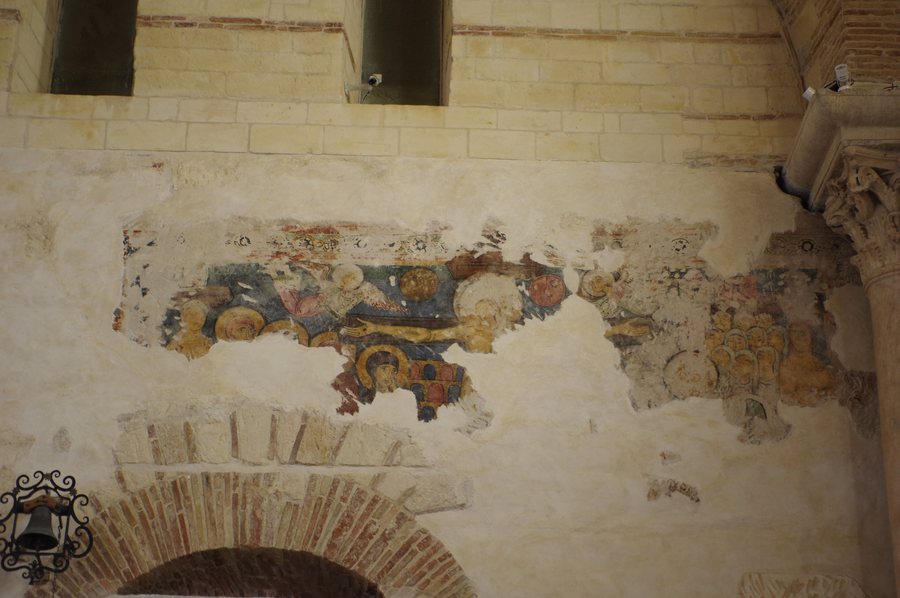 File:Canosa di Puglia BW 2016-10-14 11-03-23.jpg
Photo: Berthold Werner via Wikimedia Commons, CC BY-SA 3.0
File:Canosa di Puglia BW 2016-10-14 11-03-23.jpg
Photo: Berthold Werner via Wikimedia Commons, CC BY-SA 3.0
Sacred architecture and archaeological traces
Canosa di Puglia is a destination for travellers who wish to explore Italian history through sacred, archaeological and urban architecture. The Basilica of San Sabino is considered the most important Catholic place of worship in Canosa di Puglia and is an Italian national monument. This provides a clear cultural point of reference at the start of your exploration of the town.
The Baptistery of San Giovanni presents a different architectural form: the twelve-sided building has arms in the shape of a Greek cross, alternating corridors and the remains of a seven-sided baptismal font. Its basin preserves traces of mosaics with four-pointed stars and gold glass tesserae. For visitors interested in culture, both the floor plan and the surviving details are thus made tangible.
The Ipogei Lagrasta complex, carved entirely into the rock, consists of Lagrasta I, Lagrasta II and Lagrasta III; all three are oriented from east to west. Lagrasta I comprises five rooms that extend from an inclined dromos and are arranged in a floor plan shaped like a Latin cross. The clear division of the rooms defines the impression of the complex.
The Teatro Comunale "Raffaele Lembo" adds another era to the picture of the town. It opened in 1926 in the Liberty style and has an auditorium with ornate boxes and a distinctive dome. During restoration, a Roman archaeological site was discovered beneath the theatre; it is visible from the auditorium.
San Leucio and the ancient urban landscape
The San Leucio Archaeological Park lies on the hill of the same name southeast of Canosa and is completely surrounded by olive trees. The park contains a centrally planned early Christian basilica. It was initially dedicated to Saints Cosmas and Damian and later, during the Lombard period, to San Leucio. The adjacent antiquarium was established in July 2008. The park thus brings together landscape, religious history and archaeological evidence in one place.
The Arco Traiano was built at the beginning of the 2nd century AD for a representative or commemorative purpose. The Arco Traiano also served as an urban-planning division between the necropolis area and the historic centre of Canosa. The arch can therefore be understood both through its symbolic function and through its role in the urban order of that period.
For your orientation, tourist route T is also relevant: it starts in the area in front of the Baptistery of San Giovanni and takes visitors to all the archaeological sites and monuments of the town of Canosa.
Local tradition also has its own place. The Sagra della Percoca returns to Borgata Loconia in 2026. The focus is the percoca as a special agricultural product of the borgata and as a traditional agricultural food product (PAT). If you would like to get to know Canosa di Puglia through its history, architecture and regional products, this specific event complements the cultural themes.
Further destinations: San Ferdinando Di Puglia, Barletta, Trani, Margherita Di Savoia
For the higher-level travel overview: Barletta-Andria-Trani.
Check prices, availability and amenities for your travel dates directly on Booking.com.
View accommodation and offersAdvertisement · Affiliate link to Booking.com
