
Discover Lucugnano: Palazzo Comi, Ceramic Art and Churches
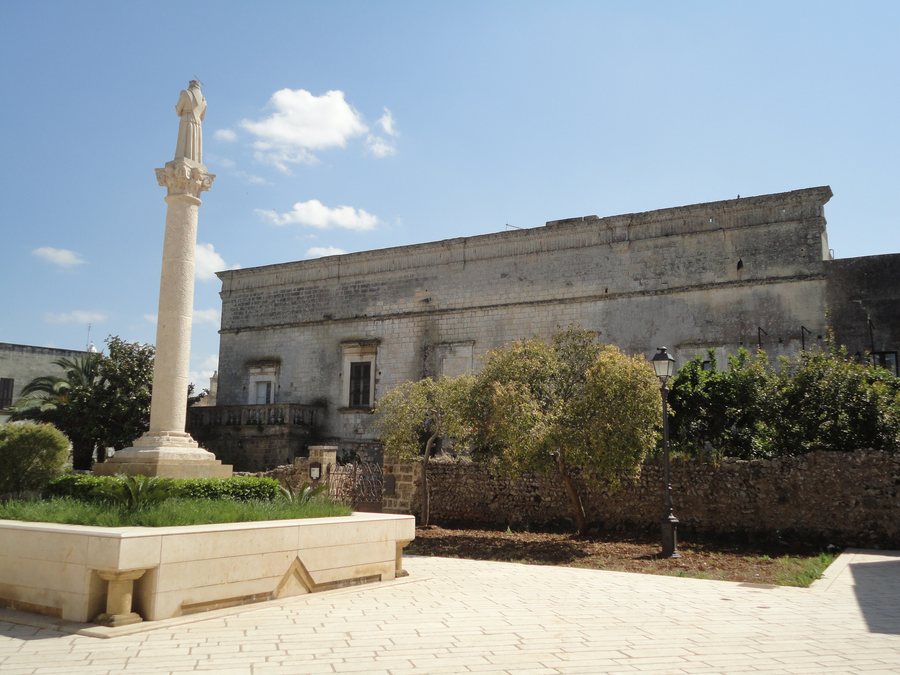
Lucugnano between Roads, History and Literature
Lucugnano lies along the SS 275 state road between Lecce and Santa Maria di Leuca. Its documented history dates back to the Middle Ages: the existence of the medieval hamlet of Lucugnano has been documented since 1092. During Norman rule, Goffredo donated the hamlet to the Italo-Greek monks of S. Maria de Amito. Lucugnano thus brings together its position along the road, medieval history and religious heritage as distinct themes.
Palazzo Comi and the Literary Side of the Town
Palazzo Comi combines literary history with a library and museum. It was the historic residence of the Salento poet Girolamo Comi and was visited by the poets of the Accademia salentina. The ground floor of Palazzo Comi houses the Biblioteca Provinciale “Girolamo Comi”, while the first floor contains the “Museo Comi”. The second floor of Palazzo Comi is not accessible by lift. Thus, the palace’s connection extends from Girolamo Comi and the Accademia salentina to the Biblioteca Provinciale and the Museo Comi, while the floors have different practical conditions.
Churches, Chapels and Historic Architecture
The parish church of Lucugnano is dedicated to Maria Santissima Assunta in Cielo. In addition to the high altar, it has six side altars. The town’s chapels include San Francesco, dating from 1719, and Santa Croce, dating from 1710. The more recent San Rocco chapel dates from 1969, while the San Giuseppe chapel dates from the 18th century.
Another historic feature is the castle, or Palazzo Baronale dei Capece, dating from the 16th century. It served to defend against Turkish incursions. Together with the parish church and chapels, this building makes religious and defensive architecture an important part of the town’s history.
Ceramic Art and Local Craftsmanship
During the past century, a thriving pottery tradition developed in Lucugnano. Differently coloured clay deposits in the area encouraged pottery-making because they are particularly suitable for this form of ceramic art. La Bottega Ceramiche Artistiche di Giuseppe Indino has a showroom at Corso Giuseppe Garibaldi 20 and a workshop on SP75, Via Pasquale Stanislao Mancini, in 73030 Lucugnano LE. Alongside history and churches, this highlights the relationship between local materials and traditional ceramic craftsmanship.
Everyday Culture and Madonna Addolorata
The Trattoria Iolanda has been documented in Lucugnano since 1970. Through openings in the floor of the trattoria, visitors can see an underground storage area containing ancient amphorae and a deep water cistern. Lucugnano is also associated with the local character and with Archpriest “Papa Galeazzo”, who is also known as “Papa Caliazzu”.
The Feast of Madonna Addolorata takes place in Lucugnano every year on the third Sunday in September. The celebration includes a Mass with numerous market stalls near the church and in the adjacent area. For your travel planning, this date provides a clear cultural connection to September.
For further travel planning, you can also explore Marina Di Ugento, Serrano, Palmariggi, Santa Maria Al Bagno, Salice Salentino, Taurisano, Otranto and Baia Verde.
For the overarching travel overview: Lecce.
Check prices, availability and amenities for your travel dates directly on Booking.com.
View Accommodation and OffersAdvertisement · Affiliate link to Booking.com
