
Otranto: Coast, Culture and the Alimini Lakes
Accommodation in Otranto
Otranto is a good choice for you if you would like to combine the coast, sacred art and walks in one trip. The southern coast features dramatic cliffs and picturesque coves, while the northern coast of Otranto is almost entirely sandy and flat. This brings together contrasting landscapes with historic buildings and a strong maritime character.
Culture between the Cathedral and Castello Aragonese
The permanent exhibition “I luoghi della Preistoria e la Grotta dei Cervi” is located on the top floor of the Castello Aragonese di Otranto. Another highlight is Otranto Cathedral: its floor mosaic extends across the nave, transept and apse. It was created by the priest Pantaleone between 1163 and 1165. The cathedral welcomes scholars, tourists and pilgrims who come to venerate the Holy Martyrs and admire the floor mosaic.
The Basilica di San Pietro is located in the historic centre. It is an expression of Byzantine art and dates back to the 8th century. The reopening of the Chiesa di San Pietro for visits was intended to be scheduled from 1 March to 31 December 2026; admission was €3.00 per person. The MUDO - Museo Diocesano Otranto takes visitors through three floors and displays stone artworks as well as valuable artefacts.
Traces of the Fortifications
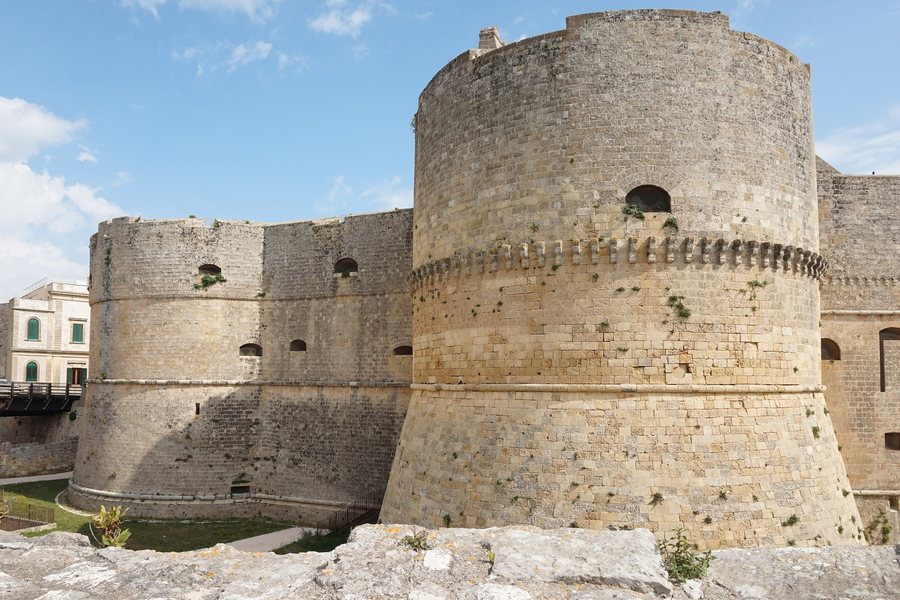
The fortifications also tell the story of different construction phases. The cylindrical Torre Matta from the first construction phase was incorporated into a square bastion in the 16th century. In Otranto, sacred art, exhibition venues and military architecture thus offer different ways of accessing the history of the town.
Contrasting Coastlines and Waters
The differences between the northern and southern coasts give the surrounding area two clearly recognisable landscape characters. The waters of the Laghi Alimini include Alimini Grande, which contains brackish water. A canal feeds Alimini Grande from Fontanelle. Fontanelle is the basin of the Laghi Alimini located farther south and is fed by an underground freshwater spring. Pedestrian access to the Laghetto ex cava di bauxite is intended to be guaranteed to every citizen and visitor at all times.
Itinerario dell'Est and Local Character
The Itinerario dell'Est of the Parco Naturale Regionale Costa Otranto – Santa Maria di Leuca e Bosco di Tricase leads from Otranto to Punta Palascia and back. It begins at the “Porta a mare” in Otranto, passes the marina and then follows an unpaved coastal path into the park. For your planning, this records both the starting point in Otranto and the transition from the harbour area to the coastal path.
The local character also includes intensive fishing. Fishing is carried out extensively in Otranto; local catches include mackerel, mullet, groupers, gilthead bream and octopuses. This connection to the sea complements Otranto’s cultural and scenic aspects with an element directly linked to the town.
Other Destinations
Find more destinations to compare at Santa Cesarea Terme, Carmiano, Ugento, Minervino Di Lecce, Torre Dell'orso, Capilungo, Torre Mozza and Racale.
For the overarching travel overview: Lecce.

