
Mottola: Rock Churches, Cathedral and Gentle Hills
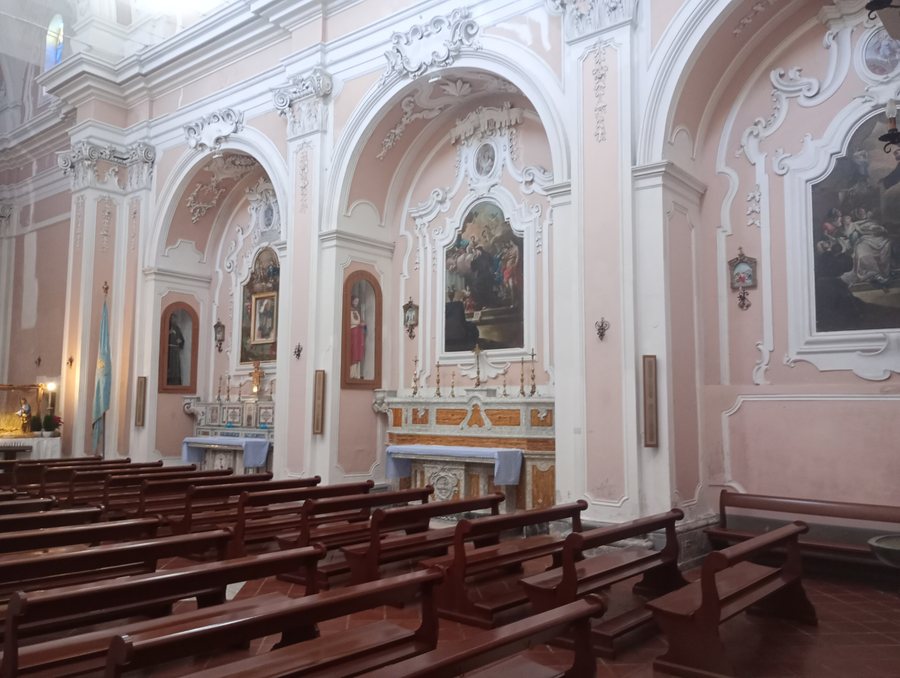 File:Chiesa dell'Immacolata di Mottola, interni 05.jpg
Photo: Mastrocom via Wikimedia Commons, CC BY-SA 4.0
File:Chiesa dell'Immacolata di Mottola, interni 05.jpg
Photo: Mastrocom via Wikimedia Commons, CC BY-SA 4.0
Mottola reveals rock churches, Romanesque sacred architecture and gentle hills as different facets of a destination shaped by culture and landscape. If you would like to combine historic spaces with peaceful surroundings, the medieval rock churches, the old town and the municipal Bosco di Sant’Antuono forest are among the diverse destinations in and around Mottola.
Rock Churches and Medieval Sacred Spaces
The rock church of San Nicola di Lamaderchia lies southeast of Mottola in the Gorgone district, near Masseria Lamaderchia. In the Middle Ages, San Nicola di Lamaderchia was a place of devotion for local residents as well as for crusaders and pilgrims travelling from the inland areas to Taranto and Brindisi to board ships for onward journeys to the Holy Land. The site is therefore part of a historical context that connects religious practice with the pilgrim movements of that time.
San Gregorio was carved out of the rock during the Norman period, between the 11th and 12th centuries. The church has a basilical layout with three naves and three semicircular apses with concave endings. This interior offers concrete details to observe, particularly for visitors interested in architectural forms and in the connection between architecture and rock.
Madonna delle Sette Lampade and the Cattedrale dell’Assunta
In the sanctuary of Madonna delle Sette Lampade, seven lamps have traditionally been kept burning continuously to this day. The feast of this Madonna is celebrated on 14 September. The rock church has two naves separated by two pillars, ending in apses oriented towards the east; the entrance is to the south. This layout is generally considered rather rare among sacred buildings. Access to the rock church is via a steep descent covered with gravel and rubble, followed by four steps.
In Schiavonia, Mottola’s old town, the Cattedrale dell’Assunta stands at the heart of the historic centre. The Romanesque cathedral was built in the early years of the 12th century. Its interior has a basilical layout with three naves separated by a row of columns. Thus, in Mottola, medieval rock architecture meets a Romanesque sacred building with clearly articulated spatial forms.
Santa Margherita and the Bosco di Sant’Antuono
The route to the Santa Margherita crypt leads through the wild vegetation of the ravine and across a narrow footbridge running above the precipice. The rock church of Santa Margherita is notable for its unusual layout as well as for the quantity and quality of its wall paintings. When exploring places like this, both the route through the ravine and the architectural and pictorial details form part of the character of the visit.
The municipal Bosco di Sant’Antuono forest covers approximately 520 hectares. Provincial Road No. 36 Mottola–Martina Franca crosses the forest, which extends across gentle, only slightly rugged hills at an elevation of 400 to 450 metres above sea level. Compared with the rock churches and the ravine, this landscape offers a different side of Mottola: open, gently contoured uplands instead of steep approaches and rocky interiors.
Check prices, availability and amenities for your travel dates directly on Booking.com.
View Accommodation and OffersAdvertisement · Affiliate link to Booking.comMore Destinations
Lizzano, Sava, Faggiano, Lido Azzurro, Castellaneta, Crispiano, Grottaglie, Leporano
For the overarching travel overview: Taranto.

