
Grassano: Carlo Levi, Churches and the Landscape of the Basento Valley
Accommodation in Grassano
Grassano between local history and landscape
Here, architecture, religious tradition, art, literature and regional cuisine come together for you at specific sites.
In Grassano’s historic town center, Palazzo Materi stands on Via Umberto I. Its construction is dated to the period between the late 18th and early 19th centuries. A portal and a coat of arms made of local stone characterize the building; the palazzo also houses a small Carlo Levi museum.
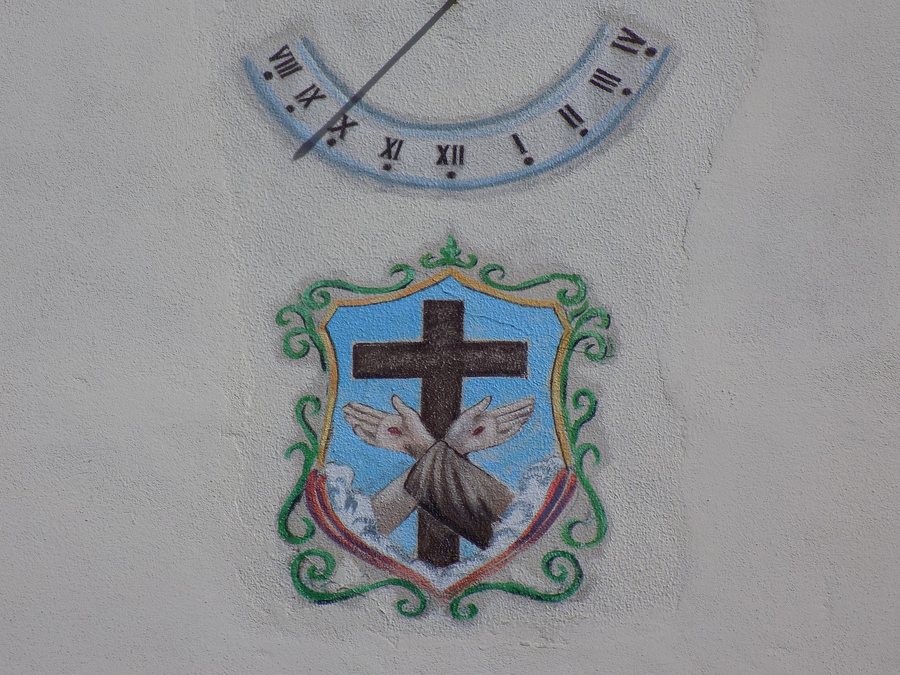 File:Meridiana, chiostro convento Grassano. Casa comunale.jpg
Photo: Marga Decuzzi via Wikimedia Commons, CC BY-SA 4.0
File:Meridiana, chiostro convento Grassano. Casa comunale.jpg
Photo: Marga Decuzzi via Wikimedia Commons, CC BY-SA 4.0
Palazzo Materi and the churches of the town
The Chiesa Madre San Giovanni Battista dates back to the 17th century. Its Baroque floor plan takes the form of a Latin cross with three naves and a large dome. Its furnishings include a carved and gilded 18th-century organ. The Chiesa della Madonna del Carmine houses a nativity scene created by Franco Artese, covering 80 m². The Chiesa di Santa Maria della Neve contains an 18th-century painting of the Nativity as well as a polychrome wooden group of the Madonna delle Nevi with angels by Giuseppe Volpe, created in 1823.
The Torretta is a medieval watchtower near Grassano’s sports field.
Carlo Levi in Grassano
During the Fascist period, Grassano took in Carlo Levi as part of the confino system. Carlo Levi later depicted Grassano in his paintings and in the book “Cristo si è fermato ad Eboli.” The historic Locanda Prisco, where he stayed during this period, forms the core of the Carlo Levi art gallery in Grassano.
Grassano also has an art gallery dedicated to Carlo Levi, created together with the “Crassanum” association. It serves as a cultural and educational laboratory and promotes practical activities.
The Basento Valley and I Cinti
From the hamlet of Caracoia, there is a view of the impressive clay badlands. In the Basento Valley, the Giardini Piccoli feature vegetable and fruit gardens along the river. An old paved path through I Cinti begins at the remains of the former fortress of the Knights of Malta below Grassano’s Chiesa Madre.
The path through I Cinti reveals alternating layers of conglomerate and sand in the geological landscape of the middle Basento Valley. I Cinti are surrounded by lush and varied vegetation. The Grotta-Cantina Santoro has been restored and returned to its condition at the beginning of the 20th century.
Traditions and cuisine
The San Rocco tradition in Grassano includes a procession on September 22, during which votive candle structures called “i macenul” are carried. Grassano’s traditional cuisine has peasant origins. Frazzul are macaroni with tomato sauce, pieces of salami and pork belly, seasoned with bay leaves.
Further destinations: Tinchi, Bernalda, Pisticci, Marina Di Pisticci, Pomarico, Lido Di Metaponto, Rotondella, Policoro
To the main travel overview: Matera.

