
Campomaggiore between Utopia, Ruins and Art
Accommodation in Campomaggiore
Campomaggiore and the History of a Utopia
Campomaggiore was founded on December 30, 1741, and abandoned on February 10, 1885, because of a landslide. If you would like to experience Italy beyond ordinary cityscapes, Campomaggiore offers a clear focus on history, architecture and artistic installations.
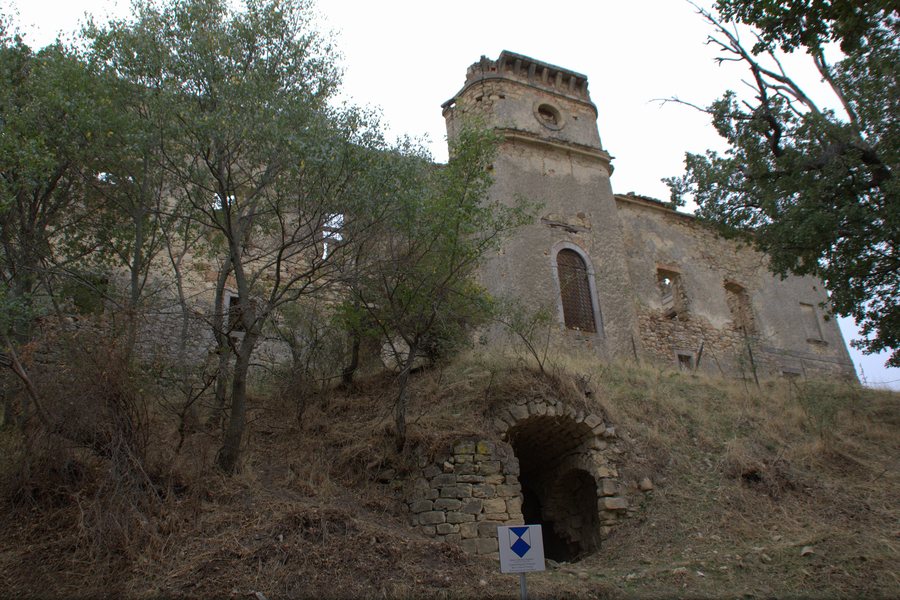 File:Casino della Contessa 5, Campomaggiore Vecchio, Basilicata.jpg
Photo: Tony.D.71 via Wikimedia Commons, CC BY-SA 4.0
File:Casino della Contessa 5, Campomaggiore Vecchio, Basilicata.jpg
Photo: Tony.D.71 via Wikimedia Commons, CC BY-SA 4.0
A Planned Townscape and Impressive Ruins
The historic layout of Campomaggiore followed a grid-like pattern. At its center was Piazza dei Voti. In Campomaggiore Vecchio, the ruins of the Church of Santa Maria del Carmelo have been preserved; its bell tower is almost intact. The Church of Santa Maria del Monte Carmelo is neoclassical in design and has a single-nave layout. At the Chiesa del Carmine, pilasters divide the façade, which is topped by a pediment structured in three orders.
The secular buildings also tell the story of the town's former structure. Palazzo Rendina survives as a ruin in Campomaggiore Vecchio and preserves the symbols of power and authority there. The ruins of Palazzo Baronale Rendina, also known as “Castello,” include imposing walls and the beginnings of monumental sail vaults. The Casino of Contessa was the summer residence of the Rendina family.
Museo dell'Utopia and Città dell'Utopia
The Museo dell'Utopia was established from 2010 onward in the inhabited town center of Campomaggiore and dedicated to the history of Campomaggiore. As a multimedia museum, it also tells the story of Teodoro Rendina's utopian urban planning project.
The connection between history and art also characterizes Città dell'Utopia. The tour through Campomaggiore Vecchio includes 12 artistic installations. The day route of the same name combines the ruins and artistic elements with an atmospheric audio accompaniment. During the Città-dell'Utopia experience, the ruins are illuminated at night through light art. Depending on your interests, this allows you to experience Campomaggiore through architecture, storytelling, sound or light.
Art in the Town and Its Connection to the Landscape
Campomaggiore's sculpture park consists of several international works of art arranged along the town's streets. A stone pine and a sequoia have survived from Campomaggiore Vecchio's former botanical garden. Together with the historic grid, the ruins and the works of art, they create a townscape in which nature, memory and design form distinct layers.
There is also a specific point of reference for views of the mountains: a bouldering area extends across the municipal territories of Accettura, Campomaggiore, Castelmezzano and Pietrapertosa.
Olive Oil Tradition and the Local Calendar
At Antico Frantoio Di Perna, guided tours through the entire olive oil production chain are offered by reservation. This insight complements the historical and artistic themes with a direct connection to the production of a regional food product.
The feast of Madonna del Carmine in Campomaggiore is celebrated on July 15 and 16. If you plan your trip around culture, architecture, art or regional food production, these different themes can determine your choice of accommodation and the rhythm of your days.
More Destinations
Discover more destinations: Moliterno, Pescopagano, Castelmezzano, Trecchina, Tito, Ginestra, Rivello, Barile.
To the main travel overview: Potenza.

