
San Fele: Waterfalls, Trails and Historic Townscapes
Accommodation in San Fele
Waterfalls and trails through the highlands
The Cascate di San Fele are formed by the Torrente Bradanello, which crosses the San Fele area and overcomes numerous elevation levels along the way. Four trails lead through the surrounding highlands to the waterfalls. On the U Urtone trail, you can see a 22-metre-high waterfall in the Vallone Corbola gorge. Il Paradiso leads to the waterfalls in about ten minutes, while the Le Gemelle trail is approximately 300 metres long. Le Gemelle form where the Bradano and Acquafredda streams meet. At 4.5 kilometres, Il Ponte is the longest of the four trails and takes approximately four hours. Trained hiking and tour guides are available for guided visits.
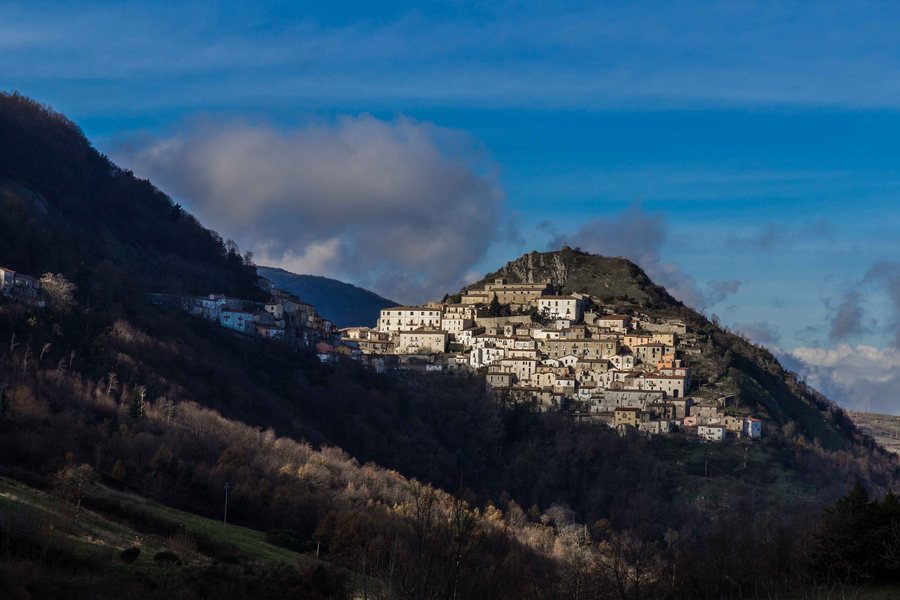 File:Centro Storico di San Fele illuminato dal Sole.jpg
Photo: Giuseppe Cillis via Wikimedia Commons, CC BY-SA 4.0
File:Centro Storico di San Fele illuminato dal Sole.jpg
Photo: Giuseppe Cillis via Wikimedia Commons, CC BY-SA 4.0
Water, forests and protected nature
Approximately 5.2 percent of the municipality of San Fele, around 514 hectares, lies within the Parco del Vulture. The Bosco Santa Croce extends around the Santuario di Pierno. Biological diversity and natural springs shape the landscape of the Bosco Monte dello Squadro. The area of the Cascate di San Fele in the Parco del Vulture is designated as a habitat for otters. Thus, alongside the individual waterfalls, San Fele also offers varied natural settings among streams, forests and protected areas.
History, churches and squares
The origins of San Fele date back to 969 AD, when Otto I of Saxony had a fortified castle built. The Chiesa Madre di Santa Maria della Quercia is dated to 1514 and is located on the central Piazza Garibaldi. The Chiesa S.Maria della Quercia has a floor plan with three naves in the form of a Greek cross, Baroque stucco decorations from the 16th century and an 18th-century dome. Its left nave contains an urn with the relics of San Giustino De Jacobis. His birthplace stands opposite the Chiesa dell’Annunziata in the western part of San Fele; San Giustino De Jacobis was born in San Fele on 9 October 1800. The interior of the Chiesa dell’Annunziata is divided into two horizontal naves, separated by arches supported by pillars.
Palazzi and local heritage
The Palazzo Frascella is a significant example of 17th-century architecture. The Palazzo Stia is an 18th-century palace and was the residence of National Guard General Francesco Stia. It is particularly distinguished by an intricately worked marble portal with side volutes, fluted central columns and the family coat of arms. A chapel was built in the Palazzo Giannini in 1868 at the request of Don Pasquale Giannini; the bishop at the time authorised Masses to be celebrated there. The Gualchiera di San Fele is recognised as a cultural heritage site of historic, environmental and ethno-anthropological interest and can be viewed via the tourist trails of the waterfalls of San Fele. The waterfalls of San Fele are also known locally as „U uattenniere“. The expression refers to a gualchiera, a machine formerly powered by water to full wool.
Festivals and cuisine
The Santuario di Pierno welcomes thousands of pilgrims every year, including pilgrims from Apulia and Campania. The festivals in honour of the Madonna di Pierno take place every year on the first Sunday in May, 15 August and 8 September. The Transumanza in San Fele is an established local event at which transhumance and activities from pastoral life are recreated. Traditional San Fele cuisine includes homemade pasta prepared according to old, time-honoured methods.
More destinations
Galdo, Palazzo San Gervasio, Sarnelli, Melfi, Trivigno, Sant'Angelo Le Fratte, Francavilla In Sinni, Latronico
To the overarching travel overview: Potenza.

