
Tolve: Sanctuary, History and Landscape in Basilicata
Accommodation in Tolve
Tolve between its sanctuary, old town and mountain landscape
Tolve can be explored through its religious history, medieval architecture and diverse landscape. At its heart is the Santuario di San Rocco di Tolve at Largo Duomo. At the same time, historical traces extend far beyond the sanctuary – from Roman and Neolithic remains to paths that connect nature and spirituality.
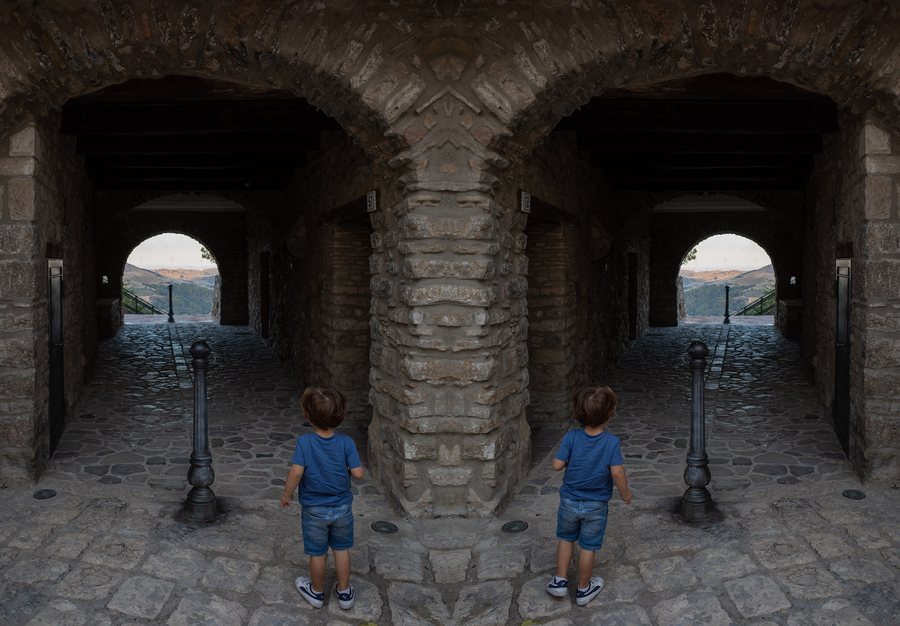 File:Gabriel at Arco del Portello, Tolve, Italy (PPL3-Altered) julesvernex2.jpg
Photo: Jules Verne Times Two via Wikimedia Commons, CC BY-SA 4.0
File:Gabriel at Arco del Portello, Tolve, Italy (PPL3-Altered) julesvernex2.jpg
Photo: Jules Verne Times Two via Wikimedia Commons, CC BY-SA 4.0
San Rocco and the religious tradition
The Santuario di San Rocco di Tolve dates back to the 12th century. In the 18th century, it was extensively expanded and transformed into a three-nave building with a magnificent dome above the apse area. The interior is designed in the Baroque style and decorated with fine stucco work and valuable works of art. At Largo Duomo, you can therefore encounter several eras of sacred architecture in a single building.
The Festività di San Rocco plays a special role. It includes celebrations on 16 August and 16 September. These include processions through the streets of Tolve's historic old town, during which worshippers carry the statue of Saint San Rocco. The diocesan sanctuary dedicated to the miracle-working Saint San Rocco is visited every year by thousands of pilgrims, most of whom arrive on foot.
Medieval traces and ancient paths
The medieval village of Tolve is entered through the Arco delle Torri. The arch is integrated into the 12th-century town wall and makes the historical character of the town visible from the moment of arrival. For further exploration, the experience therefore includes not only individual buildings, but also walls, passageways and the streets of the historic old town.
There are also remarkable remains outside the town centre. The Villa Romana di San Pietro lies west of Monte Stallone and overlooks the ancient “Tratturo Regio”. At the foot of Monte Moltone in Tolve, traces of Neolithic settlements dating from 2800 to 2500 BC have also been found. These different periods give the surrounding area a historical dimension reaching far back into the past.
The “Percorsi Rocchiani” form a network of routes that connect nature and spirituality. They lead from various places in Basilicata and the neighbouring regions to the sanctuary.
Churches and historical continuity
Other religious buildings include the San Francesco monastery, completed in 1586. The Church of San Pietro was founded by Benedictine monks in the second half of the 11th century. Both dates point to the long ecclesiastical history that shapes Tolve alongside the San Rocco sanctuary.
Landscape, animals and cuisine
The wooded mountains around Tolve provide a habitat for various animal species, including the Apennine wolf and the wild boar. The landscape around Tolve includes extensive grain fields, interrupted by olive groves and remnants of old woodland. As a result, open agricultural areas and wooded mountain regions alternate in the surrounding area.
This landscape is also reflected in Tolve's traditional cuisine. It is based on homemade pasta, local meat and pulses. Wild-growing cardoons often characterise the rich dishes prepared in Tolve, particularly on feast days. Those choosing a hotel for a trip to Tolve can therefore regard the town as a destination for culture, pilgrimage traditions, landscapes and local culinary culture.
Further destinations:Pescopagano, Teana, Terranova Di Pollino, Tito, Corleto Perticara, Atella, Francavilla In Sinni and Gallicchio.
For the higher-level travel overview: Potenza.

_julesvernex2.jpg)