
Borghi between Hills, Rivers, History and Tradition
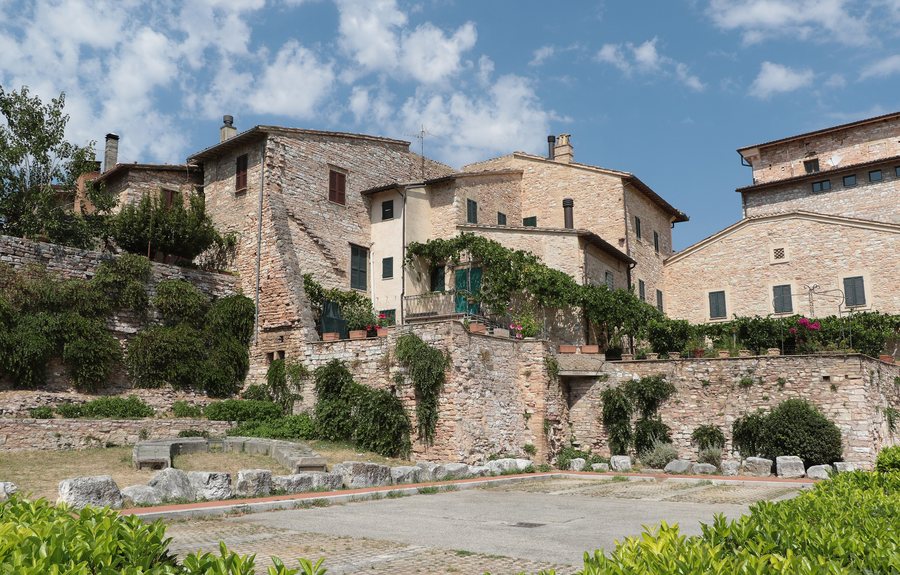 File:Spello - i borghi più belli d'Italia.jpg
Photo: Raffaele pagani via Wikimedia Commons, CC BY-SA 4.0
File:Spello - i borghi più belli d'Italia.jpg
Photo: Raffaele pagani via Wikimedia Commons, CC BY-SA 4.0
Borghi between Hills, Rivers, History and Tradition
Borghi is located in an agriculturally shaped hilly landscape and is surrounded by the Rubicone and Uso rivers. The area includes lush vineyards and olive groves. San Giovanni in Galilea lies at an altitude of 445 metres on a platform of Miocene limestone. From there, the view extends across the plain to the fortresses of Montebello, Torriana, Verucchio and San Marino. The combination of riverside landscape, cultivated land and elevated location gives the area a distinct rural character. Agricultural use remains evident in the landscape: vineyards and olive groves are just as much part of the area as the two river landscapes of the Rubicone and Uso.
San Giovanni in Galilea and the Castle
San Giovanni in Galilea is one of the formerly independent settlements that belong to the Borghi area. The castle of San Giovanni in Galilea has been known since the 10th century. Of the Rocca Malatestiana in San Giovanni in Galilea, the remains of the tower and parts of the castle structure have been preserved.
Archaeological and Rural Heritage
The archaeological site of La Piva is highly significant in terms of the landscape. In the district of San Giovanni in Galilea, the archaeological site of the Pieve and the Chiesa di San Giovanni Battista in La Piva was developed as a museum and opened to the public in 2011. This means that, in addition to the medieval castle, Borghi also includes a place where archaeological and ecclesiastical history come together.
The Chiesa di San Cristoforo dates from 1144 and contains works by the sculptor Guido Montanari. The Museo della Civiltà contadina illustrates the rural life of the area through its houses, clothing and work. The museum also contains two grain mills that were powered by animals. For visitors interested in culture, Borghi therefore offers various ways to explore architectural history, art and the former working life of the area.
Paths, Views and Regional Cuisine in the Area
The hilly area around Borghi has numerous local and agricultural paths used by walkers, including for searching for wild herbs. The San Vicinio Cycling Route reaches Borghi after Sant’Agata Feltria and before Montiano. This makes it possible to plan Borghi as a section between Sant’Agata Feltria and Montiano for an individual cycling tour.
Bustrengh is a typical sweet speciality from Borghi that was prepared by farming families on Sundays using the leftovers from the week.
Historical Details in the Town
At Borghi’s Cisterna con loggetta settecentesca, the loggetta above it dates from the 18th century. The municipal cistern of Borghi is known among the residents of the Castello di Borghi as “la sterna” and has a well for drawing water. Such specific architectural elements complement the larger historical sites with everyday details of local history.
More Places for Planning Your Trip
More places for planning your trip: Sogliano Al Rubicone, Cento, Tredozio, Dovadola, Premilcuore, Quarto, Musano and Predappio.
To the higher-level travel overview: Forlì-Cesena.
Check prices, availability and amenities for your travel dates directly on Booking.com.
View Accommodations and OffersAdvertisement · Partner link to Booking.com
