
Civitella Di Romagna: Castles, Sacred Buildings and Historic Routes
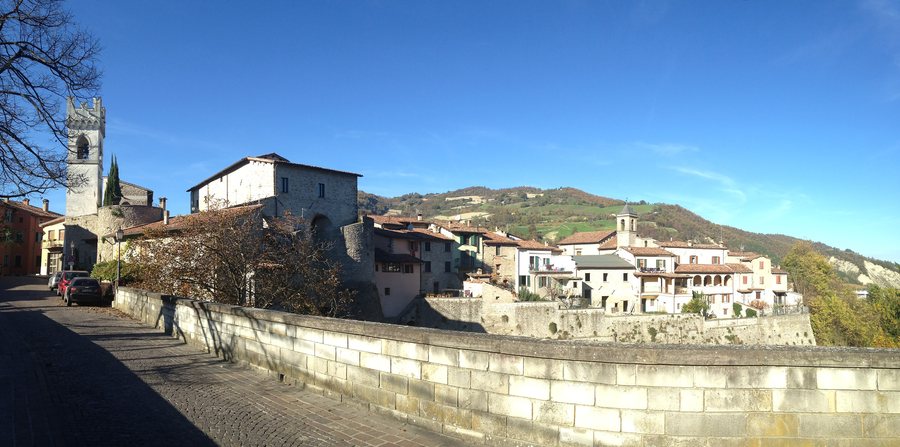
Civitella Di Romagna is a destination for you if you want to combine cultural history, castles and a historic route in one travel idea. The town and the associated village of Cusercoli offer concrete points of interest for this: sacred buildings, preserved walls, distinctive terracotta works and gastronomic events alongside a route connection that extends as far as Bagno di Romagna.
Sacred and Defensive Traces
The Santuario della Madonna della Suasia in Civitella di Romagna was built between 1556 and 1595. This precise construction period makes the sacred building a clearly datable reference point for your cultural orientation in the area. A tower rebuilt in the Gothic style has also survived from the ancient Rocca di Civitella. Both buildings represent different historical layers that can be directly connected when exploring Civitella di Romagna.
The village of Cusercoli, which belongs to Civitella di Romagna, lies on a rocky spur dominated by a medieval castle. Cusercoli Castle was built on the site of a previously existing Roman complex; an imposing wall from that complex has survived. For visitors interested in culture, this provides a precise view of the connection between the shape of the landscape, the castle site and older architectural traces, without merging the individual periods into an undifferentiated historical picture.
The local cemetery in Cusercoli preserves 14 glazed terracotta works from the school of Luca della Robbia depicting the Stations of the Cross.
The Abbazia di Sant'Ellero monastery is located in Galeata, in the vicinity of Civitella di Romagna. This broadens the cultural perspective beyond the immediate town center, without requiring a precise distance or a specific visit duration.
Historic Routes between Civitella and Bagno di Romagna
A historic variant of the Via Romea Germanica begins in Civitella di Romagna and leads to Bagno di Romagna. It probably corresponds to the route taken by the monk Alberto. The historic character and the traditional connection make this route particularly interesting for you if you want to explore local history not only through buildings, but also via a route.
From Piazza di Civitella, the historic variant leads to the Santuario della Suasia along a road that is partly asphalted, partly concrete and partly gravel.
Cusercoli: Crafts, Gastronomy and Access
Cusercoli is an important center for the production of garlands and rosaries, which are exported worldwide.
Cusercoli is associated with two gastronomic events for visitors: the Fiera del Prugnolo and the Sagra del Tartufo del Bidente. Both names point to the town's gastronomic side and provide another thematic perspective alongside art, history and route traditions.
Cusercoli can be reached via the S.S. 310 del Bidente.
Other Places for Orientation
Other places for orientation: Montecchio, Fratta Terme, San Benedetto In Alpe, Verghereto, Longiano, Sala, Meldola and San Mauro A Mare.
To the higher-level travel overview: Forlì-Cesena.
Check prices, availability and amenities for your travel dates directly on Booking.com.
View Accommodations and OffersAdvertisement · Affiliate link to Booking.com
