
Savignano sul Rubicone: Bridge, Museums and Archaeology
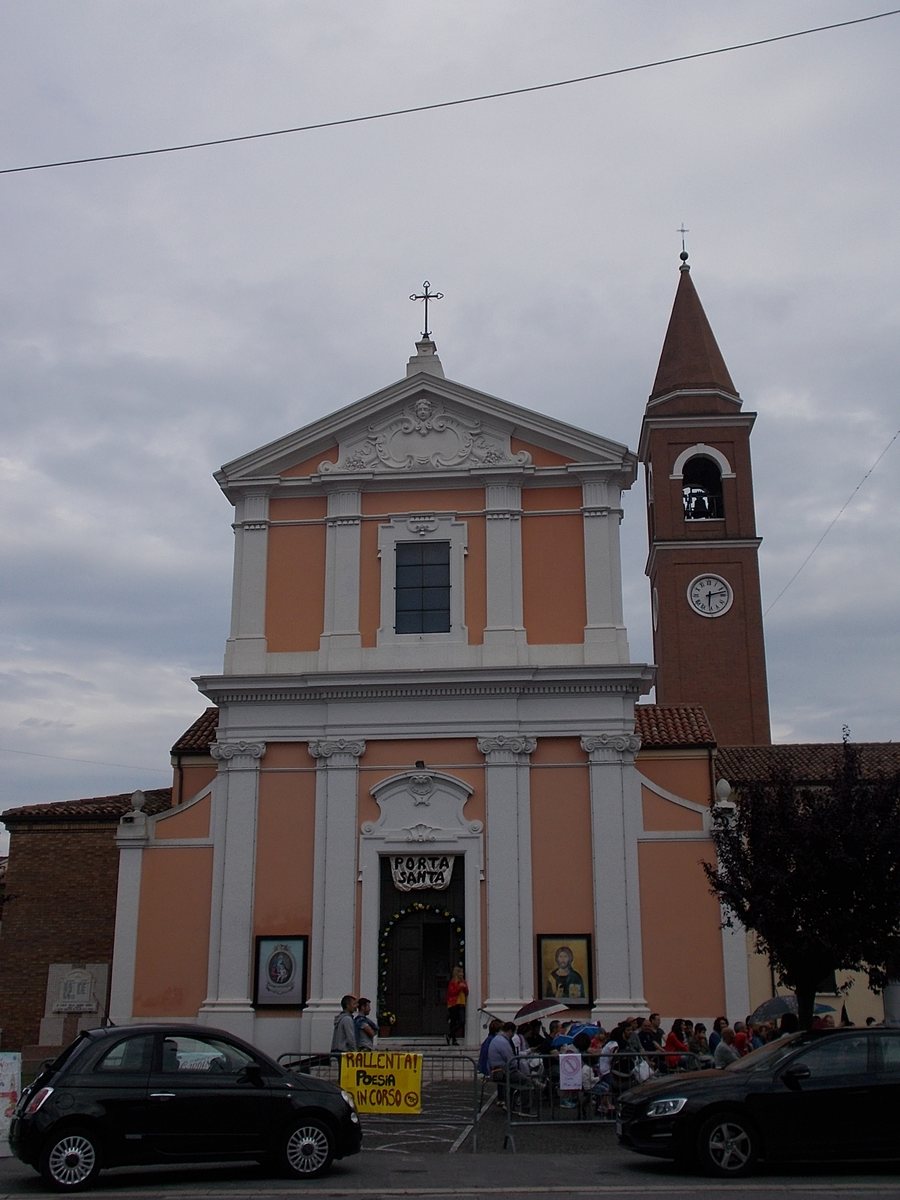 File:Santa Maria delle Grazie with cars, church in Fiumicino, Savignano sul Rubicone, Italy.jpg
Photo: Szeder László via Wikimedia Commons, CC BY-SA 4.0
File:Santa Maria delle Grazie with cars, church in Fiumicino, Savignano sul Rubicone, Italy.jpg
Photo: Szeder László via Wikimedia Commons, CC BY-SA 4.0
Between the Ponte Consolare Romano and archaeological traces
Savignano sul Rubicone is an interesting destination for travelers who want to discover Italian history through buildings, museums and archaeological evidence. The focal point is the three-arched Ponte Consolare Romano; in Compito, several sites lead into different historical periods. For your travel planning, this creates a cultural profile that you can combine with destinations in the surrounding area.
The landmark on the Rubicone
The three-arched Ponte Consolare Romano connects the two banks of the Rubicone. It is also the oldest monument and the landmark of the city of Savignano sul Rubicone. This historic structure thus gives an exploration of Savignano a distinctive theme: the connection between the river landscape and history, without requiring you to limit yourself to a single museum.
Compito: Museum and early history
The Museo Archeologico del Compito “Don Giorgio Franchini” grew out of a collection of materials that Don Giorgio Franchini found in the fields or that came to light there. In 1998, the museum was reopened by the municipal administration of Savignano sul Rubicone. Its origins in archaeological finds and its subsequent reopening give the museum its own clear, traceable history.
The archaeological site of Compito includes a princely burial from the 7th to 6th century BC with weapons and a chariot.
Church construction, Roman traces and burial history
The Pieve di San Giovanni in Compito stands on the same site as a Roman public building complex that may have been a place of worship. Excavations of the Basilica di San Pietro also revealed two construction phases and a burial ground with more than 400 burials. Together, these sites provide access to architectural development and burial history without conflating the individual findings.
Museums, a palace and a beach in the surrounding area
The Museo Casa Pascoli, a museum, is located in the immediate vicinity of Savignano sul Rubicone. Palazzo del Poggiano, a palace, is also located in the surrounding area. Casa Rossa di Alfredo Panzini is another cultural destination there, serving as a museum. In addition, there is the Collection of Votive Art, also a museum in the surrounding area. For a varied cultural itinerary, these different institutions can be considered alongside the bridge, Compito and the archaeological sites.
Greta Benvenuti is also one of the destinations in the surrounding area: it is a beach. Thus, the selection around Savignano sul Rubicone includes not only museums, a palace and archaeological history, but also a place with a distinctly maritime character.
Choose accommodation suited to your interests
If you are looking for a hotel in Savignano sul Rubicone, you can base your choice on your personal focus: the Ponte Consolare Romano and its connection to the city, the museums and archaeological findings of Compito, or a combination of cultural destinations in the surrounding area and Greta Benvenuti. This distinction helps you connect your accommodation choice with the type of days you have planned, without reducing the different places to a single attraction.
Check prices, availability and amenities for your travel dates directly on Booking.com.
View accommodation and offersAdvertisement · Affiliate link to Booking.comMore destinations for travel planning
Roncofreddo, Carpinello, Predappio, Bertinoro, Borello, Civitella Di Romagna, Rocca San Casciano, Campigna
For the higher-level travel overview: Forlì-Cesena.

