
Colorno between Residence, Garden Art and Cycle Routes
Accommodation in Colorno
Residential History in Colorno
The Reggia di Colorno, with its courtly past, is at the center. In 2026, the visitor route of the Reggia di Colorno includes specific areas and the Cappella Ducale di San Liborio.
The Reggia di Colorno was the residence of the Farnese, the Borbone and Maria Luigia of Austria, Napoleon’s second wife. When the Reggia di Colorno became the court’s summer residence, it was given the nickname “little Versailles.” For you, this makes the complex a place where several courtly eras can be experienced within a specific visitor destination.
Visitor Route, Court Chapel and MUPAC
In 2026, the visitor route of the Reggia di Colorno includes the Piano Nobile, the Appartamento del Duca Ferdinando di Borbone and the Cappella Ducale di San Liborio. The Cappella Ducale di San Liborio is considered the second-largest court chapel in Europe. If you are interested in courtly architecture and sacred spaces, the visitor route therefore brings together different historical focal points.
The musical history of San Liborio can also be experienced in concrete terms: the Serassi organ in San Liborio was built between 1792 and 1796 by Andrea and Giuseppe Serassi for Duke Ferdinando di Borbone. The MUPAC, Museo dei Paesaggi di terra e di fiume, presents another facet of regional culture. It is located on the first floor of the Aranciaia. A total of 212 ethnographic objects are exhibited in the “Abitare” and “Saperi” exhibition areas.
Giardino Storico and Garden Development
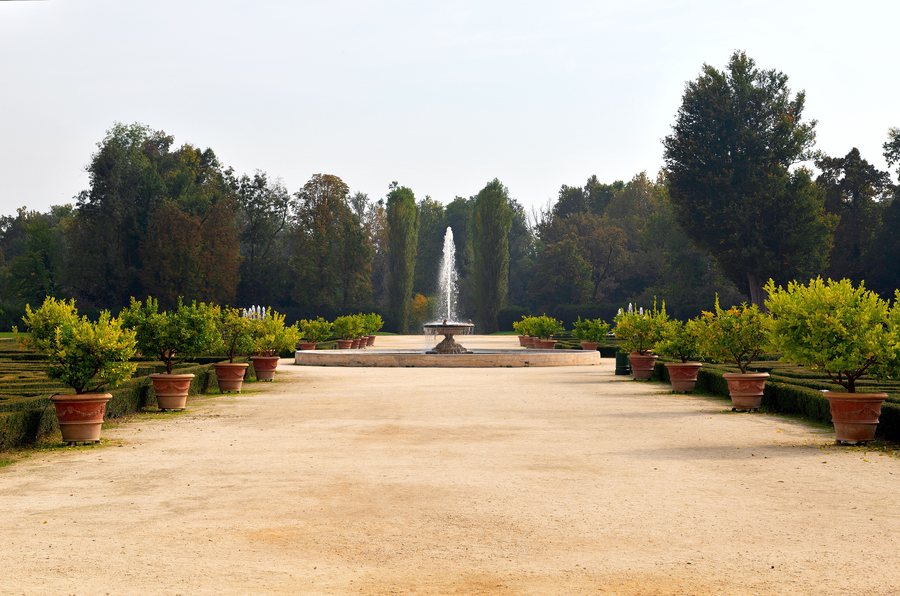
The Giardino Storico has its own historical development. The first design dates from 1400; Roberto Sanseverino conceived the Giardino Storico in the Italian style with flowerbeds, pergolas, hedges, labyrinths, citrus trees and fruit trees. The design therefore combines geometric elements with diverse planting and also makes the garden interesting for visitors who would like to consider architecture and landscape together.
Under the rule of Maria Luigia, the Giardino Storico gradually changed from a French to an English garden style between 1816 and 1823.
For your practical planning, it is important to know that the Giardino Storico is accessible free of charge during the day all year round. A historical-botanical tour with an audio guide is also offered for €3.00. This means you can either plan the garden as an independent stop or explore its plant and design history in greater depth.
Cycle Routes between Colorno and Parma
Colorno can also be experienced by bicycle. The Greenway delle Residenze Ducali di Maria Luigia is a cycle route that connects the Reggia di Colorno, the Pilotta complex and Parco Ducale di Parma, and the Casino dei Boschi di Sala Baganza. Another cycle route runs along the embankment of the Torrente Naviglio through the Bassa area of Parma to Colorno.
The two routes have different focal points: the Greenway connects several residences and parks, while the cycle route along the Torrente Naviglio takes in the Bassa area of Parma and the connection to Colorno. If you would like to structure your trip around a cultural program, a garden visit and cycling tours, Colorno offers several clearly identifiable points of connection for this.
Further Places for Planning Your Trip
You can find further places for planning your trip here: Banca, Calestano, Terenzo, Borghetto, Valditacca, San Polo, Bagni di Tabiano and Marore.
For the overarching travel overview: Parma.

