
Fidenza: Cathedral, Museums and Pilgrimage History
Accommodation in Fidenza
Fidenza between Cathedral, Theatre and Pilgrimage Route
Fidenza combines Romanesque architecture, urban heritage, sacred art and pilgrimage history. At its centre is the Duomo di Fidenza, a Romanesque cathedral whose construction began in 1117. If you are planning a journey focused on culture and history, you will find several different ways to explore the city here: historic buildings, museums, an annual season of performances and its connection with the Via Francigena.
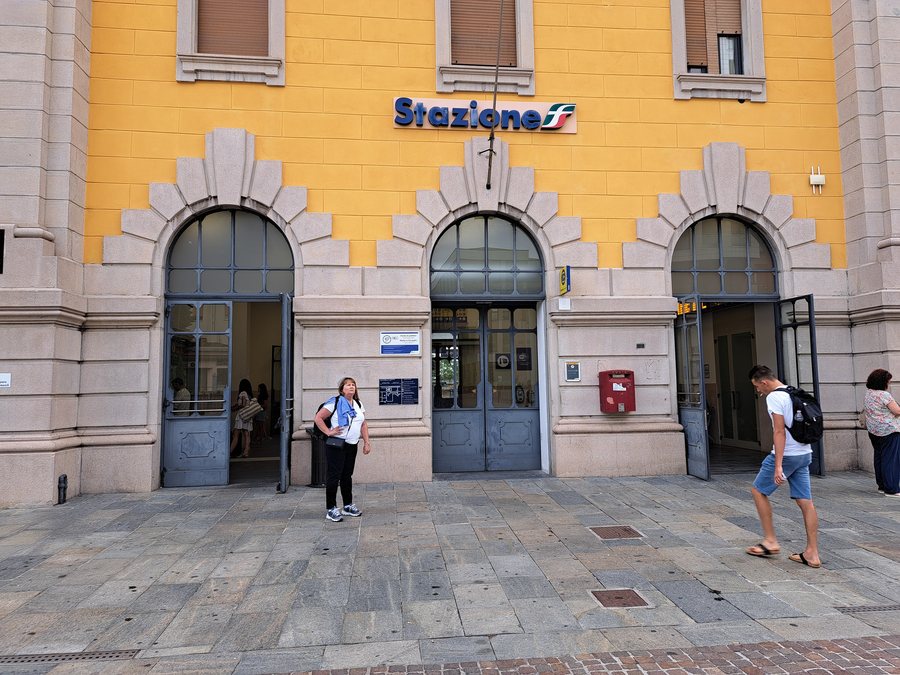 File:Stazione ferroviaria Fidenza, PR, Italia 01.jpg
Photo: Alejandro Caserio via Wikimedia Commons, CC BY-SA 4.0
File:Stazione ferroviaria Fidenza, PR, Italia 01.jpg
Photo: Alejandro Caserio via Wikimedia Commons, CC BY-SA 4.0
A Cityscape with Medieval Heritage
The Torre Medievale was built in 1364 as a defensive stronghold and as the Porta San Donnino city gate. It is the only still-visible surviving part of Fidenza’s defensive wall, built in the 14th century. The Teatro Girolamo Magnani was inaugurated on 26 October 1861 with Verdi’s Il Trovatore.
Every year, the Teatro Girolamo Magnani offers a lyrical-symphonic season featuring opera performances and concerts with renowned artists from Italy and abroad. During your stay, this means you can combine a historic theatre building with a recurring music programme.
Collections, Art and Fossils
The Museo del Risorgimento “Luigi Musini” documents regional and national history from the Napoleonic era to the Resistance through an important collection of memorabilia and historical records. The album dei Mille kept in the museum contains photographs of participants in Garibaldi’s expedition in 1860.
The Museo del Duomo was established to display valuable objects from the treasury of Fidenza’s martyr and patron saint, San Donnino. The Museo del Duomo houses Benedetto Antelami’s 12th-century Maestà mariana. The Museo dei Fossili dello Stirone mainly displays fossils unearthed in the Torrente Stirone.
The collection at the Museo dei Fossili dello Stirone includes shells and skeletal parts of molluscs, starfish and the remains of whales. This gives you a broad range of experiences spanning historical heritage, sacred art and natural discoveries.
The Stirone as a Landscape Feature
The Stirone area of the Parco dello Stirone e del Piacenziano extends in Fidenza as far as the bridge on the Via Emilia. Together with the Museo dei Fossili dello Stirone, this area adds a natural-history perspective to a cultural stay.
Cabriolo and the Via Francigena
The Chiesa di Cabriolo was already in existence around the year 1000. Around 1200, Cabriolo was chosen by the Knights Hospitaller for the construction of a hospital serving as a resting place for pilgrims travelling to Rome. The Via Francigena route begins at the Duomo in Fidenza; several paths lead from there to the pilgrimage route.
For orientation, there is another specific point of reference: the recommended walking tour through Fidenza begins at Piazza del Duomo, the centre of the medieval Borgo. This allows you to plan architectural history and pilgrimage heritage as different perspectives on the same visit.
Planning Your Trip to Fidenza
When choosing a hotel in Fidenza, you can organise your stay around the subjects that interest you most: the Cathedral and Torre Medievale for architectural history, the Teatro and museums for culture, Cabriolo and the Via Francigena for pilgrimage history, and the Stirone area for landscapes and fossils. This allows you to base your accommodation choice on your interests, while the specific sights determine the content of your days.
More Travel Ideas
For more travel ideas, you can also discover Bardi, Soragna, Ponte Taro, Fontanelle, Pianelletto, Albareto, Compiano and Salsomaggiore Terme.
For the higher-level travel overview: Parma.

