
Ostia Parmense: Discover Local History and Landscape
Accommodation in Ostia Parmense
Ostia Parmense combines remarkable local history with a landscape shaped by the valley of the Torrente Cogena and its confluence with the Taro. If you would like to discover Italy away from major centers, Ostia Parmense therefore offers several concrete points of reference for planning your trip.
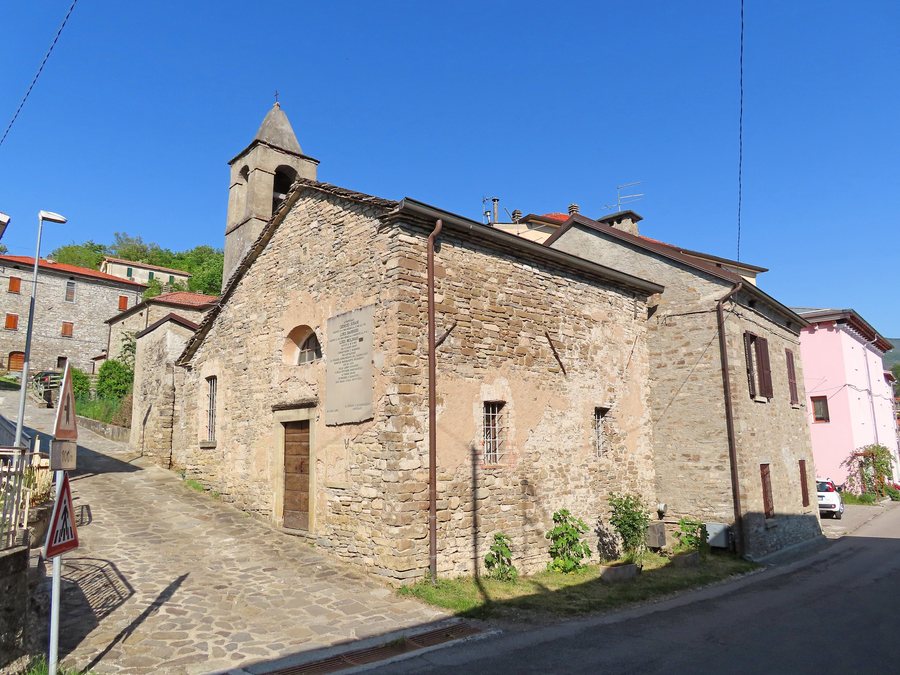 File:Oratorio di San Rocco (Ostia Parmense, Borgo Val di Taro) - facciata e lato sud-est 2022-05-14.jpg
Photo: Parma1983 via Source, CC BY-SA 4.0
File:Oratorio di San Rocco (Ostia Parmense, Borgo Val di Taro) - facciata e lato sud-est 2022-05-14.jpg
Photo: Parma1983 via Source, CC BY-SA 4.0
Historical Traces in the Historic Center
Ostia Parmense is home to the Oratorio di San Rocco, dedicated to Saint Roch and dating from the 17th century. For you, it is a tangible example of how the history of a small Italian town can also be read through individual religious buildings.
In the historic center, a tall building contains a first-floor loggia with two round-arched arcades. It was bricked up until the 1980s and is now enclosed by glazing. Dall’Olio dates a window bricked up to its left to the 15th century. These details make the loggia an independent architectural element within the historic center, without allowing any conclusion about current use or a specific sightseeing opportunity.
The Mulino di Ostia and Its History
The Mulino di Ostia stands in the village of Ostia Parmense on the right bank of the Torrente Cogena, near its confluence with the Taro. On the 1823 cadastral map, it appears as a two-wheel grain mill. Its former function was not limited to the individual site: the Mulino di Ostia supplied the villages of Ostia, Baselica and Magrano.
The Mulino di Ostia ceased operating as a mill in 1971. The mill therefore belongs to the documented working and supply history of the village, not to a currently verified ongoing operation. This chronological context helps you understand the mill as a historical topic in Ostia Parmense rather than plan it as a currently operating facility.
Memory and Landscape
In the village of Ostia Parmense, Giuseppe Gandolfi and his wife Albina rescued the Jewish engineer Aldo Di Gioacchino and his sons Alberto and Mario from Parma between autumn 1943 and the end of 1944. On February 23, 2005, Yad Vashem recognized Giuseppe Gandolfi and Albina Gigliotti Gandolfi as Righteous Among the Nations. Alongside architecture and the mill tradition, these two facts give the local history another dimension of human significance.
The valley of the Torrente Cogena flows into the Taro at the level of Ostia Parmense. For travelers interested in landscapes, river environments and regional topography, this connection is a defining aspect of the village. Monte Molinatico is also located in the surroundings of Ostia Parmense and forms part of the landscape of the wider area. The Rocca di Gusaliggio, a ruin, is likewise located nearby.
Ostia Parmense as a Place to Stay
If you are planning a hotel or other accommodation in Ostia Parmense, you can shape your stay around the documented themes of the village: religious architecture and the historic center, the history of the Mulino di Ostia, or the landscape around the Cogena and Taro. The different focal points appeal to travelers who are not looking for just a single view, but want to get to know more closely the historical and landscape connections of an Italian village.
You reach the hamlet of Ostia Parmense via the SP523 toward Parma. This road connection is useful for practical orientation when planning your stay. At the same time, the village remains manageable in terms of content: its main themes lie in the combination of historic center, mill history, remembrance culture and landscape. This allows you to base your accommodation choice on the interests you would like to place at the center of your stay.
More Destinations for Planning Your Trip
For further orientation, you can also include Berceto, Collecchio, Fontanellato, Compiano, Solignano, Valditacca, Lemignano and Polesine Parmense in your selection.
For the higher-level travel overview: Parma.

_-_facciata_e_lato_sud-est_2022-05-14.jpg)