
Pagazzano: Marble, Trails and Zen Practice
Accommodation in Pagazzano
Pagazzano lies on the first slopes of the Apennines on the left bank of the Rio Grontone, a right-bank tributary of the Taro. You can explore the area from several clearly distinguishable perspectives: marble and its former extraction, marked trails, views over the valley, and the Zen practice of SanboJi. If you would like to balance culture, landscape and activity according to your individual preferences when planning your trip to Italy, Pagazzano offers several specific themes to choose from.
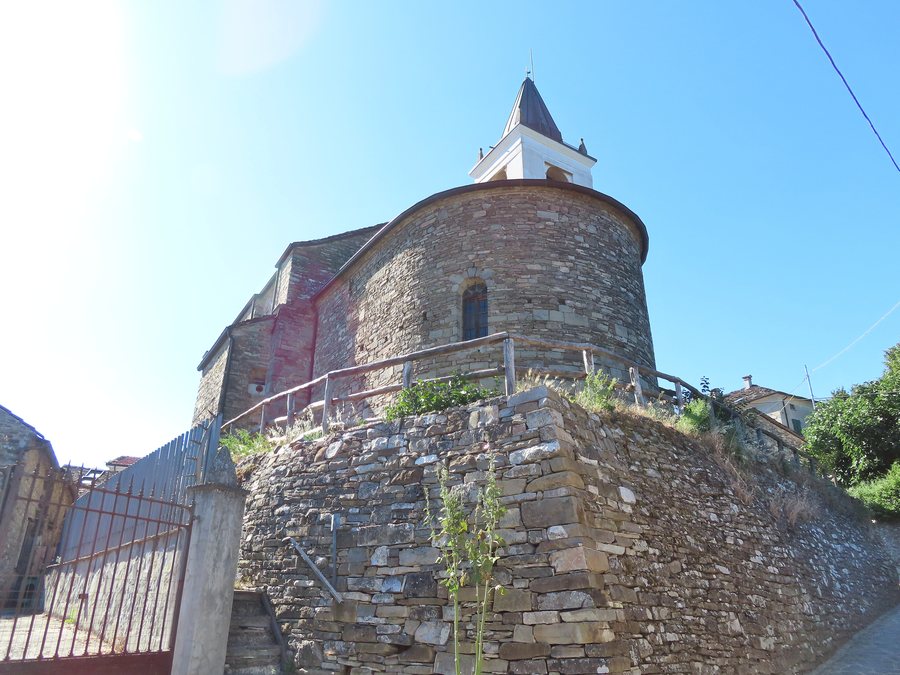 File:Chiesa dell'Assunzione di Maria Vergine (Pagazzano, Berceto) - abside e lato sud 2022-07-01.jpg
Photo: Parma1983 via Source, CC BY-SA 4.0
File:Chiesa dell'Assunzione di Maria Vergine (Pagazzano, Berceto) - abside e lato sud 2022-07-01.jpg
Photo: Parma1983 via Source, CC BY-SA 4.0
Marble and regional history
An outcrop of micritic limestone emerges in Pagazzano among chaotic clays. Limestone was extracted here from the 19th century until operations ceased. The marble deposits of Pagazzano include the varieties Grigio Ducale, Grigio Ducale rosato and Rosso Napoleone. Grigio Ducale and Rosso Napoleone in particular were frequently used in the post-Napoleonic period and during the era of Maria Luigia.
This gives the area a cultural and historical significance closely linked to its rocks. When planning your trip, this focus may be of interest if you want not only to see a landscape but also to understand how its natural resources were used in the past.
Via Longobarda, excursion and Val Grontone
The Canonica di Pagazzano is located along the Via Longobarda. The Via Longobarda is divided into six stages and marked locally with vertical signage and trail marker 741. For orientation in the area, both the division into six stages and the marking with trail marker 741 are therefore relevant.
During an excursion to the Marmi di Pagazzano, the S.C. Pagazzano-Pietramogolana was followed as far as the village of Casa Palanca; the route there was approximately 8 km. The excursion was intended to convey the history of past extraction in the province of Parma while also highlighting the Rio Grontone valley. The old quarry is about 500 m from the road; from there, there is a view of Val Grontone.
SanboJi and the landscape along the trail
The Buddhist hermitage of SanboJi is a place of Zen practice surrounded by forests, flowers and wild animals. The Sorgente di Monte Cucco rises in a meadow along the trail between Razzola di Sopra and Casacca. SanboJi thus provides a religious and cultural accent, while the spring identifies a specific landscape setting along the trail.
When choosing your hotel, it helps to consider which focus should shape your days. Would you like to concentrate more on marble and the history of extraction, or place trails, views over the valley and the landscape at the forefront? This structure supports personal planning without reducing Pagazzano to just one aspect.
More destinations for your planning
If you would like to compare other places in the same destination area in addition to Pagazzano, you can find Ravarano, Fornovo Di Taro, Sorbolo, Torrile, Langhirano, Case Vecchie, Ponte Taro and Bagni di Tabiano here.
For the overview of the wider destination: Parma.

_-_abside_e_lato_sud_2022-07-01.jpg)