
Pellegrino Parmense among churches, trails and regional festivals
Accommodation in Pellegrino Parmense
Pellegrino Parmense lies in the northern part of the Ceno Valley, in a hollow on the right bank of one of the Stirone’s branches. Its history is closely connected to its location: the town became one of the most important Pallavicino strongholds and controlled routes between Emilia, Tuscany and Liguria. This combination of landscape and history makes Pellegrino Parmense interesting for travelers who wish to combine culture and trails with regional travel planning.
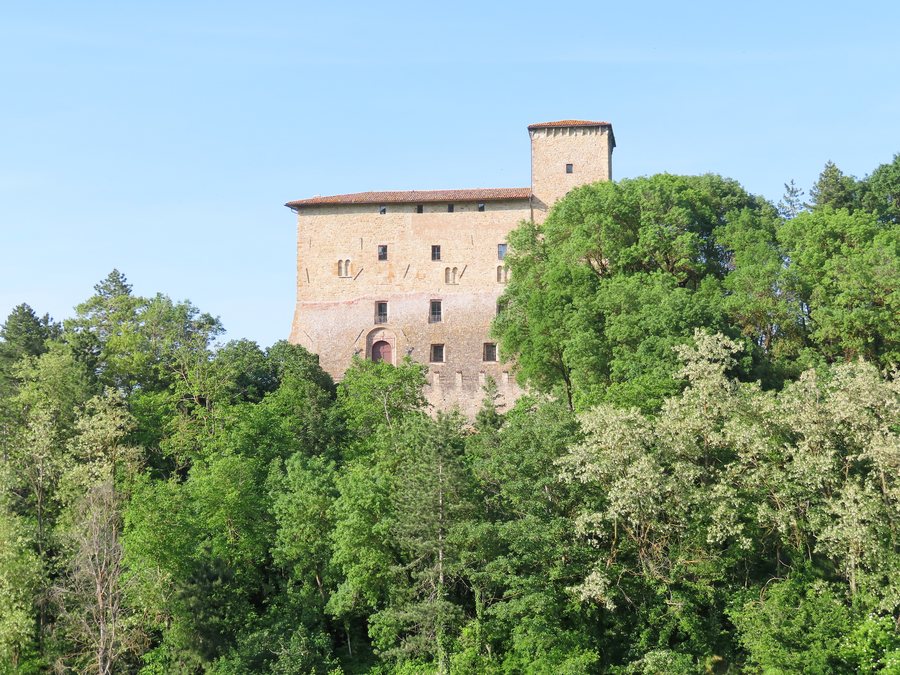 File:Castello (Pellegrino Parmense) - facciata sud 1 2022-05-17.jpg
Photo: Parma1983 via Wikimedia Commons, CC BY-SA 4.0
File:Castello (Pellegrino Parmense) - facciata sud 1 2022-05-17.jpg
Photo: Parma1983 via Wikimedia Commons, CC BY-SA 4.0
Castles, towers and religious heritage
Castello Pallavicino was fortified by Adalberto di Baden. In 981, Emperor Otto granted it to him as a fief together with the margraviate. On the grounds of the Torre dei Marchesi, underground rooms with loopholes and the remains of a cistern have been preserved. In Pellegrino Parmense, you can therefore encounter various traces of medieval rule and fortification.
Among the older religious heritage is the Pieve di San Martino in Iggio, which is mentioned in a document dating from 1040. Its central portal dates from the late 11th century and belonged to the earlier church. In the 11th and 12th centuries, the pieve was of historical importance, as several chapels were dependent on it. The parish church of San Giuseppe was built between 1915 and 1927 in the Romanesque style. The monastery and church of Santa Cristina on Monte di Careno have been documented since 926.
Mills and trails through the landscape
The area’s technological history is also tangible: the Mulino dell’Egola preserves a vertical waterwheel with iron bucket blades. The mill remained in operation until around 1965. Those interested in historic facilities and movement through the landscape can also explore a section of CAI Trail 804. It connects Pellegrino Parmense with the summit of Monte S. Cristina and runs alongside a dry-stone wall.
For planning stages, the Trasversale Francigena is divided into two specific sections. The first stage leads from Borgo di Vigoleno to the main town of Pellegrino Parmense, while the second runs from the main town to Pessola, a hamlet of Varsi. In addition, the Ostello di San Francesco at Via Roma 33 in Pellegrino Parmense is associated with an e-bike rental service.
Regional festivals throughout the year
The area’s culinary identity is reflected in several festivals. Traditional bread made from ancient grain varieties is celebrated in Pellegrino Parmense in June. The Fiera del Parmigiano Reggiano di Montagna usually takes place there in the first week of July. On August 15, the Santa Maria Assunta festival includes a centuries-old procession and religious celebrations that attract thousands of pilgrims.
Getting there and choosing accommodation
By car, you can reach Pellegrino Parmense via the A15 Parma–La Spezia motorway, the Fornovo di Taro exit, and then via Varano de’ Melegari. The most convenient railway stations are Fornovo di Taro and Fidenza; local connections to the surrounding area are available from there. If you are looking for a hotel in Pellegrino Parmense, you can consider during your travel planning whether historical heritage, stage trails, regional festivals, or access by road and rail is most important to you.
Discover more destinations
For further travel planning, you can also view Botteghino, Polesine Parmense, Calestano, Borghetto, Solignano, San Polo, Bore and Tizzano Val Parma.
To the overarching travel overview: Parma.

_-_facciata_sud_1_2022-05-17.jpg)