
Sanguigna between Frescoes, Courtyard Estate and Regional Culture
Accommodation in Sanguigna
Historical Traces in Sanguigna
If you would like to get to know Sanguigna through its historic sites, the first place to look is the Chiesa di San Salvatore: its interior walls feature a fresco cycle by Jacopo Loschi. The Corte di Sanguigna also provides access to the area's past. It was owned by the Benedictine monastery of San Giovanni Evangelista in Parma. In Sanguigna, therefore, you can discover pictorial art and monastically influenced architectural history as distinct but interconnected themes.
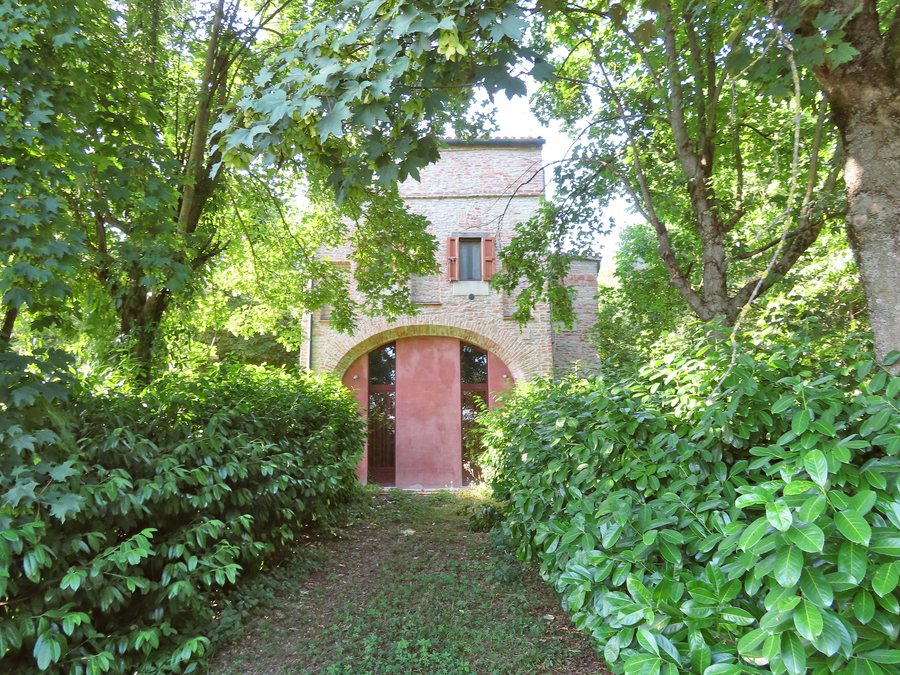 File:Antica grancia benedettina (Sanguigna, Colorno) - antica torre d'ingresso 2 2022-06-19.jpg
Photo: Parma1983 via Wikimedia Commons, CC BY-SA 4.0
File:Antica grancia benedettina (Sanguigna, Colorno) - antica torre d'ingresso 2 2022-06-19.jpg
Photo: Parma1983 via Wikimedia Commons, CC BY-SA 4.0
The Corte di Sanguigna
The central square of the Corte di Sanguigna is surrounded by buildings used as residences, service areas, storage facilities, stables and a cheese dairy. The different functions – from residence to cheese dairy – give the Corte a clear and tangible architectural profile. For you, this provides a concrete focal point if you would like to consider not only individual façades but also the interplay of living, services, storage, stabling and cheese production.
The architectural history of the Corte also includes the Villa padronale. Built in the 18th century, the villa features architectural elements that suggest its originally religious character. Near Sanguigna lies the Reggia di Colorno, a château. The wider regional area around Sanguigna also includes the Ducal Palace, a palace, and Casa Cordero Già Piazza, a palace. This allows you to distinguish in your travel planning between the local courtyard estate, the château and other palaces in the wider region.
Riverside Route and Educational Activities
A riverside route leads near the Corte di Sanguigna at kilometre 15.2 and an elevation of 29 m. The combination of the kilometre indication and elevation provides a precise spatial reference for your planning, without requiring any additional route data. As a theme, the route complements the architecture with a landscape and movement dimension.
The Antica Grancia Benedettina also offers a distinct focus. The educational activity “Una giornata con gli animali” is associated with the period “all year round”. The same period applies to “I mestieri del formaggio”, which focuses on making a small cheese shape. “Al tempo dei Benedettini” is likewise associated with “all year round” and explores architectural structures, the agricultural landscape and the relationship with the river through drainage systems and historical documents.
This variety of themes makes Sanguigna interesting for you if you would like to view cultural sites in connection with their surroundings. Animals, cheese production, architecture, the agricultural landscape and the relationship with the river offer different points of access to the subject matter. For your planning, you can therefore first choose a focus: frescoes and the courtyard estate, the château and palaces in the wider area, the riverside route or the educational activities of the Antica Grancia Benedettina. You can then base your accommodation decision on this personal travel interest.
Discover More Places
For further orientation, you can also explore Ozzano Taro, Medesano, Roccabianca, Tabiano Castello, Borghetto, Diolo, Bardi and Varano De' Melegari.
For the overarching travel overview: Parma.

_-_antica_torre_d%27ingresso_2_2022-06-19.jpg)