
Cadeo: Churches, History and Via Francigena
Accommodation in Cadeo
The settlement area of Cadeo stretches along the Via Emilia Parmense and merges into the lively hamlet of Roveleto. The cultural themes range from medieval castle history and Baroque villas to churches, pilgrimage associations and the route of the Via Francigena. The Via Emilia Parmense forms the linear axis of the settlement area, while the Via Francigena adds a historical pilgrimage connection.
Castle and church in the historic centre
The Castello di Cadeo is first mentioned in the 14th century and was badly destroyed in 1310, 1336 and 1449. The old church of San Pietro Apostolo is attached to the castle. It is in good condition and has a noteworthy portal. The castle was therefore badly destroyed in three different years: 1310, 1336 and 1449. The Castello and San Pietro Apostolo stand directly next to each other as a fortified complex and an old church.
Baroque religious buildings and distinctive architecture
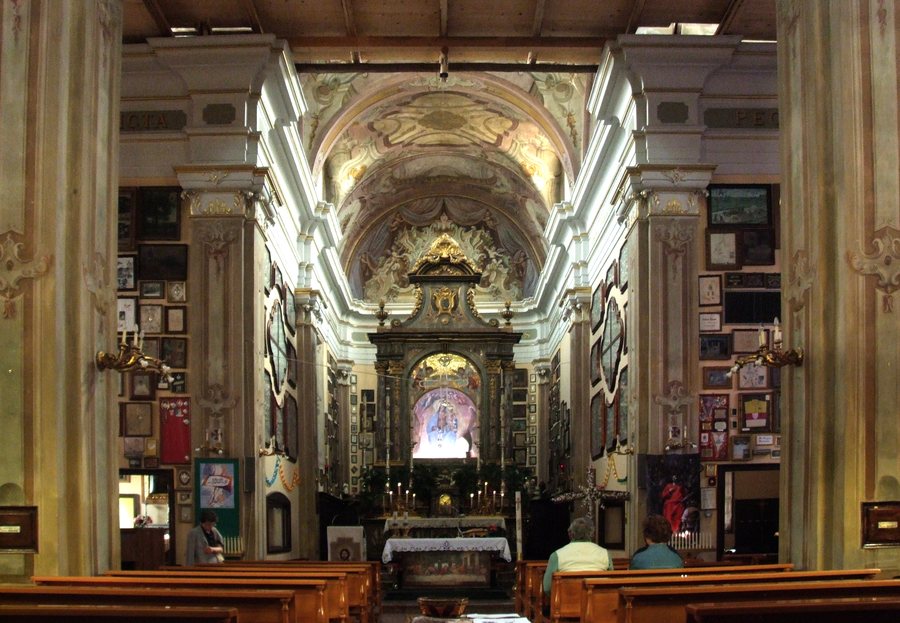
In the hamlet of Roveleto, the Santuario della Beata Vergine del Carmelo was built between 1750 and 1773 in the Baroque style with Neoclassical influences. The Oratorio di San Giuseppe was probably built in Zamberto between 1690 and 1700. The oratory has a hexagonal floor plan and is covered by a vault and a lantern. The Palazzo Fortificato di Zamberto also stands in Zamberto, a fortified Baroque villa with four corner towers of different sizes. Two architectural forms stand side by side in Zamberto: the oratory is defined by its hexagonal floor plan, vault and lantern, while the palazzo is characterised by its fortifications and four corner towers of different sizes.
Villas, notable figures and local history
Villa Visconti is also known as Palazzo di Tornora and has been considered completely abandoned for years; its loggia and courtyard are not accessible. The hamlet of Saliceto is regarded as the birthplace of Luigia Uttini, the mother of Giuseppe Verdi. For planning purposes, the access restriction is clear: the loggia and courtyard are not accessible.
Cadeo along the Via Francigena
The area around Cadeo lies along the route of the Via Francigena. Around 1120, Ghisulfo and his wife Gisla founded a hospice called “Casa di Dio”, dedicated to Saint Peter, on the section of the Via Emilia between Piacenza and Fidenza that was connected to the Via Francigena. It was run by an Augustinian prior. The religious context includes the dedication to Saint Peter and the leadership of an Augustinian prior. The connection between Piacenza and Fidenza via the Via Emilia gives the historical route connection a clear geographical framework.
Seasonal information and practical planning
The Fiera dell'Agricoltura takes place in April. The Piscina di Roveleto was scheduled to resume operations on 1 June. It is also important for people with disabilities or reduced mobility that there is no assistance service at Cadeo railway station. The Fiera therefore takes place in spring, while the Piscina date falls at the beginning of summer. For people with disabilities or reduced mobility, the information about Cadeo railway station belongs at the beginning of arrival planning.
More destinations
For further travel planning, you can also consider San Pietro In Cerro, Vigoleno, Rivergaro, Castell'arquato, Ottone, Caminata, Gropparello and San Nicolò.
For the higher-level travel overview: Piacenza.

