
Discover Castell'Arquato: Rocca, Museums and the Arda
Accommodation in Castell'arquato
Castell'Arquato can be explored through several clearly distinct themes. This creates a destination where historic architecture, natural history and a culinary accent can be considered distinctly alongside one another. The Rocca Viscontea was built on the initiative of the Visconti family, particularly Luchino Visconti, the then lord of Piacenza. Construction began in 1342 and was completed around 1347.
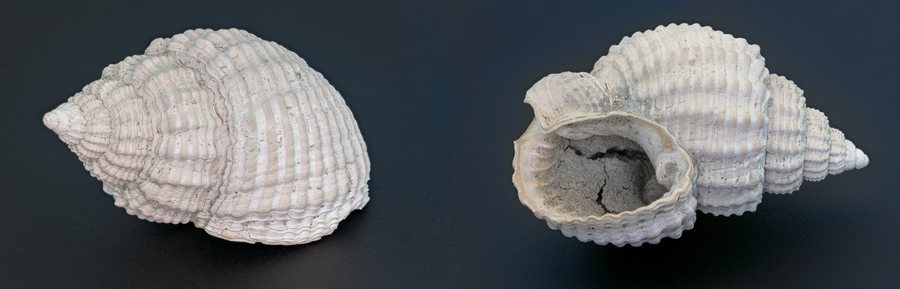 File:Hinia clathrata, Castell'Arquato, Italia, 2021-01-14, DD 082-161 FS.jpg
Photo: Diego Delso via Wikimedia Commons, CC BY-SA 4.0
File:Hinia clathrata, Castell'Arquato, Italia, 2021-01-14, DD 082-161 FS.jpg
Photo: Diego Delso via Wikimedia Commons, CC BY-SA 4.0
Landscape and paths along the Arda
The connection with the landscape is also precisely defined. Protected area IT4010008 concerns Castell'Arquato; 86 % of the protected area lies within the Stirone e del Piacenziano Regional Park. The percentage refers to the share of the protected area located in the park, not to the proportion of Castell'Arquato's area. The Percorso Arda provides orientation along the Arda River: it begins directly in Castell'Arquato, at the foot of the medieval town centre, and follows the Arda River. This allows the town centre, river and protected area to be encountered as distinct aspects of the destination.
Rocca Viscontea and medieval military life
The Rocca Viscontea currently houses museum exhibitions on the subject of medieval military life. The tour leads to the viewing terrace at the top of the Mastio tower. Anyone interested in the connection between fortification, history and museum presentation will find a clearly defined cultural focus here. The historical dating of the complex and its current exhibition belong to different periods: the building's history reaches back to the 14th century, while its museum use directs today's view towards medieval military life.
Literature, church art and collections
The Museo Luigi Illica displays texts written by Luigi Illica for the theatre, several handwritten manuscripts, opera librettos created by him together with their corresponding scores, letters, photographs, stage costumes, a piano and a portable typewriter. The Museo della Collegiata offers a different cultural perspective. It preserves silverwork and sacred furnishings, paintings, sculptures, furniture, codices and archival material from the collegiate church itself as well as from neighbouring churches. The cultural range thus extends from theatrical texts and stage objects to ecclesiastical art and preserved archival material.
Geology with current visitor information
In the field of natural history, the Museo Geologico “G. Cortesi” provides a distinct focus. Internationally, it is a reference point for the fossil fauna of the Piacenzian stratotype. Due to a technical issue, the museum is temporarily closed to the public. This status exists alongside its academic significance and should be taken into account when planning the timing of a visit.
Enoteca in the Palazzo del Podestà
The local character also includes the Enoteca Comunale on the ground floor of the Palazzo del Podestà. There you will find a remarkable tasting room. The enoteca complements the historical, literary and natural history themes with a culinary venue that adds another facet to Castell'Arquato.
Travel connections and further orientation
Fiorenzuola d’Arda railway station is served by a rail connection via Piacenza, Fidenza, Parma and Bologna. The Fontane del Duca are also located outside the town centre. Together with the Percorso Arda, the Rocca Viscontea and the museums, these offer various starting points for your personal planning in and around Castell'Arquato.
Other places:Ponte Dell'olio, Monticelli D'ongina, Russi, Piacenza, Larzano-castello, Roveleto, Quartazzola, Vigolzone
To the overarching travel overview: Piacenza.

