
Cortemaggiore: Renaissance Town with History and Regional Cuisine
Accommodation in Cortemaggiore
Cortemaggiore combines a preserved Renaissance urban structure with significant churches, oratories and regional traditions. This creates a destination whose character can be understood particularly through its squares, buildings and historic details. Market life, culinary culture and a flat cycling route also offer different perspectives on the town.
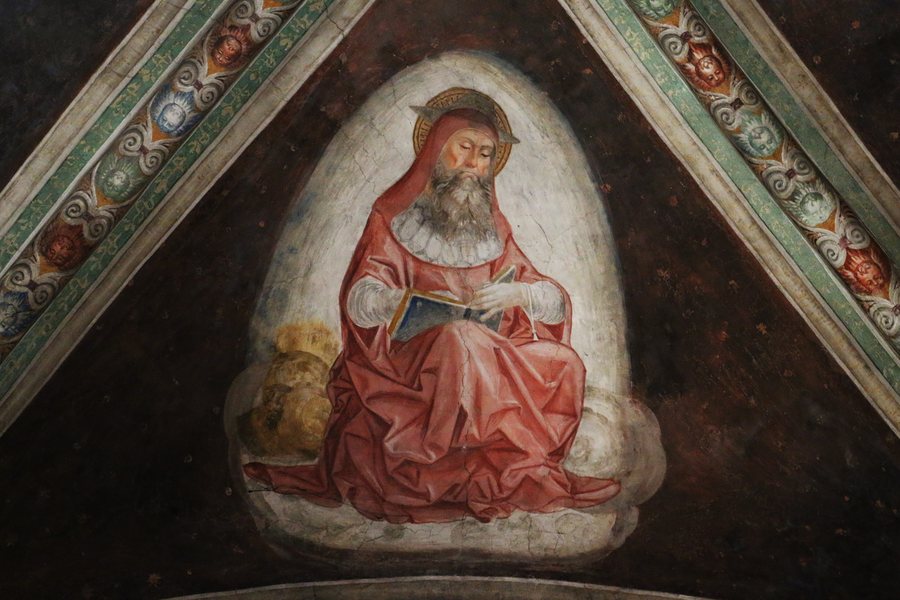 File:Cortemaggiore, Chiesa e Convento della Santissima Annunziata 028.JPG
Photo: Mattis via Wikimedia Commons, CC BY-SA 4.0
File:Cortemaggiore, Chiesa e Convento della Santissima Annunziata 028.JPG
Photo: Mattis via Wikimedia Commons, CC BY-SA 4.0
Renaissance Plan and Main Square
Cortemaggiore has preserved its original urban structure from the Renaissance. In the historic town plan, the rectangular blocks of houses are arranged regularly around the main square, forming a checkerboard pattern. The main square itself is lined with arcades on all sides. The town hall and the Basilica di Santa Maria delle Grazie e San Lorenzo are located there. This clear arrangement gives the townscape a recognizable center and makes the square an important reference point when exploring the town.
Churches, Oratories and Art
The Basilica di Santa Maria delle Grazie e Collegiata was declared a parish church in 1495 and consecrated in 1499. The chapel of San Lorenzo inside the basilica contains the mausoleum of the founders of Cortemaggiore. The basilica also preserves a 15th-century twelve-panel polyptych by Filippo Mazzola. Thus, within a sacred context, church-historical facts, a tomb and a work of Renaissance art come together.
The oratories also complement this cultural picture. The Oratorio di San Giovanni is a 17th-century church in Cortemaggiore. It contains a life-size reproduction of the Santa Casa di Loreto with bas-reliefs depicting biblical stories. The Oratorio di San Giuseppe is a building from the late 16th century with elaborate stucco decorations by Domenico Dossa and Bernardino Barca. At the Chiesa dell’Annunziata, the adjoining monastery preserves the original terracotta floor of its Renaissance cloister.
Historic Buildings and Practical Information
The Palazzo Pallavicino is the preserved part of the Palazzo Regio, a residence commissioned by Gian Ludovico Pallavicino. The Palazzo Pallavicino complex is now privately owned. At the Teatro Eleonora Duse, by contrast, visitors can also trace the town’s architectural development: it was created in 1827 by converting an oratory that had been attached to the convent of the Tertiaries. The theater’s ground-level entrance has two steps; a ramp is available for people with disabilities if needed.
For planning your journey, it is important to note that the municipality of Cortemaggiore does not have its own railway station. The Casa della Misericordia offers a historic connection to travel and journeys: it was the first hospital in Cortemaggiore and was commissioned by Rolando II Pallavicino in 1495. Historically, it also provided accommodation for pilgrims traveling via Cremona to the Via Francigena.
Market, Cuisine and Cycling Route
The Mostra Mercato dell’Antiquariato e Cose d’altri Tempi takes place in the streets and squares of central Cortemaggiore on the first Sunday of every month, except January. The Strada del Po e dei Sapori della Bassa Piacentina passes through Cortemaggiore and gives visitors the opportunity to discover the region’s authentic culinary traditions. For cyclists, “Pedalando in Val d’Arda – percorso n. 11” is a flat route along the Val d’Arda, which borders the province of Cremona.
Other Places in the Surrounding Area
If you would like to extend your travel planning beyond Cortemaggiore, here are some more destinations: Fiorenzuola Dʼarda, Piacenza, Ziano Piacentino, Nibbiano, Podenzano, Ottone, Carpaneto Piacentino and Agazzano.
To the main travel overview: Piacenza.

