
Rustigazzo: Veleia, Monte Moria and Val d’Arda
Accommodation in Rustigazzo
Rustigazzo combines the ancient world of Veleia with the paths and forests of Monte Moria.
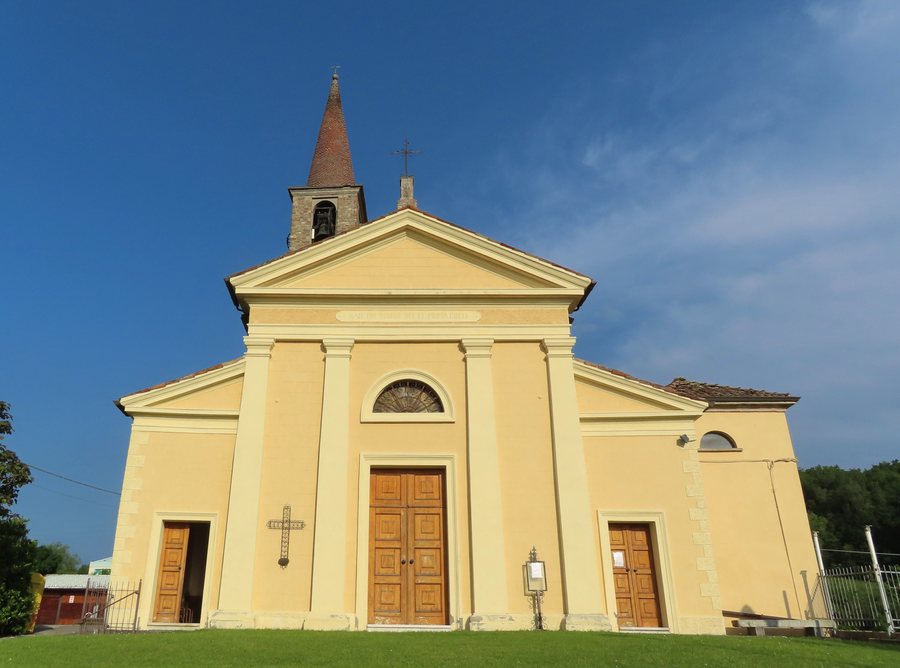 File:Chiesa di Santa Maria Assunta (Rustigazzo, Lugagnano Val d'Arda) - facciata 2023-05-27.jpg
Photo: Parma1983 via Wikimedia Commons, CC BY-SA 4.0
File:Chiesa di Santa Maria Assunta (Rustigazzo, Lugagnano Val d'Arda) - facciata 2023-05-27.jpg
Photo: Parma1983 via Wikimedia Commons, CC BY-SA 4.0
Veleia and the history of Rustigazzo
The Antiquarium di Veleia and the archaeological site are located in Località Rustigazzo. Veleia was founded as a municipium after the Roman conquest in the 2nd century BC, in the heartland of the Ligurian tribal community of the Veleates. Veleia is one of the most important archaeological centers in northern Italy. The Antiquarium displays finds documenting the key events in the history of Veleia.
The ancient city developed on a system of sloping terraces. Its forum was built on an artificial platform created through extensive earthworks. The basilica contained twelve large statues made of Luni marble, depicting members of the Julio-Claudian family.
Rustigazzo itself also has historical points of interest. Castello di Rustigazzo still stands today on the town’s main square. The ancient name of Rustigazzo was Rus Titi Cassi. The old church of Santa Maria Assunta was initially a suffragan church under the monastery of Val Tolla and later under the parish church of Macinesso. Rustigazzo was probably expanded after the abandonment of the nearby ancient city of Veleia.
Hiking and cycling around Rustigazzo
The Marcia delle Terre Veleiate starts and finishes beside the archaeological excavations of Veleia Romana. This non-competitive recreational event has been organized for everyone interested since 2013. It offers three route lengths of 6, 12 and 18 km.
In the Monte Moria Provincial Park, there are various trails that begin in the village of Rustigazzo. The official Veleia route offers a combination of culture and landscape: it initially follows the provincial road to Veleia and then to Località Rustigazzo before returning to the valley floor of the Chero. The route allows visitors to see the archaeological site of Veleia Romana, where the Tabula Alimentaria Traianea was discovered.
The area is also clearly defined for a cycling tour. The cycling route “Pedalando in Val d’Arda – percorso n. 3” follows the sequence Veleia Romana–Rustigazzo–Croce dei Segni–Veleia Romana. It leads to Parco Monte Moria, an extensive woodland area with meadows, beech forests, coniferous forests and orchards.
Woodland landscapes and regional cuisine
In Parco del Monte Moria, trees cover three quarters of the area. The landscape is characterized by sweet chestnut groves with centuries-old trees. Wild boars, badgers, roe deer, foxes and squirrels live in the undergrowth of Monte Moria. Buzzards, woodpeckers and sparrowhawks are also found there. In this way, the forests, wildlife and trails complement Veleia’s historical impressions with a distinctive natural dimension.
Regional cuisine includes chisolini, which in Alta Val d’Arda are eaten with coarse-grained salami, coppa and pancetta. Anolini in broth from Val d’Arda are filled with cheese instead of braised meat. These two dishes add a culinary connection to the area around Rustigazzo to your journey.
Further destinations for planning your trip
You can also explore Travo, Ponte Dell'olio, Bettola, Vigolzone, Castel San Giovanni, Larzano-castello, Rivergaro and San Nicolò for other destinations.
For the higher-level travel overview: Piacenza.

_-_facciata_2023-05-27.jpg)