
Discover Travo: the Middle Ages, archaeology and Pietra Perduca
Accommodation in Travo
Travo combines a medieval character with significant archaeological insights, ancient churches and a distinctive landscape surrounding the town. Those who want to experience culture not only through individual sights but also in their spatial context will find several different points of connection here.
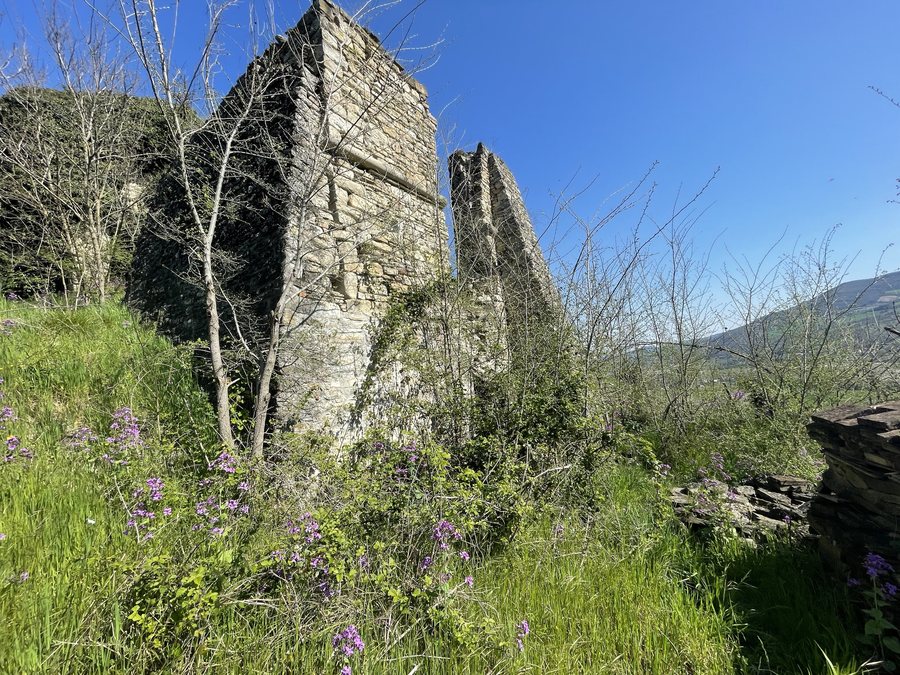 File:Rocca di Caverzago, Travo, Italia.jpg
Photo: Mattia94raggio via Wikimedia Commons, CC BY-SA 4.0
File:Rocca di Caverzago, Travo, Italia.jpg
Photo: Mattia94raggio via Wikimedia Commons, CC BY-SA 4.0
Historic centre and archaeological collections
The historic centre of Travo preserves medieval buildings and monuments on the left bank of the river. The Castello Anguissola retains medieval Trilit windows arranged in two opposing rows. The restored Castello Anguissola also houses the Museo Civico Archeologico. The archaeological museum opened in 1997 and is located in the Castello di Travo. Its collection comprises materials from research at 175 archaeological sites in the Val Trebbia and spans the period from the Palaeolithic to Roman times. The main entrance to the Museo Civico Archeologico is located at Piazza Trieste 16 in Travo (PC).
Churches with medieval traces
The Chiesa di Sant'Antonino was built around the middle of the 11th century. Its monoforas and the exterior design of the central nave wall preserve traces of the original Romanesque structure. Another special feature is the Chiesa di Santa Maria di Travo: it is located a few steps from the town near the village of Sant’Andrea and houses frescoes of great historical and artistic value.
Pietra Perduca and the surroundings of Travo
In the surroundings of Travo, Pietra Perduca rises in the valley of the Torrente Dorbida as an ophiolitic rock formation. It stands out clearly from the surrounding clay landscape. Its rock pools are home to a colony of three newt species: the great crested newt, smooth newt and Alpine newt. The Oratorio di Sant’Anna dominates the scene atop the impressive rock formation. The Oratorio di Sant’Anna and the fortress are first documented in 1143.
Archaeology to see and experience
The Neolithic Village of S. Andrea comprises well-preserved residential and functional structures, some of which remain visible for direct viewing. Reconstructions of Neolithic buildings at their original size have been on display in the Parco Archeologico di Travo since 2010. The visitor route through the park is supplemented by information boards on the history of the site, the residential and functional structures, and the Italian and local Neolithic periods.
The Parco Archeologico di Travo also organises themed activities. These recreate ancient techniques such as firing ceramic vessels, working flint, weaving and preparing food. Every year in July, an archaeological excavation campaign takes place near Travo, involving students and interested participants from across Europe.
Events and travel planning
In the first half of June, the Parco Archeologico del Villaggio Neolitico di Travo S. Andrea stages the historical reenactment “Preistorica” every year. Travo is also known for the Book Festival Giana Anguissola. This allows you to set different priorities when planning: historic architecture in the town, archaeological collections and reconstructions, sacred art or the landscape around Pietra Perduca. When choosing your hotel, you can incorporate these priorities into your personal daily itinerary.
Other destinations
For further travel planning, you can also discover Ponte Dell'olio, Rivergaro, Chiaravalle, Cortemaggiore, Castel San Giovanni, Ottone, Piozzano and Carpaneto Piacentino.
For the higher-level travel overview: Piacenza.

