
San Vitale: Film History, Landscapes and Historic Sites
Accommodation in San Vitale
Film history and the built environment along Via San Vitale
In the building now occupied by Osteria del Boccaccio, Vittorio De Sica filmed several scenes for the 1961 film “Boccaccio 70” with Sophia Loren. Osteria del Boccaccio is located at Via S. Vitale 14 in Sant’Agata sul Santerno (RA) and is housed in a restored old stable. Thus, film history and a traditional built environment come together in one specific place.
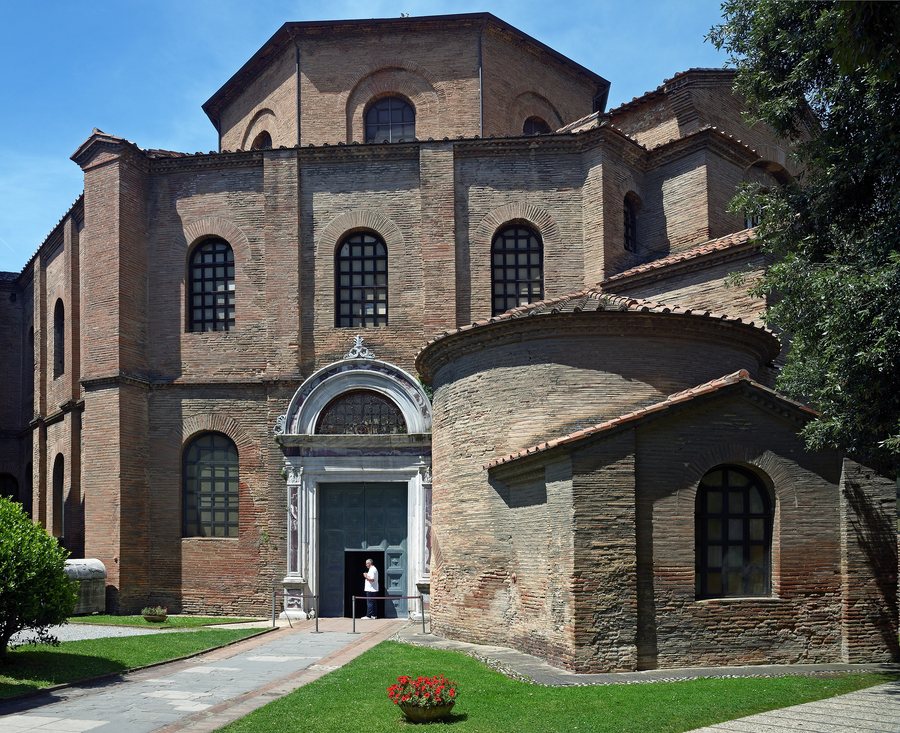 File:Basilica of San Vitale. Ravenna, Italy.jpg
Photo: Ввласенко via Wikimedia Commons, CC BY-SA 3.0
File:Basilica of San Vitale. Ravenna, Italy.jpg
Photo: Ввласенко via Wikimedia Commons, CC BY-SA 3.0
Parco del Boccaccio
Parco del Boccaccio is a large green area equipped for events such as weddings, birthdays, corporate celebrations, banquets and private parties.
Agriculture and products of Podere Casetta
At Terrestra, at the site on Via San Vitale 13 in Sant’Agata sul Santerno, you can actively participate in various activities carried out on a farm. Terrestra manages Podere Casetta there, an ecologically certified estate covering just under seven hectares. Podere Casetta mainly produces fruit, including various varieties of plums, pears, persimmons, medlars and apricots, as well as Merlot and Trebbiano grapes. For your travel planning, this part of San Vitale offers a clear connection to agriculture and regional products, without reducing the rural surroundings to a single theme.
Church and architectural history in Sant’Agata sul Santerno
Another specific site is Villa Patronale (San Vitale), located at Via San Vitale 53. Sant’Agata sul Santerno is also home to the Chiesa Arcipretale di Sant’Agata. It was rebuilt in 1881 in the Neoclassical style, based on a design by the architect Pritelli, on the foundations of a Renaissance building dating from 1494. The church preserves works by D. Tasselli from Lugo and Orfeo Orfei from Massa Lombarda. Those interested in architecture and regional art will therefore find both a clearly dated architectural history and specific works by two artists here.
Torre Civica and memories of the Middle Ages
The Torre Civica of Sant’Agata sul Santerno was built on the ancient entrance gate to the medieval castle. The tower’s history also includes its bell: since 1487, it has been known as “la campana della ragione.” This designation refers to a historical function and makes the tower a place where Sant’Agata sul Santerno’s medieval past can be traced through a single structure.
Orientation between roads, cycle path and river
Sant’Agata sul Santerno lies at the intersection of the provincial roads SP253R San Vitale and SP13 Bastia. There is a cycle path along SP 253R San Vitale. Restoration work on this cycle path was scheduled for 2024 following the flooding in May 2023.
The Santerno River is also part of the area’s historical orientation. Since pre-Roman times, it was already an important transport route between Spina and Etruria. Together with the roads, historic buildings, estate and culinary connections, this creates a multifaceted picture of San Vitale and Sant’Agata sul Santerno that appeals as much to those interested in culture as to those interested in landscapes, agriculture and regional history.
For the main travel overview: Sant'agata Sul Santerno.

