
Cecciola: Stone Village, Chestnut Culture and Apennine Views
Accommodation in Cecciola
Cecciola on Monte Lungo
Cecciola lies on the western slopes of Monte Lungo, on the right bank of the Torrente Liocca and opposite Miscoso. If you approach the village from Ramiseto, the SP 15 towards P.sso del Lagastrello leads to a signposted turn-off for Cecciola. The Val d'Enza, known as the “Valley of the Knights”, follows the SP 15 to the stone village of Cecciola.
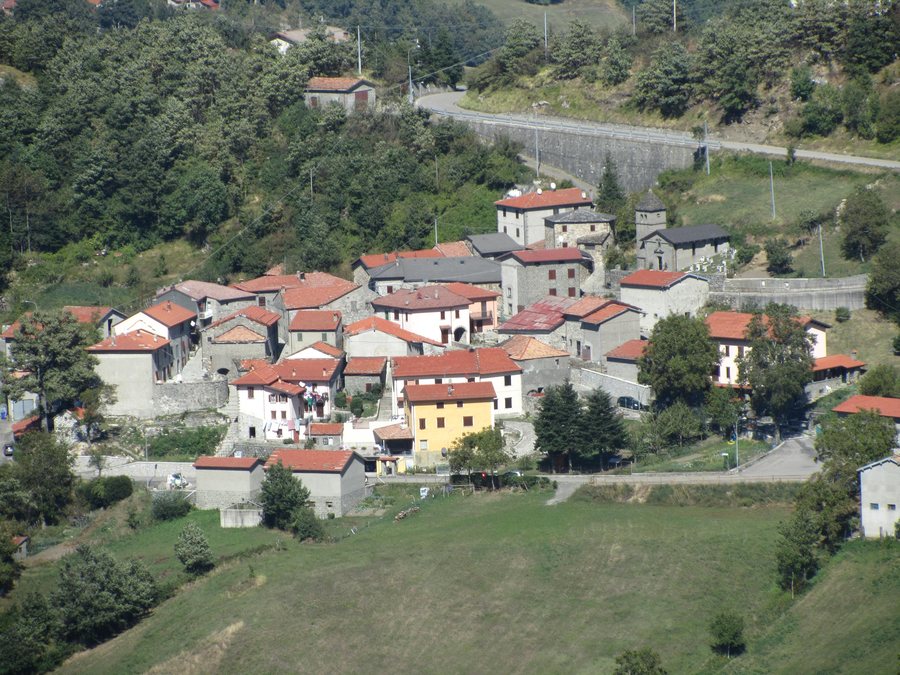
Architecture in the Historic Centre
The historic centre of Cecciola includes vaulted passageways, courtyards, loggias and paved lanes with portals, windows and wayside shrines. Historic buildings in Cecciola preserve features of Reggio Emilia’s Apennine architecture: square floor plans, roofs made of stone slabs and windows framed with finely grooved sandstone. These elements shape the villagescape with clearly recognisable regional forms. The oldest portal identified so far in Cecciola is dated 1592.
Church and Mill
The small Church of Maria Assunta has an intricately crafted stone portal dating from 1885 on its façade. The Mulino Briselli di Cecciola dates from the 19th century and began operating in 1853. The 1972 flood almost completely destroyed the mill; however, its equipment and mechanisms have survived.
Chestnuts, Metati and Veglie
The Mulino Briselli di Cecciola can be reached via a path leading downhill from the village of Cecciola to the Torrente Liocca. The Metato di Cecciola is a restored building for drying chestnuts that has been returned to its original function and is currently in operation. Historically, it served as a meeting place for evening “Veglie”, when young and old gathered to tell stories by the warm embers.
Two stone, wood-fired metati in Cecciola are used every year for the traditional drying of chestnuts, producing dried chestnuts. The dried chestnuts from Cecciola are used to make chestnut flour and products such as biscuits, pasta, confectionery, beer and liqueur. The process therefore extends from the dried raw product to food and beverages.
Views and Rural Heritage
Next to the church of Cecciola there is a viewpoint from which the ridge of Monte Casarola, Alpe di Succiso and Monte Acuto can be seen; their profiles form the boundary with Lunigiana. The Centro per il turismo rurale di Cecciola also houses a small museum with old farm tools and household implements recovered from the Cecciola area. The viewpoint and museum bring together the landscape and the history of rural everyday life in two different locations in the village.
Accommodation in Cecciola
The accommodation at the Centro per il Turismo Rurale di Cecciola can be booked individually or as an entire complex for up to 60 people. This provides for both an individual accommodation option and booking the entire complex as an available option for a stay in Cecciola.
Other Destinations
Castelnovo Di Sotto, Villa Minozzo, Casale, Febbio, Ligonchio, Casalgrande, Fogliano, Barco
To the main travel overview: Reggio Emilia.

