
Ligonchio: Forests, Decauville Path and Water Engineering History
Accommodation in Ligonchio
Forests and Landscapes
The area around Ligonchio is predominantly forested. At lower elevations, there are oak, hornbeam and chestnut forests; the mountain forest is characterised by extensive beech forests, locally mixed with sycamore maple and silver fir. This succession of tree species makes the transition between lower elevations and mountain forest a defining landscape feature. At Costa delle Veline lies a beech forest that is considered one of the particularly valuable and significant forests in the national park. Bosco delle Veline is home to several centuries-old trees and glacial erratic boulders. Those interested in nature can therefore include various forest types and geological traces in their day planning.
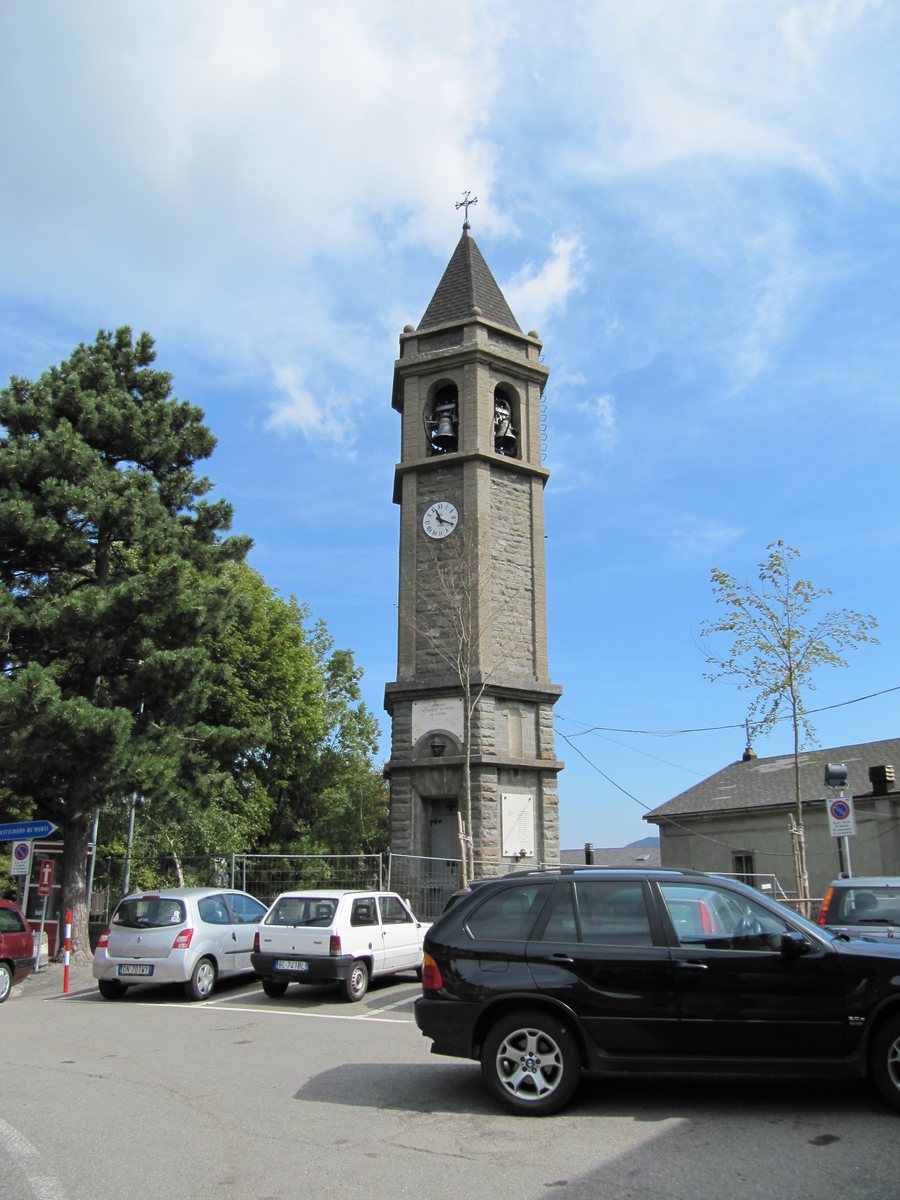 File:Church tower of Sant'Andrea Apostolo, Ligonchio, Ventasso, Italy.jpg
Photo: Bucaramango via Wikimedia Commons, Public domain
File:Church tower of Sant'Andrea Apostolo, Ligonchio, Ventasso, Italy.jpg
Photo: Bucaramango via Wikimedia Commons, Public domain
The Decauville Path: Railway Line, Forest and Water
The connection between landscape and technology is illustrated by the Decauville Path in Ligonchio. It follows the route of the former railway built from 1915 onwards for the construction of the hydropower plants between Tarlanda and Presa Alta. The path has only gentle inclines and leads through centuries-old beech forests. In sections, historic rails as well as streams and springs are visible. As a result, several tangible traces lie side by side along this path: the former railway, the historic construction of the hydropower plants, the old beech trees and water in the form of streams and springs. If you would like to combine natural and technological history during your stay, the Decauville Path can be understood as a shared theme.
Hydropower and Atelier
The history of water engineering in Ligonchio is not limited to the former railway line either. The Ligonchio hydropower plant is still in operation; its Liberty-style building extends across the reservoir. A historic hydropower station in Ligonchio houses the Atelier Di Onda in Onda. Thus, the town's water-related heritage encompasses both a power plant that remains in operation and a historic station associated with an atelier. For visitors interested in culture, this creates a thematic area where technological use, historic buildings and an atelier come together.
Fortress and Parish Church
Ligonchio's history also includes a fortress and a parish church with origins reaching far back in time. A fortress in Ligonchio is documented as belonging to Frassinoro Abbey since 1164. The parish church in Ligonchio, dedicated to Saint Andrew, has been documented since 1302. The two dates place the buildings in different historical periods: the fortress dates back to the 12th century, while the parish church is documented from the 14th century onwards. Together with the water engineering heritage and the atelier, this local history broadens the range between medieval tradition, religious heritage and an industrial past.
Mountains in the Surrounding Area
In the vicinity of Ligonchio are the summit of Monte Bagioletto, the mountain Monte Cavalbianco and the summit of Monte Asinara. These three mountains add further mountain references to Ligonchio's landscape setting, thereby expanding the thematic selection between forest landscape and local history.
Further Places for Your Travel Planning
For further travel planning, you can also discover Castelnovo Di Sotto, Correggio, Novellara, Bibbiano, Praticello, Cadelbosco Di Sopra, San Donnino Di Liguria and Bagno.
To the higher-level travel overview: Reggio Emilia.

