
Novellara: Gonzaga Fortress, Frescoes and Balsamic Vinegar
Accommodation in Novellara
Novellara combines architectural history, art and religious sites with local culture. The piano nobile of the Gonzaga Fortress houses several rooms of the Museo Gonzaga; the attic of the east wing contains the Acetaia Comunale. Other highlights include the Teatro Comunale Franco Tagliavini, the Santuario della Beata Vergine della Fossetta, the Chiesa Collegiata di Santo Stefano and the Ex Macello Comunale. The historical reference points range from the fresco fragments dated to 1280 to the 1930 construction date of the Ex Macello and the pilgrimage tradition that has existed since its foundation.
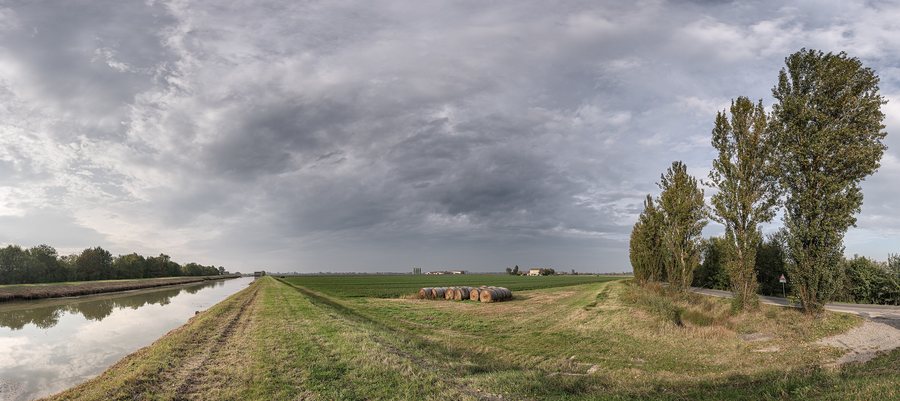 File:Allacciante Cartoccio - Novellara, Reggio Emilia, Italy - October 19, 2019 01.jpg
Photo: Giorgio Galeotti via Wikimedia Commons, CC BY 4.0
File:Allacciante Cartoccio - Novellara, Reggio Emilia, Italy - October 19, 2019 01.jpg
Photo: Giorgio Galeotti via Wikimedia Commons, CC BY 4.0
Art and history in the Gonzaga Fortress
The Sala del Fico in the Gonzaga Fortress has a particularly valuable ceiling with frescoes from the mid-16th century. The frescoes are attributed to Domenico Fredino and Giovan Battista Torbido. They depict allegorical, naturalistic and unusual motifs.
Museo Gonzaga and fresco fragments
The Museo Gonzaga is located in several rooms of the 16th-century apartment of the Counts Gonzaga on the piano nobile of the Gonzaga Fortress. The apartment was designed, built and decorated under the direction of Lelio Orsi. Romanesque-Byzantine fresco fragments from the Church of San Giovanni della Fossa are temporarily housed there. The fragments are dated to 1280 and depict apostles beneath Christ; only the image of one foot of Christ has survived.
Local culture and Aceto Balsamico
The Acetaia Comunale is located in the attic of the east wing of the Rocca dei Gonzaga. This wing now houses the municipal administration in the heart of Novellara's old town. Aceto Balsamico matures there in two valuable sets of barrels branded with Novellara's coat of arms.
Teatro Comunale Franco Tagliavini
The Teatro Comunale Franco Tagliavini was built from 1862 to 1868 according to a design by Antonio Tegani, who came from Reggio Emilia. It replaced two earlier theatres. Anyone planning to attend a performance at the Teatro Comunale Franco Tagliavini should consult the programme; admission is granted upon purchasing a ticket.
Sanctuary and ecclesiastical architectural history
The Santuario della Beata Vergine della Fossetta was built in 1654 according to a design by the architect G.B. Negri. The land was donated by Donna Barbara Gonzaga; the Chiesa del Gesù in Bologna served as its model. The sanctuary houses an image of the Virgin Mary believed to be miraculous. Because of this image, the church has been a destination for numerous pilgrimages since its foundation.
Further architectural history
Construction work on the Chiesa Collegiata di Santo Stefano was completed approximately half a century later.
Geographical setting
The Ex Macello Comunale of Novellara was built in 1930 in what was then a suburban area on a municipal road. The area between the municipalities of Novellara and Reggiolo covers 1,981 hectares.
Further travel ideas
For further travel ideas, you can also take a look at Ramiseto, Vecchia, Salvaterra, Cerreto Laghi, San Donnino Di Liguria, Viano, Casalgrande and Casale.
For the higher-level travel overview: Reggio Emilia.

