
Porcia between Springscape and History
Accommodation in Porcia
Porcia between Springscape and History
Porcia displays a distinctive landscape in its southern area. The southern part of Porcia is shaped by spring-water outflows and features a great diversity of flora and fauna. Spring pools and fontanili feed canals, streams, and ponds. This connection between water and biological diversity gives Porcia a distinct landscape character. For you, this provides a concrete point of reference if, alongside historic buildings, you also want to understand the nature of an Italian town.
The Rio Bujon is the most important watercourse for the inhabited area of Porcia. Historically, it served as a natural defensive ditch. This shows, through a single watercourse, how closely the town’s history is connected to its waterways. Anyone who wants to understand Porcia not only through its buildings but also through its landscape will find a precise historical connection here.
Historic Places and Cultural Connections
Villa Correr Dolfin was built in the second half of the 17th century. Cultural activities take place in the park of Villa Correr Dolfin during the summer. For a summer trip, the villa is therefore interesting not only for its architectural history but also for the cultural events held in its park.
The Castello di Porcia developed into an eclectic complex and served as the permanent residence of the di Porcia family for almost eight centuries. The first records of the “castro Porczile” date from 1178; the defensive core consisted of a single elevated tower surrounded by natural ditches and waterways. These historical details give the Castello and its surroundings a far-reaching historical dimension.
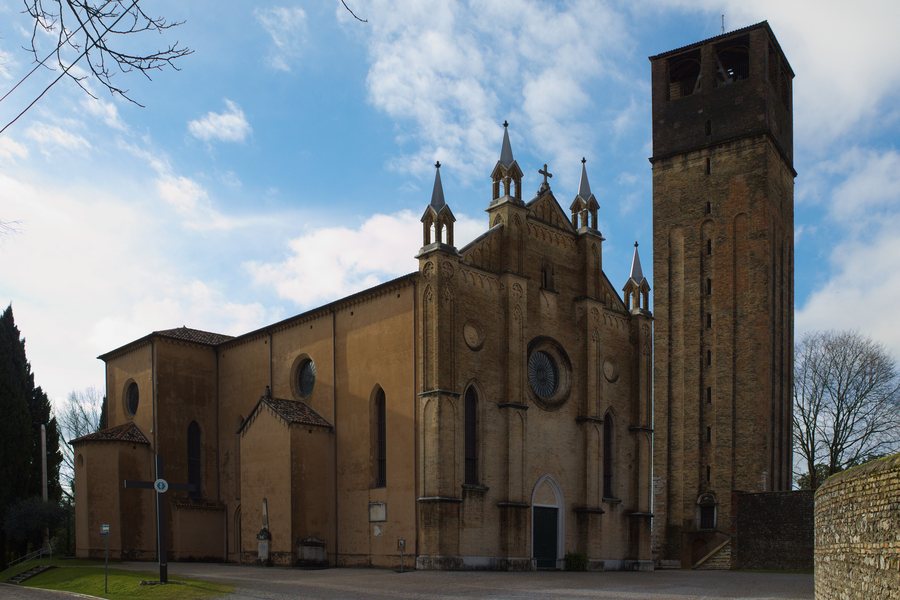
The Duomo di San Giorgio is designed in the Venetian Gothic style. The painting Pala di S. Giorgio in the Duomo di San Giorgio was created by Jacopo Negretti, who was known as Palma il Giovane. For visitors interested in art and architecture, the style and a specific work from the same religious building can be found side by side here.
The present-day building of the Chiesa di Santa Maria dates from 1554. Palazzo Badin, a palace, is located in the immediate surroundings of Porcia. Both points of reference broaden the view of the historic architecture around Porcia.
The Napoleonic reenactment in Porcia was established in 2008 and organized by ProPorcia.
Getting to and Staying in Porcia
Porcia can be reached via the SS13 (Pontebbana) on the Treviso–Udine route and via the A28 on the Portogruaro–Conegliano route, taking the Porcia exit.
When choosing a hotel or other accommodation in Porcia, you can therefore first determine which aspect should shape your trip: the historic places or the landscape of the southern area. The choice of travel character thus becomes a practical guideline for your planning, while Porcia offers both cultural and landscape points of reference.
Further Destinations
For further travel planning, you can also explore Frisanco, Barcis, San Vito Al Tagliamento, Caneva, Montereale Valcellina, Fiume Veneto, Aviano and Sedrano.
For the overview of the wider region: Pordenone.

.jpg)