
Prata di Pordenone: Villas, Churches and the Meduna Cycle Route
Accommodation in Prata Di Pordenone
Villas, Park and Family History of Prata di Pordenone
Prata di Pordenone reveals its character particularly where architecture, family history and designed landscapes come together. Villa Brunetta was built between 1780 and 1800 by the Brunetta family, who came from Prata. The park of Villa Brunetta is characterised by straight paths arranged in an orthogonal layout. Avenues bordered by hedges, lawns and free-standing mature trees give the grounds their clear structure. To the south lies an artificial pond inhabited by numerous waterfowl.
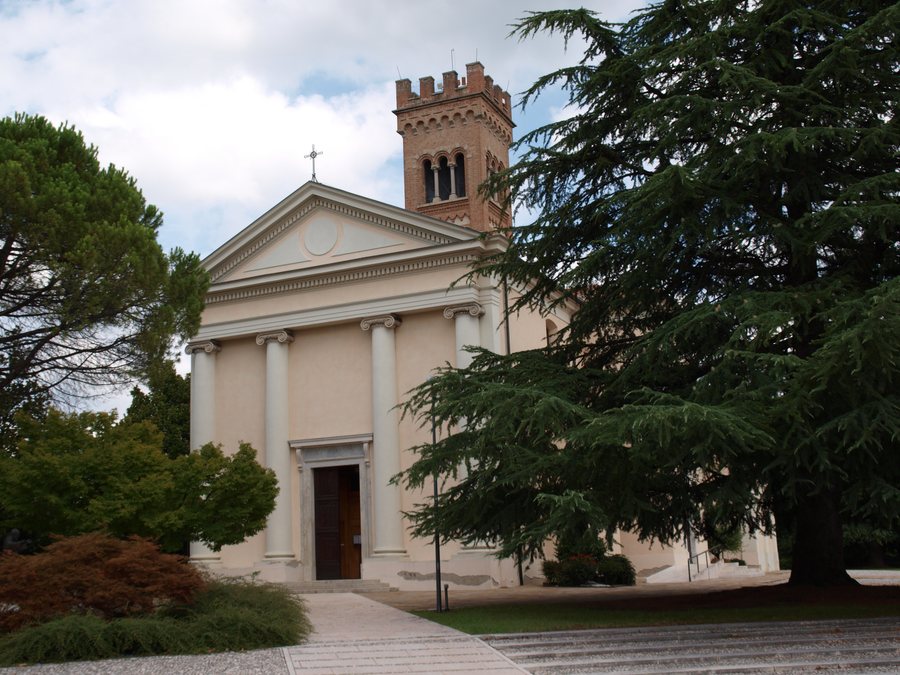 File:Chiesa di Santa Lucia, Prata di Pordenone - Facciata e campanile.jpg
Photo: Stefano Travasci via Wikimedia Commons, CC BY 4.0
File:Chiesa di Santa Lucia, Prata di Pordenone - Facciata e campanile.jpg
Photo: Stefano Travasci via Wikimedia Commons, CC BY 4.0
Another villa adds to this historical picture. Villa Memmo Brunetta is located in the centre of Prata di Sotto next to the church. At the end of the 16th century, the Memmo family acquired it by inheritance from the Gonzardi family. Together, the two villas offer different perspectives on the town’s architectural and family history.
Museum, Church and Working History in the Centre of Prata
In the centre of Prata, the Museo della Miniera di Prata commemorates the work of many local residents who emigrated, particularly to Belgium. The Chiesa dei Santi Simone e Giuda Taddeo is mentioned in the will of Guecello II. di Prata dated 7 August 1262.
San Giovanni dei Cavalieri: Hospice, Church and Gothic Sculpture in Friuli
San Giovanni dei Cavalieri was part of a hospice run by the Knights Hospitaller of Jerusalem. The church was built in the first half of the 13th century, probably at the instigation of Guecello II. di Prata. The evidence of Gothic sculpture in Friuli is particularly valuable. It includes 14th-century tomb slabs depicting the priests Giacomo da Prata (1330) and Bonaccorso (1337), as well as the funerary arcade of Pileo da Prata (1325). Anyone interested in medieval sacred art will find several concrete examples of Gothic sculpture here, in a historic setting.
Sagra dea Quaia in July and the Cycle Route along the Meduna
The Sagra dea Quaia is a tradition that has been passed down in Prata for more than 50 years. It begins on the second Thursday in July and lasts 11 days. Its timing and duration give this festival a clear place in travel planning if you would like to organise your stay around regional culture and community events.
Prata di Pordenone also offers a specific point of interest for cyclists. The “Livenza and Meduna Rivers Ring (R057)” cycle route leads to Prata di Pordenone. There, cyclists can ride along the Meduna River and view it up close.
Prata di Pordenone: Culture, Festival Tradition, Churches and Cycle Route
The combination of villas, churches, a museum, festival tradition and a cycle route along the Meduna appeals to a variety of interests. When choosing your hotel, you can therefore consider whether cultural history, Gothic art, the Sagra dea Quaia or cycling should be the focus of your trip. As an additional destination, you can also discover Ghirano.
For the main travel overview: Pordenone.
More Destinations
More places within the same destination:

