
Pravisdomini: Villas, Churches and the Palù
Accommodation in Pravisdomini
Pravisdomini is a destination for travellers who want to discover Italian culture, history and landscapes in their many different forms. Historic villas and churches stand alongside archaeological finds from pre-Roman, Roman and medieval times; at the same time, the Palù protected natural area stretches across the landscape. If you would like to divide your days between architectural heritage, contemporary history and natural surroundings, the town offers several distinct focal points for doing so.
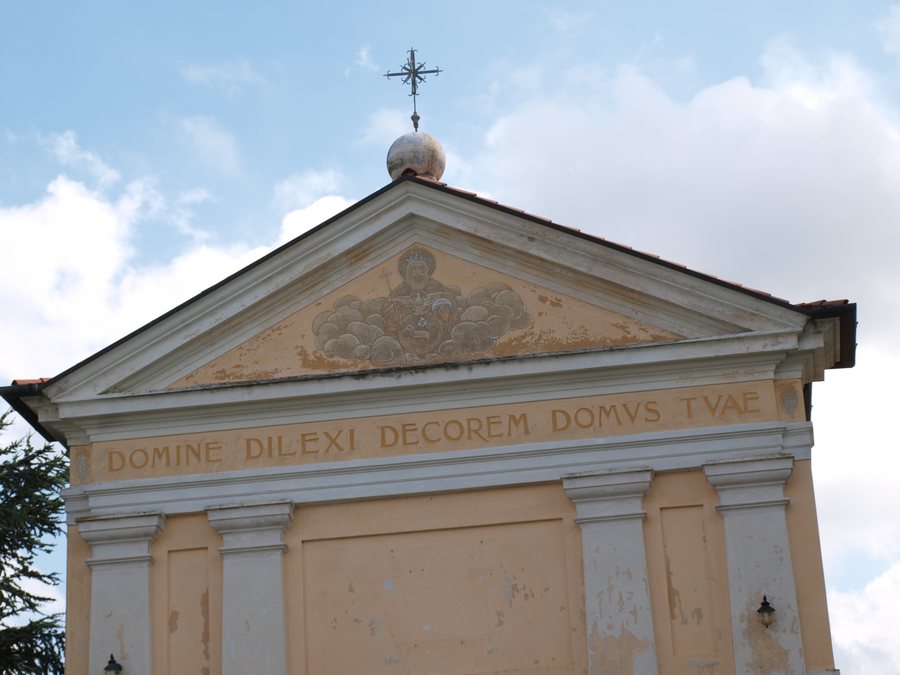 File:Chiesa di San Martino Vescovo, Barco, Pravisdomini - Dettaglio della facciata.jpg
Photo: Stefano Travasci via Wikimedia Commons, CC BY 4.0
File:Chiesa di San Martino Vescovo, Barco, Pravisdomini - Dettaglio della facciata.jpg
Photo: Stefano Travasci via Wikimedia Commons, CC BY 4.0
Historic residences on a circular tour
The circular route to the historic residences includes Villa Girardi in Pravisdomini. It partly follows the FVG 9 cycle route, the Ciclovia della Bassa Pianura Pordenonese. In the area around Pravisdomini, this circular tour starts and ends at Cordovado-Sesto railway station. Villa Girardi probably dates from the late 18th century. For planning your trip, this creates a clear cultural and cycling focus, without requiring the individual stops to be combined into a uniform townscape.
Panigai, Barco and sacred architecture
Panigai is considered a medieval village with surviving buildings and cultural assets from this period. The Church of San Giuliano in Panigai dates from the 16th century and has been remodelled several times over the centuries. Villa Panigai-Ovio dates from the 18th century, retains its original furnishings to this day and is a Venetian villa on the banks of the Sile River. Villa Morocutti is also an 18th-century villa; it consists of a manor house and an agricultural outbuilding. The Church of Sant’Antonio Abate contains an altarpiece by Pomponio Amalteo created in 1571. It depicts the risen Christ with Saint Anthony the Great and John the Baptist.
Barco, too, bears traces of several historical periods. The existence of its church is mentioned in a ruling issued by the Bishop of Concordia on 30 January 1424. The bell tower of Barco was built in 1800 and had already begun to lean during construction. The cause is believed to be the marshy surroundings that persisted for many centuries. The parish church of Barco was restored again after the 1976 earthquake.
The Palù and the Sile River
Alongside the Sile River, which runs as far as Panigai, the Palù protected natural area stretches across Pravisdomini. The Palù is one of the region’s few wetlands. Together with Villa Panigai-Ovio on the banks of the Sile, this landscape shows how closely water, historic settlement areas and regional architectural heritage can be connected. This gives you the opportunity to alternate between exploring cultural history and taking in the landscape.
Archaeological traces spanning several periods
The archaeological history of Pravisdomini goes back a long way. Worked flints on the banks of the Sile River in Panigai are considered evidence of the first human settlements from the Neolithic period, dated to 1250 BC. The town hall of Pravisdomini houses pottery fragments from the Bronze Age. In addition, Pravisdomini has archaeological finds from pre-Roman, Roman and medieval times. Anyone interested in the development of human settlements and traces of past cultures will therefore find several historical points of reference here.
More places to include in your plans
Rauscedo, Cavasso Nuovo, Azzano Decimo, Carbona, Spilimbergo, Pordenone, Sedrano and Cordovado
To the higher-level travel overview: Pordenone.

