
Aquileia: Archaeological Heritage between the Basilica and Roman River Port
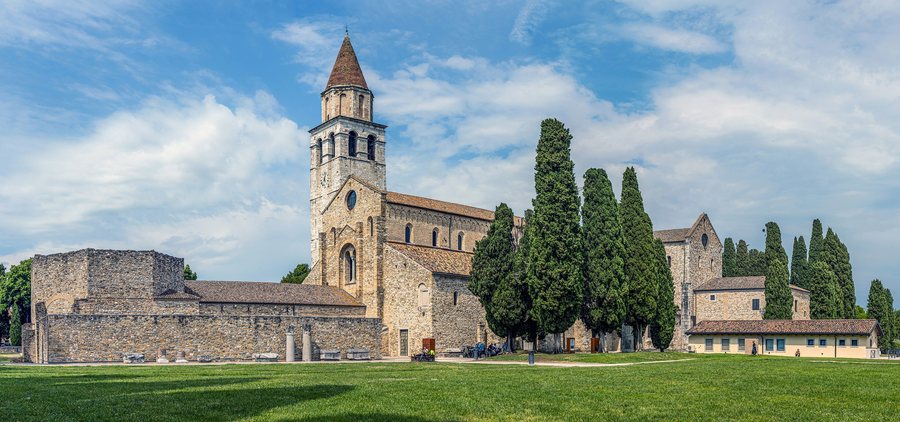 File:Aquileia - Basilica di Santa Maria Assunta in Cielo e Santi Ermagora e Fortunato - 2025-09-06 22-58-45 001.jpg
Photo: Terragio67 via Source, CC BY-SA 4.0
File:Aquileia - Basilica di Santa Maria Assunta in Cielo e Santi Ermagora e Fortunato - 2025-09-06 22-58-45 001.jpg
Photo: Terragio67 via Source, CC BY-SA 4.0
Aquileia is a destination for anyone who wants to experience Italy’s history not only in museums, but also through extensive archaeological remains, mosaics and sacred buildings. If you are looking for a hotel in Aquileia, you can tailor your stay around Roman urban history, early Christian art and the special significance of the basilica.
An Open-Air Archaeological Area
The archaeological area of Aquileia covers 155 hectares. Most of the town lies beneath fields, still unexcavated, creating a unique archaeological reserve. This combination of visible monuments and areas that have not yet been excavated defines Aquileia’s character. One of the central stops is the Roman Forum: it measures 141 metres in length and 55 metres in width and was the central square of the city’s political, administrative and social life.
The Roman river port is also one of the area’s important remains and is considered one of the best-preserved port facilities in the Roman world. Visitors can see preserved waterfront areas, loading and unloading quays, sloping surfaces and ramps that connected the port with the city streets. The Decumanus of Aratria Galla connected the river port with the forum and theatre area in an east-west direction.
Basilica, Mosaics and Early Christian History
The Patriarchal Basilica of Aquileia houses an extraordinary mosaic floor. At the same time, it played an important role in the Christianisation of a large part of Central Europe. The basilica includes a ninth-century fresco crypt with twelfth-century fresco scenes depicting the legend of the Evangelist Mark. At the northern end of the Fondo CAL archaeological area, the Good Shepherd mosaic adorns the apse hall.
Another focus is on the preserved residential and sacred areas. The Domus di Tito Macro covers 1,700 square metres and is considered unique in Europe. The tour of Domus e Palazzo Episcopale reveals mosaic floors and building structures from the 1st and 2nd centuries as well as the 4th and 5th centuries, at depths of up to 4 metres. The Palaeochristian Museum of Aquileia combines a museum presentation with an archaeological area on the site of one of Aquileia’s early Christian basilicas.
Details that Enrich the Tour
The lapidarium galleries of the National Archaeological Museum of Aquileia contain hundreds of inscriptions and funerary monuments. At Fondo Pasqualis, the visible area comprises three paved spaces interpreted as marketplaces. Fondo CAL also includes a residential building open to visitors, featuring geometric black-and-white mosaics.
The mosaic in the south hall is divided into three separate fields. The side fields display geometric patterns, while the central field contains octagons with animal figures, including a lamb. This mosaic has been accessible since 2011 in a museum building specially constructed for it. In addition, the Sepolcreto of Aquileia consists of five funerary enclosures.
Planning and Finding Your Way around Aquileia
To prepare for individual visits, the digital guide “Aquileia patrimonio dell'umanità” offers a map with 100 sights and thematic tours through Aquileia. From 1 January 2026, the official combined ticket for Aquileia will include the basilica with its crypts, the baptistery and the south hall, the Domus/episcopal palace and the Domus di Tito Macro; the regular price is 12.00 euros. Casa Bertoli is opened to the public on special occasions and during major events, sometimes also with guided tours.
Check prices, availability and amenities for your travel dates directly on Booking.com.
View Accommodation and OffersAdvertisement · Affiliate link to Booking.comMore Destinations to Consider
If you would like to extend your trip beyond Aquileia, you can also include Belvedere, Valpicetto, Ronchis, Aiello del Friuli, San Giovanni Al Natisone, Torviscosa, Lateis and Chiopris-Viscone in your further research.
Back to the main travel overview: Udine.

