
Lavariano between Piazza, Townscape and History
Accommodation in Lavariano
Historic Lavariano in the Friulian Plain
Lavariano lies in the Friulian plain about 15 kilometres south of Udine. Its location gives the town a clear regional context: its distinctive features are reflected in squares, architectural forms, religious traces and evidence of earlier uses. If you would like to focus your trip on regional architectural forms and local history, Lavariano offers a concentrated insight into the historic and everyday side of the Friulian plain.
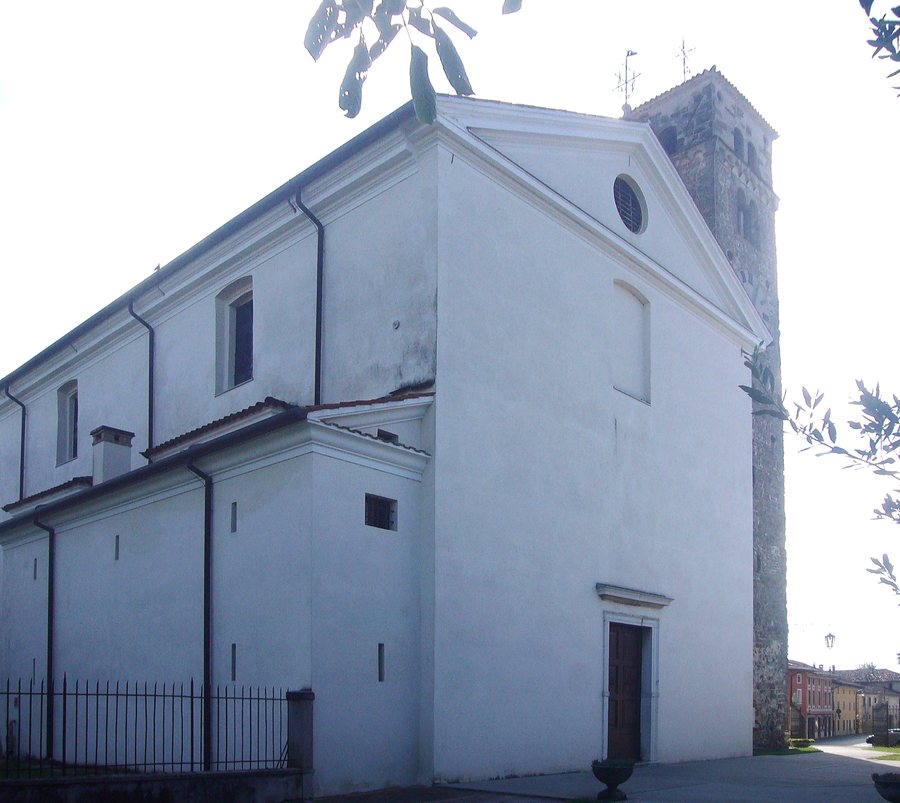 File:Chiesa di San Paolo Apostolo (Lavariano, Mortegliano) 02.jpg
Photo: Marchetto da Trieste via Wikimedia Commons, CC BY-SA 4.0
File:Chiesa di San Paolo Apostolo (Lavariano, Mortegliano) 02.jpg
Photo: Marchetto da Trieste via Wikimedia Commons, CC BY-SA 4.0
Piazza San Paolino and Sacred References
The Campanile della Chiesa di San Paolo Apostolo stands on Piazza San Paolino in Lavariano. The parish church Chiesa di San Paolo Apostolo in Lavariano is dedicated to Saint Paul of Tarsus. At the medieval Centa di Lavariano, the former defensive-wall tower was converted into a bell tower. Thus, Lavariano brings together ecclesiastical references and medieval architectural history.
Architecture and Artistic Traces
On Piazza San Paolino there is a fountain that was probably inspired by works by Gianlorenzo Bernini, particularly the fountain of Monteranum. Lavariano’s historic townscape includes visible natural-stone walls, courtyard entrances with segmental arches, and old religious wall frescoes. Lavariano preserves traditional architecture characteristic of the lowland villages of Friuli. If you appreciate regional architectural forms, these elements draw attention to the connection between the public square and the organically developed townscape.
The Historic Pista di volo
The historic Pista di volo di Lavariano lies north of Lavariano’s town centre; part of the site is located south of the hamlet of Risano. The Pista di volo was built by the Organisation Todt from concrete rectangles measuring 5 × 4 metres. Its main runway was two kilometres long and 100 metres wide. This creates a vivid connection between the surrounding landscape and the town’s history of technology.
Roggia di Palma and the History of Crafts
Along the canal leading to Lavariano, now called Roggia di Palma and diverted from the Torrente Torre farther to the north, two mills and an iron hammer were established later. One of the mills is still known today as „Mulino Cogoi“. This historical context broadens the perspective from sacred and architectural themes to earlier forms of craftsmanship and local use.
Market and Festival Traditions
The Festa dell’oca e del vino novello in Lavariano was held year after year and had reached 26 editions. The agroalimentare market „Naturalmente Lavariano“ is regarded as a monthly food market held on the second Saturday of every month on Piazza San Paolino; it is associated with local products and tastings. If you would like to include local food culture in your trip, these two references complement the historic townscape with a culinary dimension.
Choosing a Hotel with the Character of the Town in Mind
When choosing a hotel in Lavariano, you can focus on the town’s themes: historic architecture and religious references, traces of water and craftsmanship, or market and festival traditions. What matters is which of these specific facets you would like to explore in greater depth during your trip.
Further Destinations
Pozzuolo del Friuli, Comeglians, Cassacco, Latisana, Attimis, Forni Avoltri, Moimacco, Torreano
For the overview of the wider region: Udine.

_02.jpg)