
Pescorocchiano: Nature, Trails and History
Accommodation in Pescorocchiano
Pescorocchiano offers several clear starting points for a journey through Italy’s landscapes, history and local culture. Grotta di Val de’Varri, the European long-distance trail E1, the Cammino Naturale dei Parchi and historic sites in the municipal area lead to different facets of the destination. Festivals, chestnut products and a chestnut museum also help define the town beyond its landscapes and buildings.
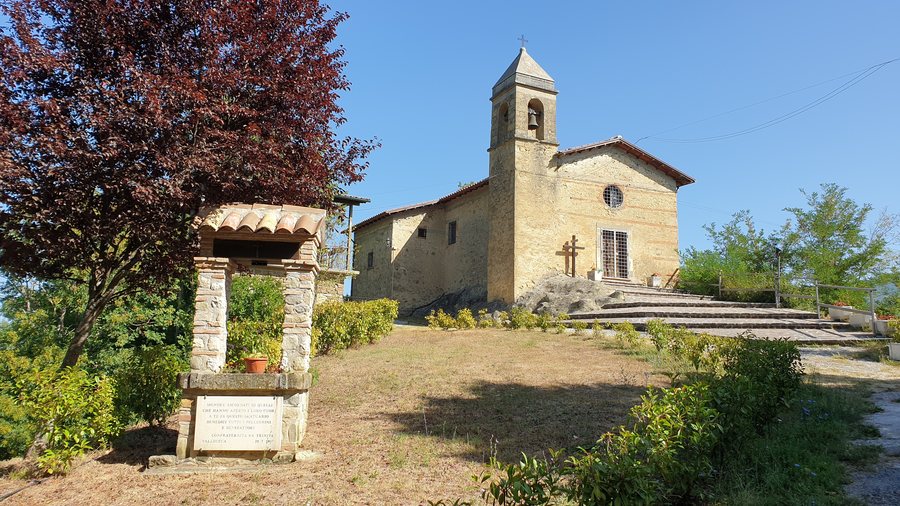 File:Pescorocchiano - Santuario della Santissima Trinità 01.jpg
Photo: Pietro via Wikimedia Commons, CC BY-SA 4.0
File:Pescorocchiano - Santuario della Santissima Trinità 01.jpg
Photo: Pietro via Wikimedia Commons, CC BY-SA 4.0
Grotta di Val de’Varri and the Water
Grotta di Val de’Varri lies in a valley between the Salto and Turano rivers in the municipality of Pescorocchiano, near the inhabited locality of Leofreni. As a result, a distinctive natural area is just as much part of the municipality’s character as its built-up areas. The cave also offers a remarkable display of water: in the active branch of Grotta di Val de’Varri, a stream regularly forms a waterfall approximately 20 metres high at the cave entrance.
If you are interested in geological landscapes and natural waterways, you will find a specific focus here within Pescorocchiano’s diverse range of themes. The waterfall is connected with the cave and its active branch; no further statements about the use or accessibility of this natural phenomenon are implied.
Trails between Nature and Archaeology
From the starting point in Pescorocchiano, the European long-distance trail E1 leads towards Grotta del Cavaliere, an important Italic-Roman archaeological site. Pescorocchiano is also one of the stages of the Cammino Naturale dei Parchi. Both trail connections draw attention to the relationship between landscapes, longer-distance hiking routes and historic destinations. For your travel planning, they can therefore bring together different interests in nature, activity and history, without implying anything about current usability or access conditions.
Churches, Antiquity and Local History
In the town itself stands the Chiesa di S. Andrea in Pescorocchiano. The three-nave parish church dates from the 12th century and has been rebuilt several times. Its architectural history combines medieval origins with later alterations, making it a significant historic site within Pescorocchiano.
At Casale S. Silvestro in the hamlet of Civitella, the forum of the ancient city of Nersae was identified, along with altars, columns and capitals. Only a valuable rusticated arch remains at Palazzo Baronale dei Baldinotti; behind it is a viewpoint overlooking part of the municipal area. Thus, sacred architecture, ancient traces and an architectural relic stand side by side in the town’s history, each with its own character.
Festivals and Chestnut Culture
Pescorocchiano’s Carnevale features masked Zanni bands led by the Turco, the Guerriero and the Zannone. These figures give the festival a clearly recognisable local character and complement its historical themes with a living tradition.
As part of the Festa della Castagna, wine tastings and typical dishes made with chestnuts and other local products are offered. The Sagra della Castagna reatina takes place every year during the chestnut harvest season. There is also a chestnut museum, the Museo del Castagno di S. Lucia di Gioverotondo. Those wishing to discover Pescorocchiano through regional products and festivals will therefore find several independent starting points for their stay.
More Destinations
Torricella In Sabina, San Giovanni Reatino, Pian De' Valli, Monteleone Sabino, Labro, Forano, Santa Rufina, Montebuono
For the higher-level travel overview: Rieti.

