
Pietra Ligure: Coast, History and Italian Local Culture
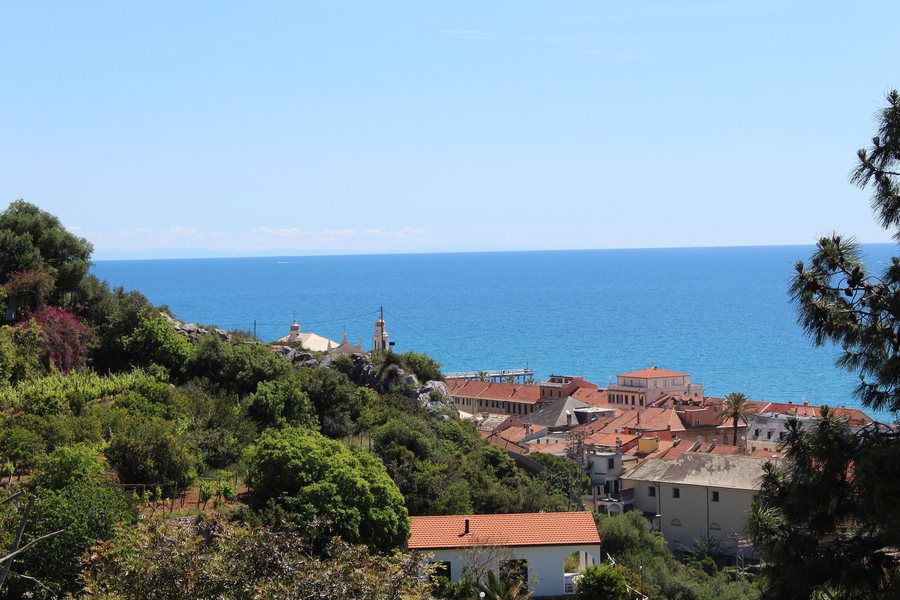
Pietra Ligure combines the palm- and garden-lined Lungomare promenade along the historic center with a freely accessible, equipped beach and a dense sequence of historic sites. The combination of coast, local history and living traditions gives your trip different focal points. When choosing a hotel for your stay, you can orient yourself according to your interests: the beach and promenade, churches and architectural history, or the special customs of Ranzi, a district of Pietra Ligure.
Promenade, Beach and the Castle
The Lungomare promenade runs along the historic center of Pietra Ligure. At the end of the pier stands a large iron anchor monument. The anchor belonged to Admiral Nelson’s fleet and was brought to light in the 1980s. The Anchor Monument has no architectural barriers. For a stay by the sea, Bagni ex Soggiorno Leonessa is also a specific place to go: the beach is freely accessible and equipped.
The Castello di Pietra Ligure also shapes the townscape. It has stood on a rocky spur since Roman times and is regarded as the “stone” that gave the town its name. In Pietra Ligure, therefore, you encounter not only maritime impressions but also a structure whose traditional connection with the place name directly links the town’s history with its landscape.
Churches with a Long History
The foundation stone of the Basilica di San Nicolò was laid in 1750. On November 25, 1791, the basilica was consecrated for worship. Its main vault is 27.25 meters long and 23.50 meters wide. The Chiesa Vecchia, the old parish church of Pietra Ligure, was built in 885 and rebuilt and expanded in the Romanesque style in 1384. It has no architectural barriers.
Today, the bell tower, apse and the large Annunciation painting by Brandimarte di Lucca remain of the Chiesa dell'Annunziata. The original chapel of the Santuario di Nostra Signora del Soccorso contained a 16th-century painting that provided comfort to sailors and seafarers. The Basilica di San Nicolò also houses the “Campana del Miracolo,” a large bell with a visible handprint that, according to tradition, originated from Saint Nicolò.
Historic Traces and a Viewpoint
The Porta di Santa Caterina was the northern gate of the old walled town center and its main entrance. Through the gate, people reached the old cemetery and the former church of Santa Caterina, which stood outside the walls. Those who wish to turn their gaze beyond history toward the landscape can find the Croce del Trabocchetto on Trabocchetto Hill. The present-day cross is seven meters high and was erected in 1965.
The Croce del Trabocchetto can be reached by car or on foot. Immediately before the cross, however, there is a short unpaved section that cannot be traveled by car. This precise description of the route is more important for your planning than a blanket statement about accessibility.
Traditions in Pietra Ligure and Ranzi
In Pietra Ligure, the “Festival of the Miracle” is celebrated every year in connection with the veneration of Saint Nicholas. In Ranzi, the “Stella di Ranzi” is maintained as a recurring annual tradition of long-standing flower-image design. Since 2003, the traditional “Infiorata del Corpus Domini” has been complemented there by the flower-composition competition “Ranzi Infiora le sue Borgate.” These customs expand the historical perspective to include forms of local culture that you can take into account when choosing your personal travel focus.
Other Places in the Surrounding Area
Bardineto, Carbuta, Nasino-Borgo, Zuccarello, Orco Feglino, Ranzi, Menosio and Castelbianco.
For the overarching travel overview: Savona.
Check prices, availability and amenities for your travel dates directly on Booking.com.
View Accommodations and OffersAdvertisement · Affiliate link to Booking.com
.jpg)