
Villanova d'Albenga: History, Nature and Local Specialties
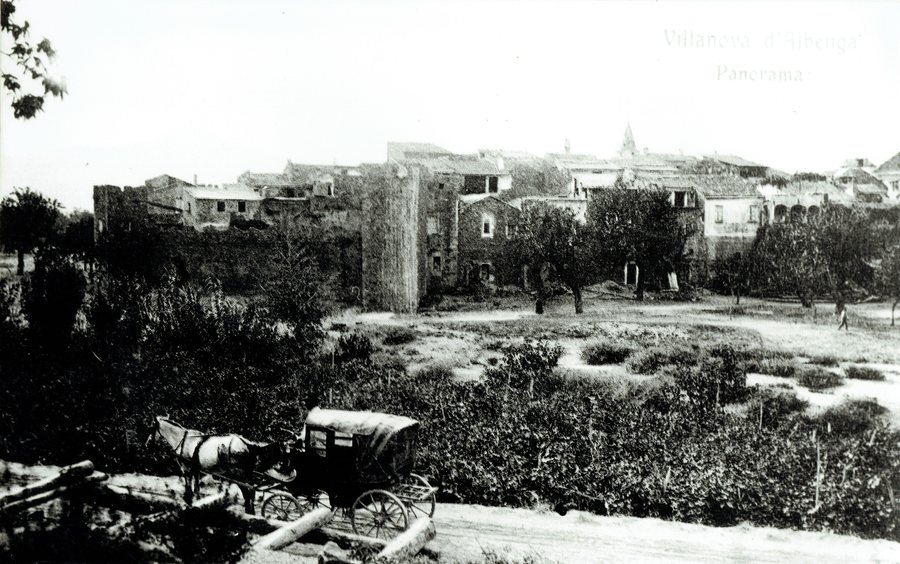 File:Villanova d'Albenga 1904.jpg
Photo: Unknown author Unknown author via Wikimedia Commons, Public domain
File:Villanova d'Albenga 1904.jpg
Photo: Unknown author Unknown author via Wikimedia Commons, Public domain
Villanova d'Albenga combines a medieval-influenced local history with church art, local food and a protected natural area. The foundation of the fortified settlement was decided on 7 December 1250; Villanova was established as part of the fortified settlements founded between 1250 and 1288. This makes it an interesting destination for travellers seeking to explore Liguria through historical evidence, natural attractions and culinary specialties.
Churches and Traces of Local History
At the edge of the oldest settlement stands the Oratorio di San Giovanni Battista, which is still the seat of the Brotherhood of the same name. The oratory contains two cycles of frescoes: one depicts the Virgin Mary, the Child and a series of saints from the 14th century. The second cycle depicts scenes from the Passion and was created from the late 15th to the early 16th century. There are also the wooden sculptures Madonna della Misericordia and a crucifix, both from the 16th century.
The Chiesa di Santo Stefano di Cavatorio was built before the foundation of the fortified settlement and preserves traces of its earlier Romanesque structure. Its façade features a portico built in the 15th century with reused marble elements. The medieval bell tower has single- and double-arched openings with a central column and a corbel capital. The Chiesa di Santa Maria del Soccorso also contributes a specific date to the historical context: a funerary inscription set into the wall gives 1520 as the beginning of its construction.
Architecture, Art and the Ligo District
The Chiesa di Santa Maria del Soccorso is also known as La Rotonda. Its distinctive cylindrical shape sets it apart from the other churches; it is located not far from the historic centre on the road to Garlenda. In the Ligo district, the parish church of San Bernardo still preserves several Cartelami in good condition. They were recently part of an exhibition at the Palazzo Ducale in Genoa. The cultural perspective therefore extends from medieval architectural elements to sacred artworks preserved in various churches in Villanova.
Violets, Sweets and Local Traditions
A culinary specialty is “a ventre”, a local dish prepared on Good Friday according to an old recipe using tuna stomach. The recipe was passed down by the Tonnarotti, men who once worked in the tuna fisheries of Sardinia. Villanova's characteristic sweets also include baci e sorriso with violet flavour.
The violet flavour points to a special chapter in the area's history. Violet cultivation was introduced in Villanova d'Albenga in the 1880s. The plants came from Ollioulles-Var in France and were introduced by seasonal emigrants from Villanova d'Albenga who had learned the cultivation technique there. After the Genoa–Ventimiglia railway line was completed at the end of 1873, violet production gained access to the markets of Northern Europe in addition to the national market.
Arroscia-Valloni and Other Interests
The protected Arroscia-Valloni area is part of the natural landscape. It includes a river sub-basin and a former extraction area for Pliocene clays, with permanently or seasonally water-filled ponds that have since been renaturalised. The area contains sections of garrigue and maquis, as well as small, fossil-rich erosional landscapes. It is also home to one of the last populations in Liguria of the European pond turtle, Emys orbicularis. There are also birds listed in Annex I of Directive 79/409/EEC.
When choosing your accommodation in Villanova d'Albenga according to your personal interests, the town offers several clearly distinct themes: sacred art and architectural history, the development of violet cultivation, regional sweets, protected landscapes or equestrian sports. The Ippodromo dei Fiori in Villanova d'Albenga specialises in trotting and flat racing. Its racecourse is 1,000 m long; this figure refers to a distance of one metre from the inner track boundary. For travel planning, it is also relevant that Clemente Panero Airport is located in Villanova d'Albenga.
Check prices, availability and amenities for your travel dates directly on Booking.com.
View Accommodation and DealsAdvertisement · Affiliate link to Booking.comMore Destinations
More destinations: Marta, Orco Feglino, Pietra Ligure, Ceriale, Loano, Cisano Sul Neva, Borgio Verezzi, Noli
Back to the main travel overview: Savona.

