
Merone between Lakes, River and History
Accommodation in Merone
Merone between Lakes, River and Hills
Merone is characterized by its hills and waterways. The Lambro flows between the hills and crosses the entire area. Along the shores of Lake Pusiano near Moiana, the natural character is still relatively well preserved, with a succession of vegetation zones typical of the area, especially reed beds and sedge communities. If you would like to include nature and culture in your stay, Merone offers various points of interest for doing so. Water, hills and waterside vegetation give the town a distinctive landscape profile.
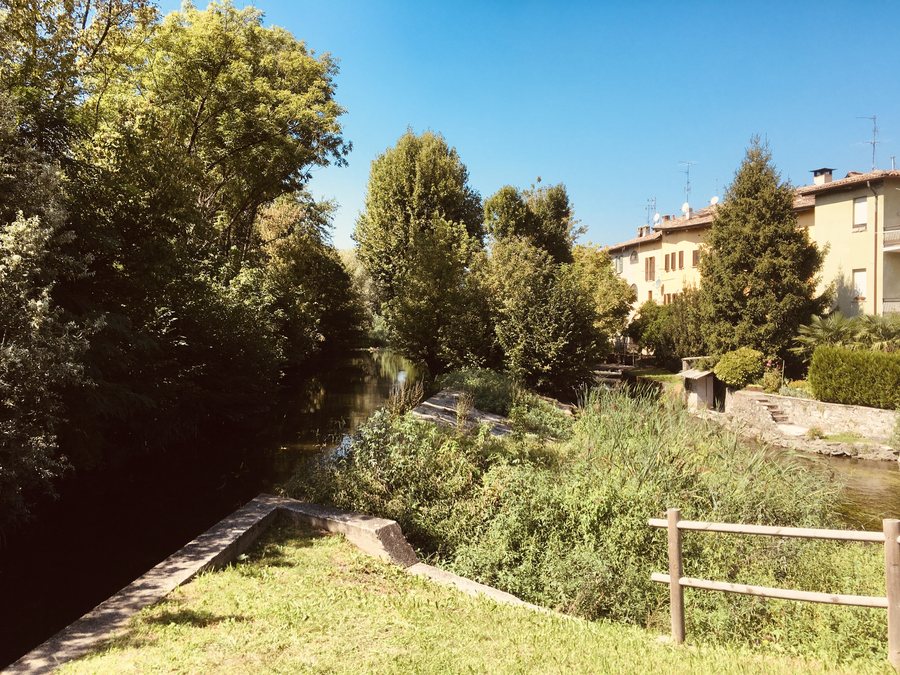 File:Canale sul fiume Lambro in Merone 1.jpg
Photo: Iolanda Pensa via Wikimedia Commons, CC BY-SA 4.0
File:Canale sul fiume Lambro in Merone 1.jpg
Photo: Iolanda Pensa via Wikimedia Commons, CC BY-SA 4.0
Oasi di Baggero and Trails by the Water
An important natural area is Oasi di Baggero, a protected area within the Parco Naturale della Valle del Lambro. It covers 26 hectares across four municipalities in the Province of Como, including Merone. The Alta Via in Oasi di Baggero forms a loop around the lakes and connects with the surrounding cycling and walking trails. Some of the paths, including the Sentiero al Cavolto and the trails by the waterfall, are flat, surfaced with concrete or firm earth, and suitable for wheelchairs.
The Sentiero della Buerga nature trail is another practical way to experience the landscape. It can be walked from Alserio or Merone, offers views of the lake and the forest, and leads to the environmental education center. For cycling enthusiasts, a cycle route linked to Lake Pusiano has its starting and finishing point in the municipality of Merone and also connects with Como.
Mills, Churches and Local History
Merone also has several cultural and historical points of interest. The Chiesa della Madonna del Rosario di Pompei in Merone is a 17th-century church. The Ecomuseo dei Mulini on Via Mazzini is housed in a mill dating from 1722 that has been restored to full working order. At the Mulini di Baggero, sluice gates, waterwheels and a room with an oil press have been preserved; one of the waterwheels is still operational. Until 1888, the Santuario della Beata Vergine del Rosario di Pompei served as the parish church of Moiana and Merone, as well as partly of Incino.
The Castle of Merone is also part of the town's history. It was destroyed in 1285 by the Della Torre during their war with the Visconti for control of Milan. Together with the churches and mills, this historical turning point points to the town's eventful past, while the trails along the lakes, river and forest open up a landscape perspective. This allows you to discover Merone according to your interests—through protected nature, walking trails, cycling connections or surviving evidence of earlier uses.
More Destinations for Your Travel Planning
Dizzasco, Cermenate, Lenno, San Nazzaro Val Cavargna, Cerano D'intelvi, Villa Guardia, Mezzegra, Lurago Marinone
To the broader travel overview: Como.

