
Torno: Village History, Sacred Art and Paths to the Pietra Pendula
Accommodation in Torno
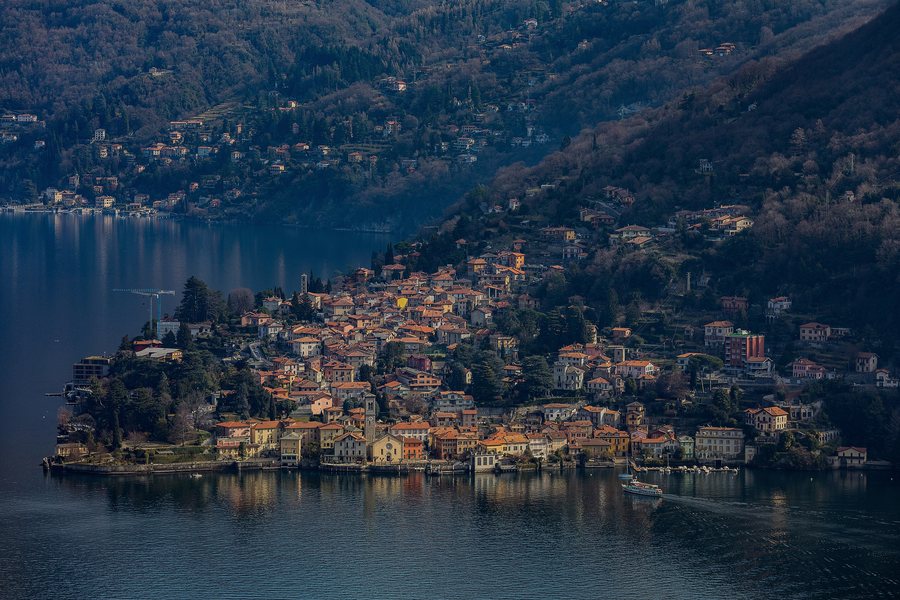
Torno appeals to travellers who want to discover history, the lakeside and walking routes together. The historic centre preserves the structure of the old village: narrow, steep alleyways occasionally open up to views of the lake. For your planning, this creates a balance between the townscape, sacred art and hiking destinations above the village.
Historic Centre and Sacred Art
Several periods come together at the Chiesa di San Giovanni Battista. The church is designated as a national monument and was built in the 12th century in the Romanesque-Gothic style. Its marble portal was created in the late 15th century and is attributed to the Rodari school. This gives the church a direct connection to Torno’s architectural and artistic history, without you having to leave the village.
Santa Tecla overlooks the square at Torno’s harbour. Inside is a group of eight 16th-century poplar-wood sculptures depicting the Lamentation of Christ. Above Torno lies Montepiatto, with a chapel dedicated to the Visitation of Mary to Elizabeth and a 16th-century monastery. The Massi Avelli are ancient tombs carved into glacial erratic boulders.
Pietra Pendula and the Landscape
The Pietra Pendula is a large, mushroom-shaped Ghiandone erratic boulder from Val Masino. It rests on a smaller, narrow base of local limestone. It is precisely this unusual combination of erratic boulder and limestone that makes the site an illustrative landscape feature for anyone who finds geological formations as interesting as historic buildings.
Hiking from Torno
The circular hike to the Pietra Pendula starts and ends at the Piazza Caronti car park in Torno. Along the route, the trail reaches Montepiatto via the paved mule track known as “la drizza”. The starting point can be reached via the Piazza Caronti stop on bus routes C30, C31 and C32, or by boat from Torno’s landing stage.
The Strada Regia adds a historic connection to the local network of trails. It is an approximately 35-kilometre-long historic route that once connected the villages on the eastern shore of the Triangolo Lariano from Como to Bellagio. The section designated as a walking route is almost entirely intended for pedestrians. Its approximate length and the former connection between the villages offer a broader historical perspective, while the route to the Pietra Pendula describes a specific excursion from Torno.
Planning Your Stay in Torno
When choosing accommodation in Torno, you can decide according to your preferred focus. If you want to place the alleyways, churches, Santa Tecla and the harbour square at the centre of your visit, the village’s history takes priority. If, on the other hand, you plan to take the circular hike to the Pietra Pendula, visit Montepiatto or walk the section of the Strada Regia designated as a walking route, walking becomes more important.
Discover More Places
For further stops on your trip to Italy, also discover Garzeno, Domaso, Castelmarte, Careno, Inverigo, Osteno-claino, Schignano and Como.
To the overarching travel overview: Como.

