
Discover Valmorea: Nature, History and Culture
Accommodation in Valmorea
Valmorea combines a moraine terrace, the Torrente Lanza and numerous testimonies to the area’s history. The two inhabited districts are located on a moraine terrace around 400 metres above sea level; the Torrente Lanza forms the western municipal boundary. This combination of landscape, waterways and historical sites gives you several perspectives for planning a trip that brings together experiences of nature and an interest in culture.
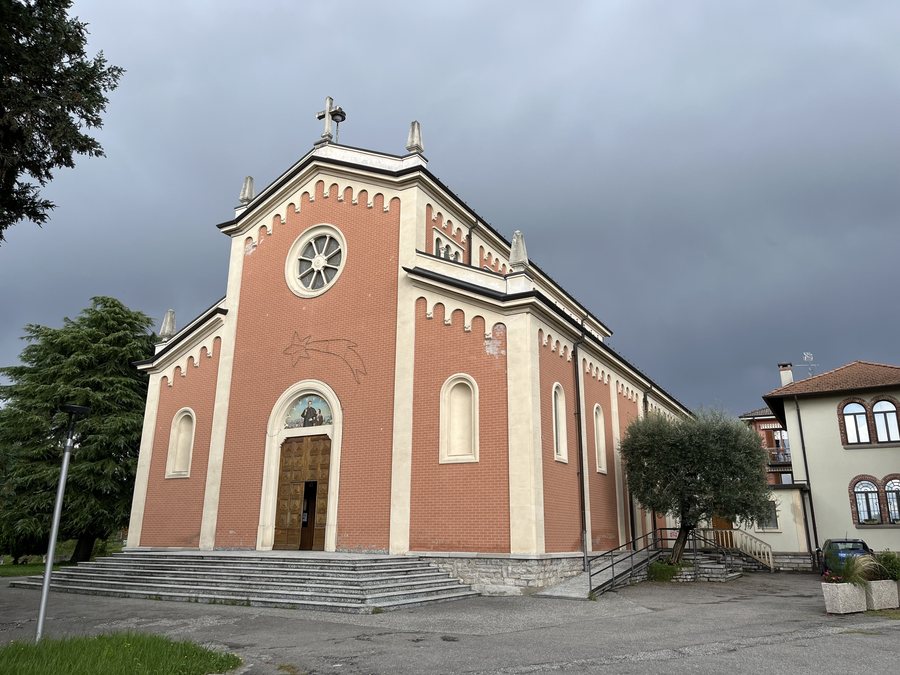 File:Valmorea - Chiesa dei santi Donato e Giovanni Bosco - 2025-09-26 13-35-52 001.jpeg
Photo: Massaro_Astrid via Wikimedia Commons, CC BY-SA 4.0
File:Valmorea - Chiesa dei santi Donato e Giovanni Bosco - 2025-09-26 13-35-52 001.jpeg
Photo: Massaro_Astrid via Wikimedia Commons, CC BY-SA 4.0
Landscape along the Torrente Lanza
In Parco Valle del Lanza, the network of paths includes unpaved tracks, farm roads, as well as a cycle and pedestrian path. The routes follow the Torrente Lanza and the historic railway line via Valmorea railway station. This allows you to view natural and transport history within a shared landscape. This creates opportunities for walks and cycling tours without assuming a specific route length or fixed itinerary.
Buzzun is home to aquatic fauna typical of these ponds, including frogs, dragonflies and water striders. The Valmorea fish farm uses natural pools for fish farming. The Lanza–Lura trail also passes near the fish farm. Those interested in natural habitats and water-shaped landscapes can combine different observation themes here.
Church, Archaeology and Local History
The Church of San Biagio can be traced back to a chapel dating from the late 13th century; by the end of the 16th century, it is documented as a parish church. It preserves Baroque architectural elements, including a two-storey façade and a single-nave interior with Ionic-Corinthian pilasters. San Biagio therefore offers a tangible introduction to Valmorea’s architectural and religious history.
Caversaccio also leads into a more distant past: in 1936, two stone cist graves with ceramic grave goods were discovered there, dating from the transitional period between Celtic and Roman rule. On 17 December 1853, Carlo Mozart bought a small house with a garden in Caversaccio and later left the house and garden to the municipality. For visitors interested in cultural history, this brings together archaeological traces and a recorded event from the 19th century.
Cultural Attractions in the Surrounding Area
The area around Valmorea is home to Villa Augusta, a palace, and Villa Mirabello, also a palace. The Civico Museo D'arte Moderna E Contemporanea and the Museo Tattile Varese, both museums, are also located nearby. These destinations broaden the cultural scope around Valmorea with historic architecture and different forms of art and museum experiences.
Landscape-oriented destinations in the surrounding area include Monte Bisbino, a peak, and Monte Generoso, a mountain. The Giardini di Palazzo Estense, a garden, and Parco di Villa Mylius, a park, are also located there. Depending on your personal interests, you can combine Valmorea with nature observation, paths along the water, regional history and other cultural or landscape destinations.
More Places for Your Trip Planning
You can also include additional destinations in your trip to Italy: Lasnigo, Ossuccio, Turate, Porlezza, Albiolo, Osteno, Argegno and Dongo.
For the higher-level travel overview: Como.

