
Discover Mantua: UNESCO Culture, River Landscapes and Cycling Routes
Accommodation in Mantua
Mantua combines urban history, water landscapes and extensive cycling routes to create a region with diverse cultural and natural features. Mantua and Sabbioneta are part of a UNESCO World Heritage site, inscribed in 2008 under criteria (ii) and (iii). In Mantua, the irregular urban layout documents phases of development dating back to Roman times and represents the renewal and expansion of an existing city.
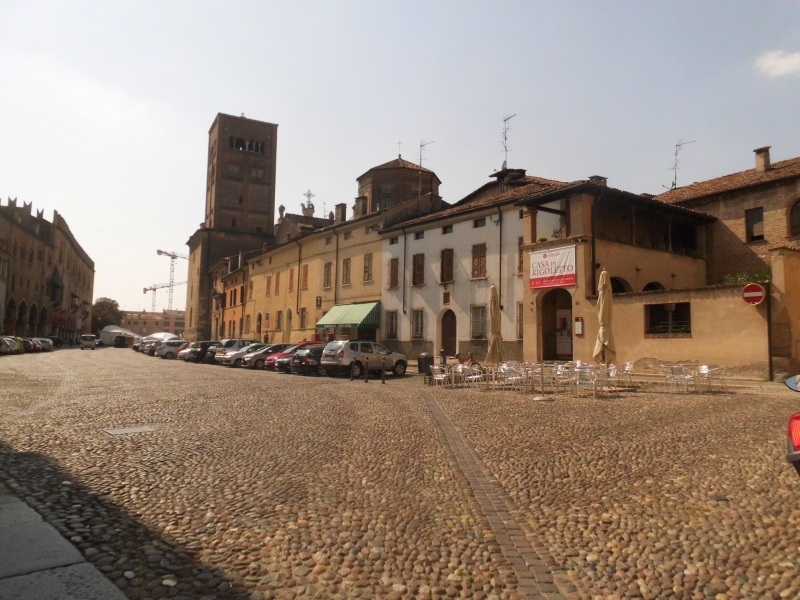
Cityscapes from the Renaissance to the palace city
Sabbioneta was laid out in the second half of the 16th century as a planned city with a rectangular grid layout. Its cityscape embodies Renaissance ideas of the ideal city. In Mantua, Palazzo Te was built between 1525 and 1535 as a masterpiece by Giulio Romano, who constructed and decorated the building. The Palazzo Ducale developed into a palace city; its parts are connected by galleries, porticoes and monumental squares.
The Polirone monastery complex is also one of the region’s defining historical features. It was founded in 1007 by Tedaldo di Canossa on an island between the Po and the Lirone River. Palazzo Te also offers general or themed educational programmes with practical workshops for schools and accompanied groups of children. Palazzo Te has a single entrance with a ramp.
Rivers, canals and wetlands
The area around Mantua is shaped by the Po, Mincio, Chiese, Oglio and Secchia rivers, as well as by a network of drainage and land-reclamation canals. The Paludi di Ostiglia form a distinctive natural area: the nature reserve is home to 175 bird species, is part of the Natura 2000 network and is recognised as a wetland of international importance.
The Paludi di Ostiglia has a landscaped path from the visitor centre to the observation huts. Access is free all year round on foot or by bicycle. The Paludi are connected by the Ciclabile dei Parchi, the Via Claudia Augusta and Provincial Cycle Route 9. In Parco del Mincio, the tourism and education office offers guided visits in the park and at the park centres.
Cycling through the Oltrepò Mantovano
The cycling routes of the Oltrepò Mantovano connect villages and districts, historic buildings, museums, water-management facilities, parks and nature reserves. The cycling route networks offer more than 470 kilometres of paths.
The Mantova–Peschiera Cycle Route begins at Mantova railway station and runs along the artificial Diversivo del Mincio canal. A branch leads to the Bosco della Fontana state reserve. On the UNESCO cycling route, the return journey from Suzzara to Mantova is intended to be made by regional train; bicycles may always be taken on board.
Travelling on the water
I Barcaioli del Mincio offer boat trips on Lago Superiore and in the Valli del Mincio, with departures from Rivalta sul Mincio, Grazie di Curtatone and Mantova. One of the boats operated by I Barcaioli del Mincio is equipped to carry people with disabilities and is fully covered to protect against rain.
For further orientation: Asola, Pietole, Eremo, Gabbiana, Castel Goffredo, Medole, Casalmoro, Motteggiana, Piubega, Castellaro Lagusello, Libiola, Correggioverde, Castellucchio, Redondesco, Gonzaga, Revere, Governolo, Cavriana, Casaloldo, Cesole, Scorzarolo, Bagnolo San Vito, Sustinente, Davini, Pomponesco, Gazoldo Degli Ippoliti, Viadana, Curtatone, San Benedetto Po, Ostiglia, Marcaria, Buscoldo, San Giacomo Delle Segnate, Sabbioneta, Ceresara, Suzzara, Virgilio, Pegognaga, Palidano, Roverbella, Rivarolo Mantovano, Marmirolo, Porto Mantovano, Castel Dʼario, San Giorgio Di Mantova, Solferino, Volta Mantovana, Goito, Villastrada, Sermide, Monzambano, Ponti Sul Mincio, Rodigo, Mantova, Castiglione Delle Stiviere, Canneto Sull'oglio, Campitello, Roncoferraro, Gazzuolo, Moglia, Barche and Poggio Rusco.
For the broader travel overview: Lombardy.
