
Casa Bianca: Winegrowing, Trails and Local History
Accommodation in Casa Bianca
The hamlet of Casa Bianca in the municipality of Montù Beccaria combines wine country, trails and historic traces. If you are looking for a place for your trip to Italy that offers winegrowing, rural landscapes and cultural and historical connections, you will find several starting points here for planning your visit.
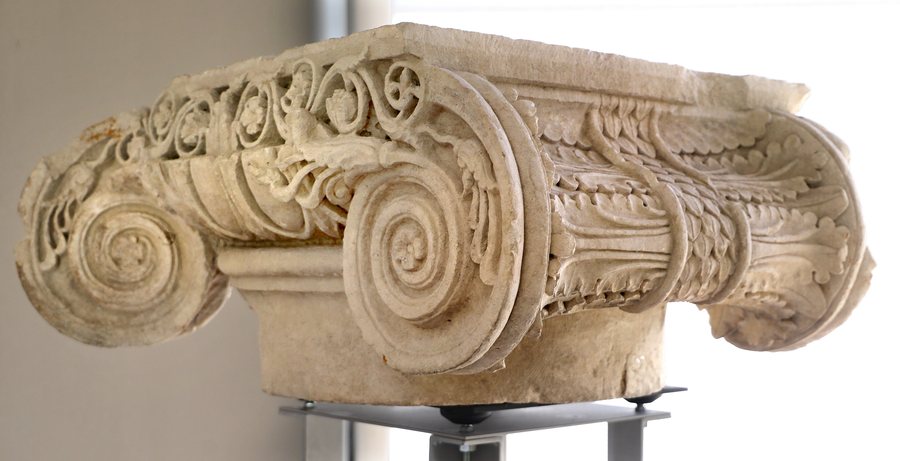 File:Capitello ionico d'angolo, I-II secolo dc., dall'iseo di casa bianca a sibari.jpg
Photo: Sailko via Wikimedia Commons, CC BY-SA 4.0
File:Capitello ionico d'angolo, I-II secolo dc., dall'iseo di casa bianca a sibari.jpg
Photo: Sailko via Wikimedia Commons, CC BY-SA 4.0
Winegrowing in the Valle Versa
Winegrowing is the most important activity in the municipality of Montù Beccaria. The DOC wines produced there include Bonarda-Croatina, Barbera, Riesling, Pinot and Moscato, among others. This character is particularly tangible in the vineyards of “Le Vigne Tonalini”: they are located at the entrance to the Valle Versa, on Casa Bianca’s flat ridge in the municipality of Montù Beccaria, at an average elevation of 200 metres. The vineyards have been directly cultivated for five generations.
The central area of “Le Vigne Tonalini” lies in the region where the Romanesque Pieve di Auliano was already producing the equivalent of 3,150 litres of renowned wine each year in the 9th century. The winegrowing landscape has a mesothermal, subcontinental climate without arid periods. The vineyard soils are considered to consist of varying combinations of sulphurous formations, marl clays and sandstone.
Hiking and cycling routes
The routes around Casa Bianca differ considerably in length, elevation gain and character. Via Columbani Stage 15, “Stradella to Canevino”, is a difficult 24.4-kilometre stage with a duration of 10 hours and 1,015 metres of elevation gain. The cycling route stage “Pavia to Pometo” follows the SP134 through the hamlet of Casa Bianca. After passing through the hamlet, this route climbs to the ridge, which overlooks the valley of the Torrente Versa.
Shorter circular hikes also pass through the hamlet. The 9-kilometre Casa Massimini–Montù Beccaria circular hike follows paved roads through Casa Bianca. It then enters a cut through the vineyards before climbing towards Montù Beccaria. The approximately 6-kilometre Cima–Casa Bianca–Porcarano circular hike passes through rural settlements such as Casa del Pozzo and Porcarano, then follows a path directly into the vineyards. The Tessarole–Casa Bianca circular hike is approximately 13 kilometres long, includes 100 metres of elevation gain and returns to Casa Bianca.
Manor House, Chapel and Local History
Most of the houses in the hamlet of Casa Bianca were built around the manor house of the Counts Negri della Torre. The manor house was a country residence of the Counts Negri della Torre dating from the 17th century. A family chapel or family oratory in Casa Bianca was open to the hamlet’s faithful for religious celebrations.
According to local tradition, a statue of the Virgin Mary remained in Casa Bianca; a small chapel was built there, and the Madonna was regarded as the protector of the vineyards. Until the death of Countess Maddalena Marchiò, the widowed Negri, Mass was celebrated in the chapel every Sunday by a priest from the parish. During an episcopal visitation in 1777, the family oratory of Casa Bianca was described as public; believers from the hamlet and surrounding area attended Mass there. The 1790 episcopal visitation refers to the Oratorio di Casa Bianca as having been built in 1733 by Abbot Don Gaspare Negri della Torre.
Traces along the Torrente Versa
In the mid-19th century, the Quaroni family operated a grain mill at the foot of Casa Bianca near the Torrente Versa. The “Molino di Casa Bianca” mill belonged to Count Negri della Torre. The connection to Stradella also has an earlier name: the road from Casa Bianca to Stradella was formerly called “strada del Gesso”.
More destinations
Bereguardo, Sant'alessio Con Vialone, Torre D'isola, Torre Beretti, Cilavegna, Sala, Miradolo Terme, Stradella
For the higher-level travel overview: Pavia.

