
Codevilla between wine, culture and the Po Valley
Accommodation in Codevilla
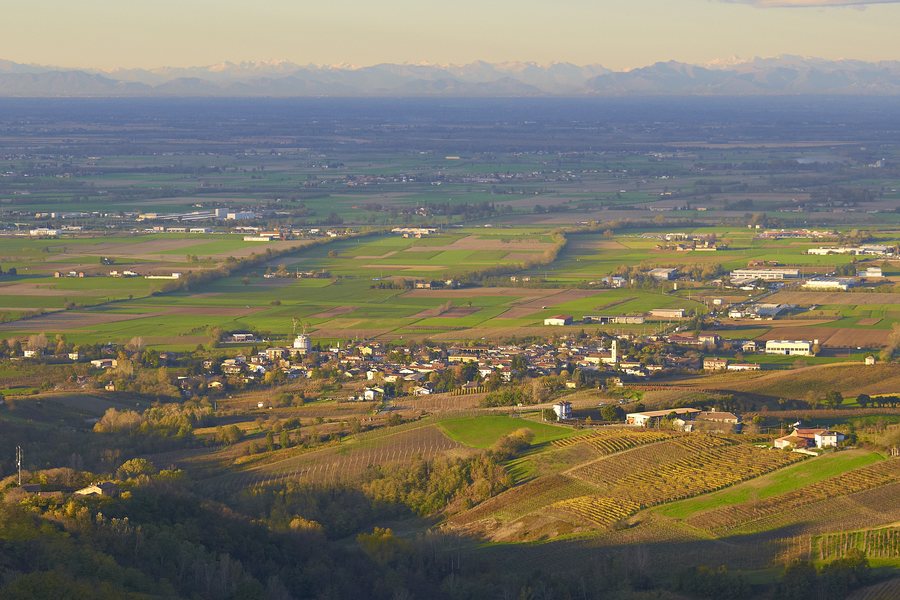
Codevilla lies on the border between the Po Valley and the first hills of Oltrepò Pavese. Extensive arable land characterizes the traditional Lombard landscape, while winegrowing holds a renowned position in Oltrepò Pavese.
Wine, wineries and regional specialties
La Genisia offers an e-bike tour through the vineyards and hills of Oltrepò Pavese, including a winery visit and wine tasting. The tour combines a ride through the wine-growing landscape with a visit to the winery. At La Genisia, these elements are part of the same e-bike offering.
La Genisia’s winery experience includes a visit to the historic wine cellar and the rooms where sparkling wines are produced, including the Torre Vinaria. The visit therefore covers both the historic cellar and the production of sparkling wines. At Montelio, the tasting includes three base wines accompanied by local cured meats and local cheeses. Those wishing to compare the wine offerings of La Genisia and Montelio will find different focuses between the tour, winery visit and tasting.
Hills, forests and expansive views
The hills above Mondondone and Piana are home to deciduous forests, especially oak, black locust, chestnut and poplar trees. The different tree species form part of the wooded landscape above both villages. Compared with the extensive arable land of the Po Valley, this part of the surrounding area appears distinctly hillier and more strongly characterized by woodland.
The Panchina Gigante di Codevilla offers a viewpoint with a field of vision of more than 180 degrees. The expansive view is therefore closely connected to the open landscape of the Po Valley and the first hills of Oltrepò Pavese.
The natural erosion formations of the Calanchi near Pontazzo are also among the notable landscape features. In their niches, European bee-eaters nest in spring and summer.
Culture and local stories
The Chiesa di San Bernardo in Codevilla dates from the 16th century. It preserves a remarkable wooden organ loft as well as sacred artworks.
The “Maria Maddalena Rossi” collection includes paintings by Guttuso, Carrol, Mafai, Gentilini and Sassu, as well as sculptures and old books. Those interested in culture will encounter paintings, sculptural works and historical books within the same collection.
The Santuario del Pontasso is associated with a local legend according to which it was founded by a Lombard warrior named Asso. The story forms part of the cultural significance of the Santuario del Pontasso without presenting the foundation account as established history.
The cultural offerings are complemented by Tucano Fiere in Codevilla. Antique markets and fairs for culinary specialties are organized there.
Getting there and orientation
Voghera railway station connects Codevilla by rail with the rest of the country. Regional trains operated by Trenord, long-distance trains operated by Trenitalia with the exception of Italo and Frecciarossa, and freight trains run there.
In addition, route 144 operates along the Voghera–Codevilla–Retorbido–Rivanazzano–Godiasco route. For orientation between Voghera, Codevilla and the towns in Oltrepò Pavese, this route is a distinct part of regional mobility.
Further destinations for your planning: Montalto Pavese, Settimo, Carbonara al Ticino, Sartirana Lomellina, Siziano, Valverde, Bereguardo, Voghera
For the broader travel overview: Pavia.

.jpg)