
Palestro: History, Via Francigena and Rice Fields
Accommodation in Palestro
Palestro combines sacred architecture, the memory of the Second Italian War of Independence, its connection to the Via Francigena and a landscape shaped by rice fields. This makes it a diverse travel destination: churches and sites of remembrance, pilgrim and cycling experiences, a play area for children, and habitats for waterfowl provide a range of different highlights. These themes can be combined with culture, physical activity, family time or nature observation.
Churches and Sacred Architecture
The religious heritage reaches far back into the past. A religious building dedicated to San Martino di Tours can be traced back to 1006 in Palestro. The Chiesa di San Giovanni Battista was consecrated on June 24, 1627. It features a five-story brick bell tower, topped by a level with bifora windows. The Chiesa Parrocchiale di San Martino di Tours also makes its own architectural statement: its façade is designed in the Gothic-Lombard style with characteristic terracotta decorations.
Sites of Remembrance from the History of 1859
The Battle of Palestro was fought on May 30 and 31, 1859, during the Second Italian War of Independence. The Ossario della Battaglia di Palestro was built in 1893 based on a design by Milanese architect Giuseppe Sommaruga and preserves the mortal remains of the Piedmontese, French and Austrian soldiers who fell in the battle. The Monumento al Soldato commemorates the events of the Second Italian War of Independence and was inaugurated on May 31, 1868. The Monumento al Bersagliere also commemorates events from this war.
Via Francigena, Family and Landscape
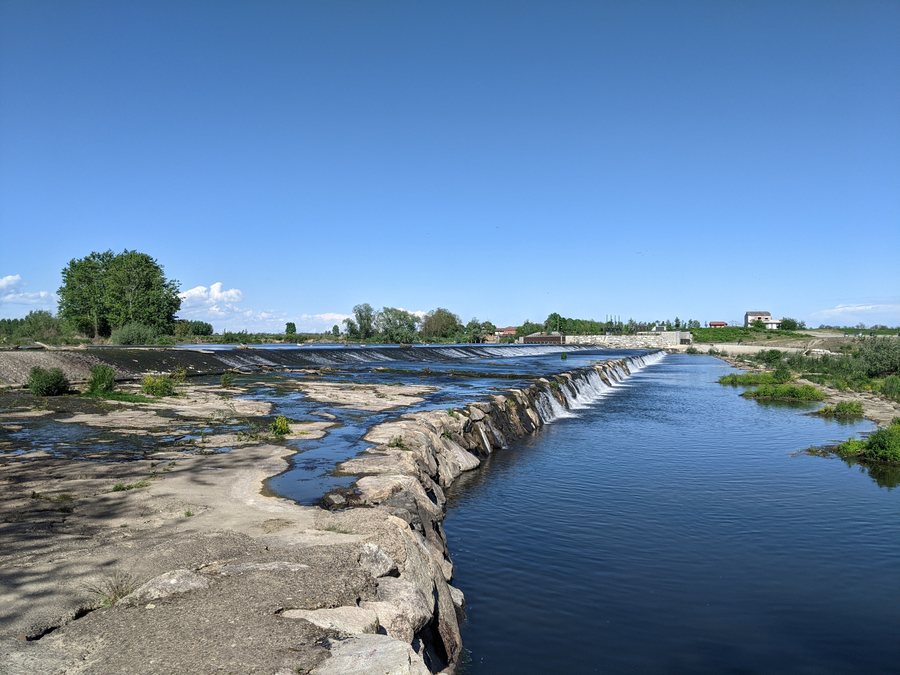
The Lombard section of the Via Francigena can be explored on foot, by bicycle or by train. In Palestro, the parish priest keeps the official stamp for the Via Francigena pilgrim credential. The Parco giochi offers an equipped play area with games for children of all ages. The landscape includes the Torre di Palestro, which stands on a natural terrace above the Sesia and may be connected with an ancient early medieval castrum. Around Palestro, the landscape encompasses rice fields as well as habitats for herons, egrets and numerous other waterfowl species. This makes it possible to combine physical activity, culture and nature observation in a variety of travel plans.
Getting There and Planning Your Trip
When arriving by car, the route leads via the A26 motorway (Genova–Gravellona Toce), the Robbio exit and then along the SP596 toward Palestro. By train, the nearest station is in Robbio on the Mortara–Vercelli railway line; onward travel by road is then required. When choosing your accommodation, you can therefore first decide whether you mainly want to discover Palestro through its churches and sites of remembrance, via the Via Francigena or through its rice-field landscape.
Other Places
Sannazzaro De' Burgondi, Breme, Siziano, Cervesina, Ponte Nizza, Pieve Porto Morone, Santa Maria Della Versa, Garlasco
For the higher-level travel overview: Pavia.

