
Pavia between the Renaissance, urban history and the Ticino
Accommodation in Pavia
Pavia between the Renaissance and the Ticino
Those who visit Pavia encounter a city where Visconti court architecture, the Renaissance, ecclesiastical art and the landscape along the Ticino stand closely side by side. The key impressions range from historic buildings and museums to a walking and cycling route through the surrounding area. This allows you to shape your stay around both culture and an interest in nature and outdoor activities.
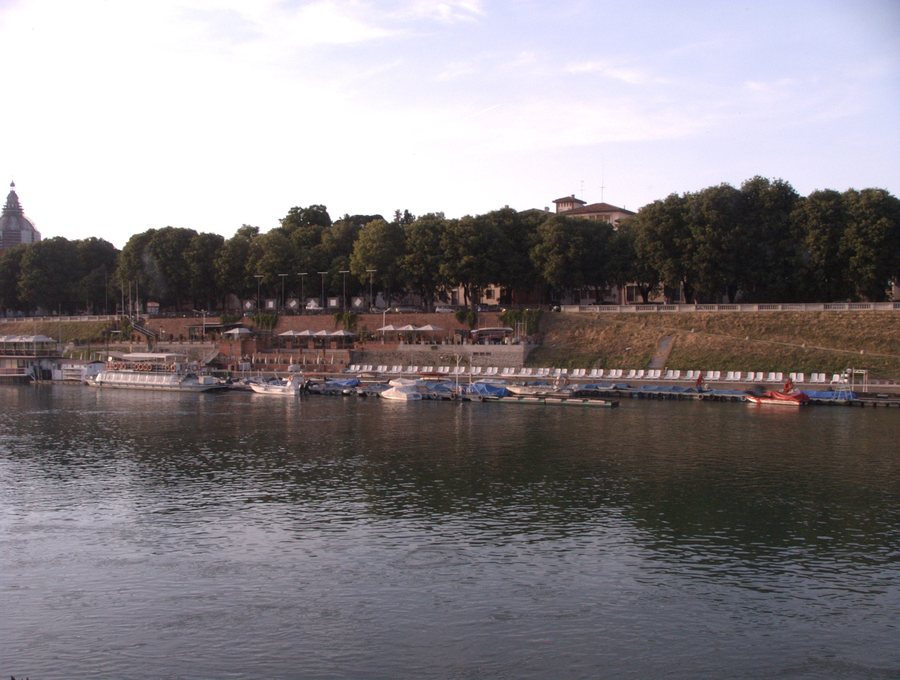 File:Pavia, Province of Pavia, Italy - panoramio - vir db.jpg
Photo: vir_db via Wikimedia Commons, CC BY-SA 3.0
File:Pavia, Province of Pavia, Italy - panoramio - vir db.jpg
Photo: vir_db via Wikimedia Commons, CC BY-SA 3.0
Castello Visconteo and the routes into the city centre
Castello Visconteo was built from 1360 onwards as a refined and elegant court residence. It was not primarily a military defensive castle. Today, the Castello serves as a cultural institution, houses various departments of the Musei Civici and provides spaces for temporary art exhibitions.
Castello Visconteo is about a 20-minute walk from Pavia railway station and a 10-minute walk from the city centre. This location combines a historic visit with an easy-to-follow route between the railway station, the city centre and the cultural attractions.
The Renaissance, the university and sacred art
Pavia Cathedral was rebuilt from 1488 onwards in Renaissance forms. The original project was entrusted to Bramante, who was advised by Leonardo da Vinci. The University of Pavia is also one of Europe's oldest universities by virtue of its founding; Galeazzo II Visconti supported its opening in 1361.
The Basilica of San Pietro in Ciel d'Oro preserves the relics of Saint Augustine and contains his monumental marble ark. It thus adds a place to the city's architectural history where sacred art and religious tradition are directly connected.
Urban history and cultural programme
From the 11th to the 16th century, the Broletto was the historic seat of the city's council meetings. Following a recent restoration, it houses various municipal cultural institutions as well as a space for contemporary art. The Ponte Coperto was rebuilt in the mid-14th century in place of an ancient Roman bridge. It connects Pavia's historic city centre with a picturesque medieval borgo on the other side of the Ticino.
Today's cultural life also has several established points of reference. Santa Maria Gualtieri is used as a multipurpose hall for exhibitions, chamber concerts and conferences. Teatro Fraschini offers an extensive programme of music, theatre and opera.
Nature and outdoor activities along the Ticino
Oasi Lipu Bosco Negri is a managed nature reserve within the Valle del Ticino Lombardy Regional Park in Pavia. Those who wish to take the area's natural side into account alongside its buildings will find an independent theme here centred on the protected area and the river landscape.
The Greenway is also the main route for walks and cycle rides. It is an 18-kilometre walking and cycling connection linking Certosa di Pavia with the Ticino River and mainly following the course of the Roggia Vernavola from its source to its mouth at the Ticino.
Choosing accommodation to suit your stay
The choice of accommodation in Pavia can be guided by the desired mix: those interested in culture can combine Castello Visconteo, the cathedral, the basilica, the Broletto, Santa Maria Gualtieri and Teatro Fraschini into an urban stay. If you also plan to include routes and nature, Oasi Lipu Bosco Negri and the Greenway complement the cultural highlights with landscape and outdoor activities.
Discover more destinations
Santa Margherita, Semiana, San Genesio Ed Uniti, Cilavegna, Breme, Marcignago, Borgo Priolo, Valverde
For the higher-level travel overview: Pavia.

