
Villanova d’Asti between church art and green hills
Accommodation in Villanova d'Asti
Church art with clear historical traces
Villanova d’Asti combines sacred art, historic buildings and a green hilly landscape to create a destination with many different facets. The Chiesa di San Martino houses paintings by Moncalvo depicting the Nativity and the Immaculate Conception. The main altar of this church also draws attention to the local history of art: Carlo Pellagata created it in 1777. Another art-historical trace leads to the Chiesa di San Pietro. It houses two valuable paintings by Moncalvo from 1600.
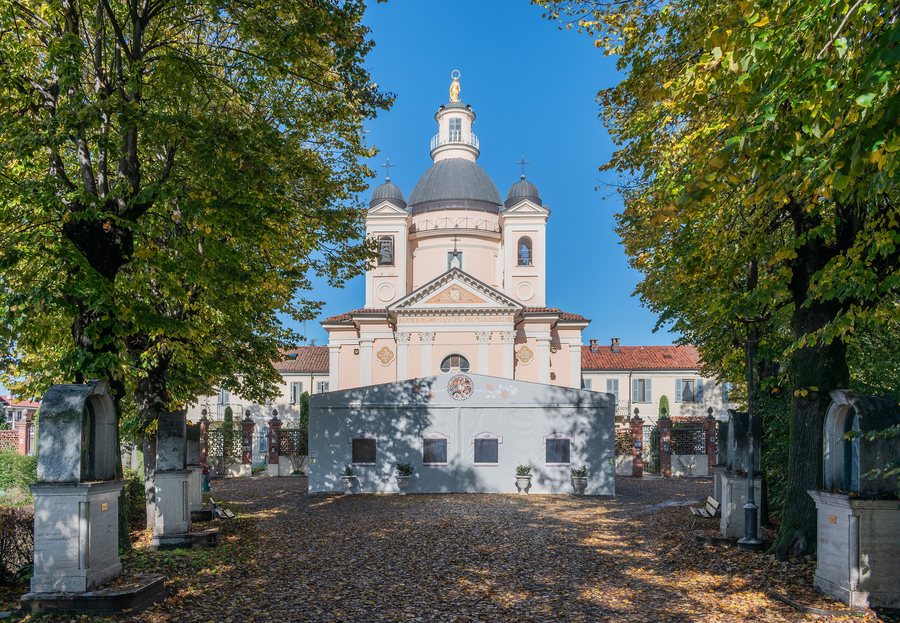 File:Our Lady of Grace sanctuary in Villanova d'Asti (1).jpg
Photo: Tournasol7 via Wikimedia Commons, CC BY-SA 4.0
File:Our Lady of Grace sanctuary in Villanova d'Asti (1).jpg
Photo: Tournasol7 via Wikimedia Commons, CC BY-SA 4.0
Palaces, towers and older local history
At Palazzo De Robertis, the architectural links to the past are particularly evident. The palazzo is located in a former Franciscan monastery and features monastic porticoes. In the historic centre, the Torre civica rises above the town’s buildings. Outside densely built-up areas, the two Bicocche stand as watchtowers in the open landscape around Villanova d’Asti. This historical picture is complemented by the Pievania di San Pietro, whose origins date back to around 1200.
Green landscapes around Villanova d’Asti
The landscape around Villanova d’Asti is characterised by green and lush fields. Farms and estates alternate across a gently rolling landscape of green hills. This creates a townscape in which the cultural and historical themes of the centre are combined with open landscapes. If you are planning a trip to Italy based on your interests, Villanova d’Asti can therefore be explored both through its churches and works of art and through its agriculturally shaped surroundings. The two perspectives complement each other without reducing the town to just one attraction.
Santuario and Infiorata
The Santuario della Beata Vergine delle Grazie was consecrated and opened for worship on 14 August 1870. The Infiorata di Villanova d’Asti is also associated with this sanctuary. It has taken place since 1985 on the access avenue to the Santuario Madonna delle Grazie. Preparations for the Infiorata take place on the night before the event and are carried out by volunteers of all ages. Anyone interested in religious sites, traditional forms of community involvement and the connection between festivals and local history will find another distinctive way to experience Villanova d’Asti here.
Local connections for your planning
Two bus routes are connected with Villanova d’Asti and provide orientation when travelling by public transport. Bus route 154, Circolare Villanova, serves Villanova d’Asti Stazione, Villanova d’Asti paese and Valfenera. Bus route 46 Villanova–Chieri serves Villanova d’Asti, San Paolo Solbrito, Dusino San Michele, Valfenera, Riva presso Chieri and Chieri. These different routes provide a concrete framework for your travel planning if you would like to include other places in your days in addition to Villanova d’Asti. When choosing a hotel, the places served can therefore be taken into account in your personal location planning.
More places for your trip to Italy
If you would like to compare Villanova d’Asti with other destinations or continue your research beyond the town, you can also include Casalotto, Cinaglio, Rocchetta Tanaro, Mongardino, Passerano, Cassinasco, Dusino San Michele and Antignano in your travel planning.
For the higher-level travel overview: Asti.

.jpg)