
Discover Borgofranco d'Ivrea: Ricetto, Balmetti and local specialties
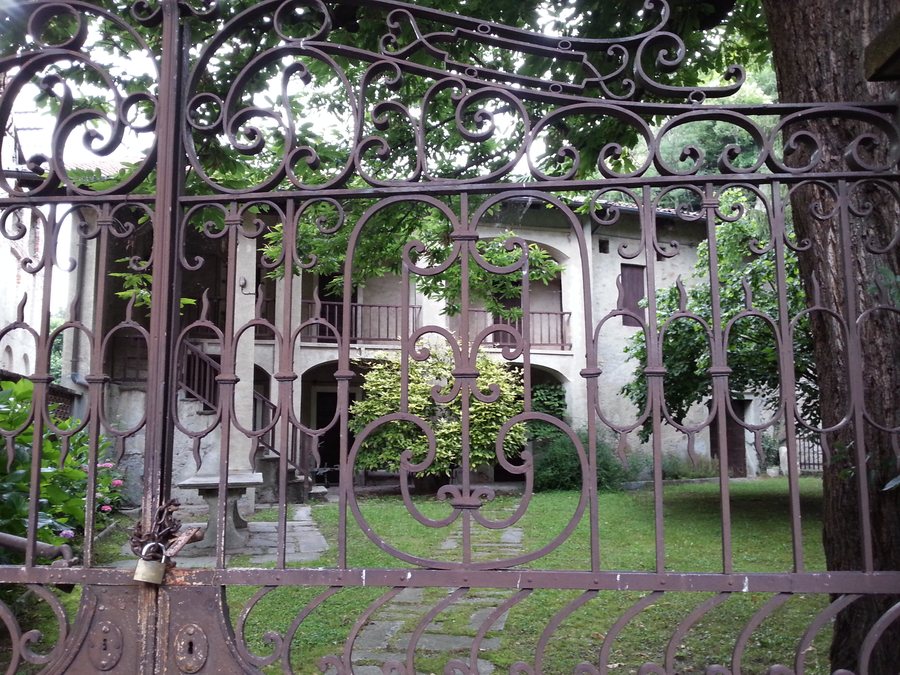 File:San Germano (Borgofranco d'Ivrea) 4 Italia.jpg
Photo: Ambra75 via Wikimedia Commons, CC BY-SA 4.0
File:San Germano (Borgofranco d'Ivrea) 4 Italia.jpg
Photo: Ambra75 via Wikimedia Commons, CC BY-SA 4.0
Between the pilgrimage route, vineyards and town center
Borgofranco d’Ivrea combines a historic town center with unique landscape and cultural experiences. The Via Francigena runs through the town and can be explored on foot or by bicycle; some of its sections through Borgofranco d’Ivrea are accessible on foot. In Località Montebuono, the green-and-blue Big Bench No. 184 stands at a viewpoint accessible via a short footpath through the vineyards. The hills of Montebuono display a topiary-like vineyard landscape that becomes visible when approaching from Baio Dora to Borgofranco d’Ivrea.
Town center with medieval traces
The original medieval town center is home to Palazzo Marini, near the gate toward Ivrea. Its tower dates from the last quarter of the 13th century; the municipal tourist office is located on the ground floor. The almost perfectly preserved ancient Ricetto has regularly laid-out streets and rural-style houses with large arcaded loggias. The wide Travà were built for stables and hay storage. The Ricetto was built between 1256 and 1277.
Buildings and former uses
Several buildings reflect different historical uses. The exterior of the Chiesa di Santa Marta has a medieval design, while the building was extensively altered in 1691. The church can be visited free of charge from the outside; an interior visit is possible during religious events. The parish church of Madonna del Rosario e dei Santi Maurizio e Germano is in the Baroque style and was built in 1663. The 15th-century Domus Sancti Spiriti was the seat of a brotherhood and served as a rectory and school until 1600. A large villa surrounded by greenery served as a hydrotherapy spa in Borgofranco d’Ivrea.
Balmetti, art trail and Rio Rosso
In the Balmetti, air currents known as “Ore” create a microclimate with a constant temperature of 7–8 °C and consistent humidity. The former Birrificio De Giacomi was opened in the hamlet of Biò between the mid-19th and early 20th centuries and is an example of industrial archaeology in the Balmetti. The Balmetti art – Place of art and culture art trail connects the lower and upper Balmetti. At the Rio Rosso, a small tributary of the Dora, the yellow-gold coloration stands out; it is caused by mineral pigments washed out of a quarry upstream. The Balmetti are accessible by car and can be visited on foot free of charge.
Local specialties
The culinary side of Borgofranco d’Ivrea includes Miasse with Salignun as local gastronomic specialties and Vin dai Balmit as a local wine. Canestrelli are a typical product of the town: the crisp, wafer-thin pastries are embossed with family coats of arms. Bottega del Canestrello continues to make Canestrelli by hand and operates a vintage café in Borgofranco d’Ivrea.
Check prices, availability and amenities for your travel dates directly on Booking.com.
View accommodations and offersAdvertisement · Affiliate link to Booking.comMore destinations
For further travel planning in Italy: Bruino, Chiaverano, Val Della Torre, Castellamonte, Ruà, Dubbione Di Pinasca, Banchette, Villareggia
For the higher-level travel overview: Turin.

_4_Italia.jpg)