
Chiomonte: Village History, Mountain Culture and Avanà
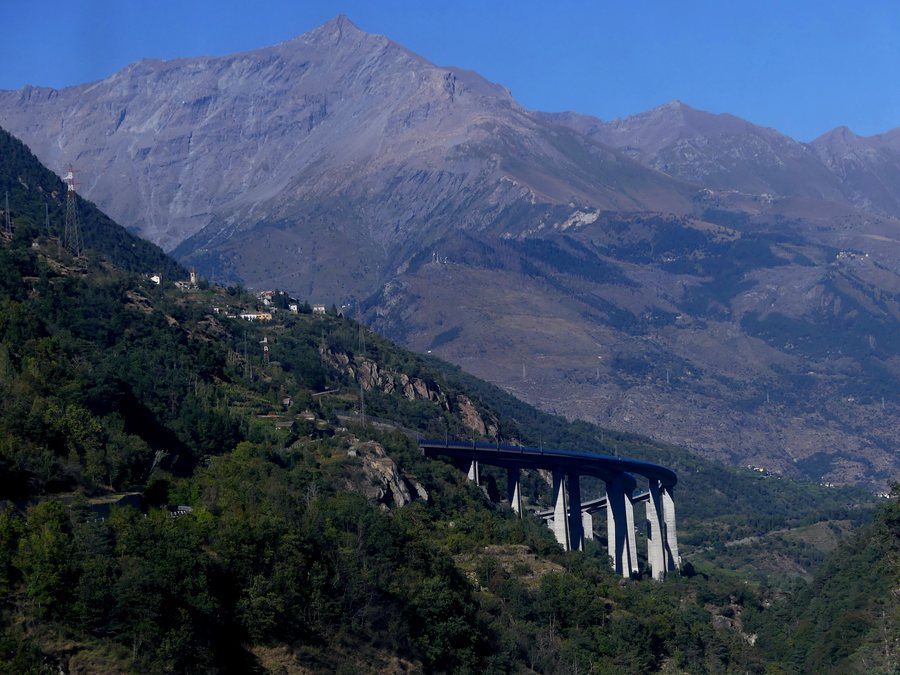 File:Viaduct et village de Ramat à Chiomonte (septembre 2024).JPG
Photo: Florian Pépellin via Wikimedia Commons, CC BY-SA 4.0
File:Viaduct et village de Ramat à Chiomonte (septembre 2024).JPG
Photo: Florian Pépellin via Wikimedia Commons, CC BY-SA 4.0
Chiomonte between Village Centre and Mountain History
In the centre of Chiomonte, narrow streets, old fountains and winding lanes preserve the character of historic Alpine villages. This combination of a small-scale villagescape and Alpine history is what makes the town interesting for travellers who want to discover Italy through more than just its major attractions. The Pinacoteca G. A. Levis is another cultural highlight. It is housed in a 16th-century palace associated with the Paleologo family of Chiomonte and contains an extensive collection of paintings. This documents a large part of G. Levis’s artistic career between 1900 and 1926.
Art and Sacred Heritage
Beyond the Pinacoteca, Chiomonte is also home to important artistic and architectural heritage. The Chiesa di Sant’Andrea in the hamlet of Ramats features a Renaissance fresco cycle depicting the Annunciation and the martyrdom of Saint Andrew. The Chiesa di Santa Caterina was built in the years immediately after 1208 as an oratory for a hospital and preserves 14th-century frescoes. The parish church of Santa Maria Assunta is surmounted by a bell tower built in 1432 in the Romanesque Dauphiné style. Together, these buildings offer different perspectives on the town’s long religious and artistic heritage.
The Pertus: Engineering History in the Mountains
The Pertus combines an experience of the landscape with a historic engineering achievement. Between 1526 and 1533, the miner Colombano Romean excavated it on behalf of the residents of Cels, a hamlet of Exilles, and Ramats, a hamlet of Chiomonte. The tunnel was intended to carry water from the Rio Touilles to irrigate the entire slope. The Pertus is approximately 450 metres long and features visible traces of excavation, lamp niches, and depictions of crosses, human faces and French fleurs-de-lis carved into the rock.
Access leads from the hamlet of Ramats in Chiomonte along an unpaved road to the Grange Rigaud at an altitude of 1,450 metres, followed by a path towards Quattro Denti. In autumn, the Pertus can be carefully traversed when water levels are low. A torch and spare shoes are absolutely essential.
Winter, Festivals and Local Flavours
The Pian del Frais ski area is located in a mountain hamlet of the municipality of Chiomonte. The ski area is considered suitable for families, beginners and school groups. It thus complements the town’s cultural attractions with a winter perspective, without Chiomonte being limited to winter sports. The local annual calendar also includes the January festival of San Sebastiano, which features the Puento dance.
A distinctive culinary tradition is connected with wine. Avanà is considered Chiomonte’s most representative grape variety and received Denominazione di Origine Controllata status in 1997. The Chiomonte ice wine “San Sebastiano” was created from the first experimental grape harvest on 20 January 2006 in the vineyards of the Comunità Montana Alta Valle di Susa, where the indigenous “Avanà” grape variety is cultivated. In this way, Chiomonte brings together a historic village centre, art, mining history, winter activities, festival culture and a distinctive wine tradition.
More Places for Your Travel Planning
If you would like to discover more places at this travel level in addition to Chiomonte, here is a concise selection: Salbertrand, Druento, Chivasso, Settimo Vittone, San Giusto Canavese, Coazze, Rollieres and Vico Canavese.
To the higher-level travel overview: Turin.
Check prices, availability and amenities for your travel dates directly on Booking.com.
View Accommodation and OffersAdvertisement · Affiliate link to Booking.com
.JPG)