
Salbertrand between Gran Bosco and local history
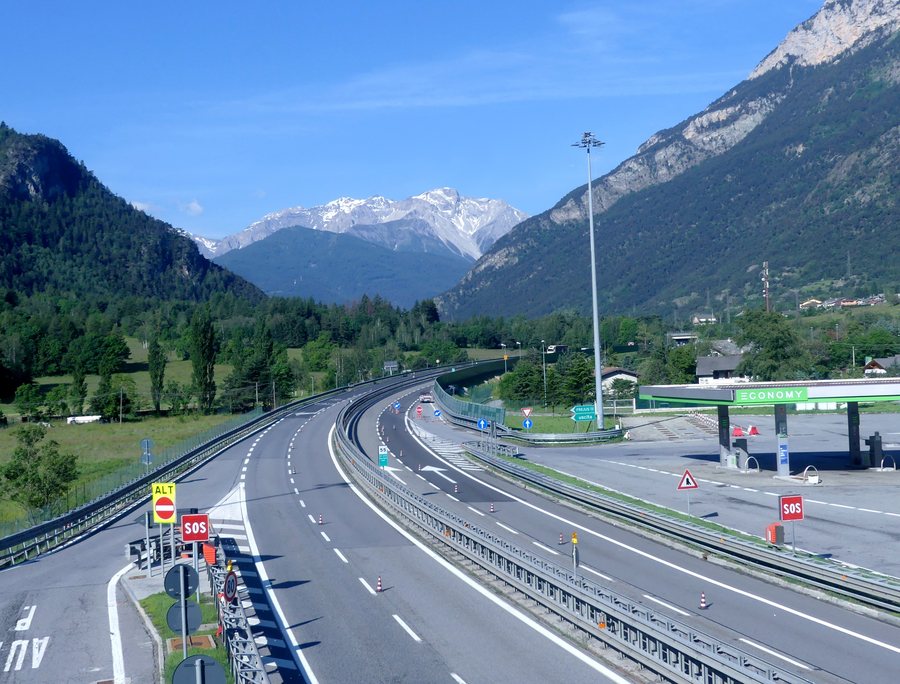 File:Autoroute A32 à Salbertrand côté Fréjus (juin 2023).JPG
Photo: Florian Pépellin via Wikimedia Commons, CC BY-SA 4.0
File:Autoroute A32 à Salbertrand côté Fréjus (juin 2023).JPG
Photo: Florian Pépellin via Wikimedia Commons, CC BY-SA 4.0
Nature and local history in Salbertrand
Salbertrand combines a protected natural area with a multifaceted local history. The Parco Naturale del Gran Bosco di Salbertrand also includes Salbertrand and extends along the right side of the Susa Valley in the northern Cottian Alps. Its elevation ranges from 1,000 metres above sea level to the watershed at 2,600 metres.
The Gran Bosco as a landscape area
The Gran Bosco includes 700 hectares of mixed forest consisting of silver firs and spruces. Together with the protected area's considerable elevation range, this forest shapes Salbertrand's landscape character. For your travel planning, the nature park is therefore a distinct focus alongside the town's cultural and historical heritage.
The Ecomuseo between the forest and the town centre
The Ecomuseo Colombano Romean follows an approximately five-kilometre circular route between Salbertrand and the Gran Bosco nature park. Along the route are 13 sites currently open to visitors. In addition, the Ecomuseo offers a signposted circular trail with information panels that extends between the protected area and the old lanes of Salbertrand's town centre. Its approximate length provides a clear indication for planning the day; the specific order of the stops and the length of stay remain open. This does not result in a fixed daily schedule; breaks can be planned individually on site along the circular route. In this way, exploring the landscape and local history becomes a coherent theme for a single visit.
Water power and regional history
The hydraulic mill is part of the Ecomuseo's historical dimension. It tells the story of 800 years of water-power use, from feudal milling rights to electricity generation. The Ecomuseo Colombano Romean also includes an area dedicated to the Glorioso Rimpatrio dei Valdesi. A Piedmontese ice house from the 19th century is considered the last fully preserved example of its kind in the region.
Fountains, frescoes and sacred heritage
In Salbertrand's town centre, a rectangular fountain bears the year 1524 and is known for its period decorations. An octagonal fountain bearing the year 1525 stands in Piazza San Rocco. The Hotel Dieu, also known as Maison Dieu, was a historic hospice for pilgrims and travellers in the town centre on the medieval „Strada di Francia“.
The parish church of San Giovanni Battista has three superimposed layers of frescoes created between 1300 and 1500. Its sacristy houses the small parish museum „Tesori della Parrocchiale“, with goldsmith's work and textiles from the 16th to the 19th century. In the Oulme district, the Maria Annunziata Chapel has traditionally also been known as the Chapel of San Cristoforo because of the monumental fresco of Saint Christopher on its façade; inside are frescoes dating from 1534.
Getting there and choosing where to stay
You can reach Salbertrand by train via the Torino–Modane line. The town is also accessible by the SAPAV Torino–Briançon bus line. Those planning to travel by public transport can choose between the Torino–Modane railway line and the SAPAV Torino–Briançon bus line. Both connections lead to Salbertrand.
Discover more places
Villareggia, Vestignè, Sant'antonino Di Susa, Busano, Montalto Dora, Gassino Torinese, Maddalena, Perosa Argentina
For the higher-level travel overview: Turin.
Check prices, availability and amenities for your travel dates directly on Booking.com.
View accommodations and offersAdvertisement · Affiliate link to Booking.com
.JPG)