
San Sebastiano between mountain views and historic trails
Accommodation in San Sebastiano
San Sebastiano lies on the southeastern slope of Monte Cornetto and offers views of the upper Astico Valley. This combination of a hillside location and expansive views of the landscape gives the village a clear setting for walks, hikes and historical discoveries. If you are planning a trip combining nature experiences with cultural points of interest, you will find short routes here as well as a longer hike with specified key details.
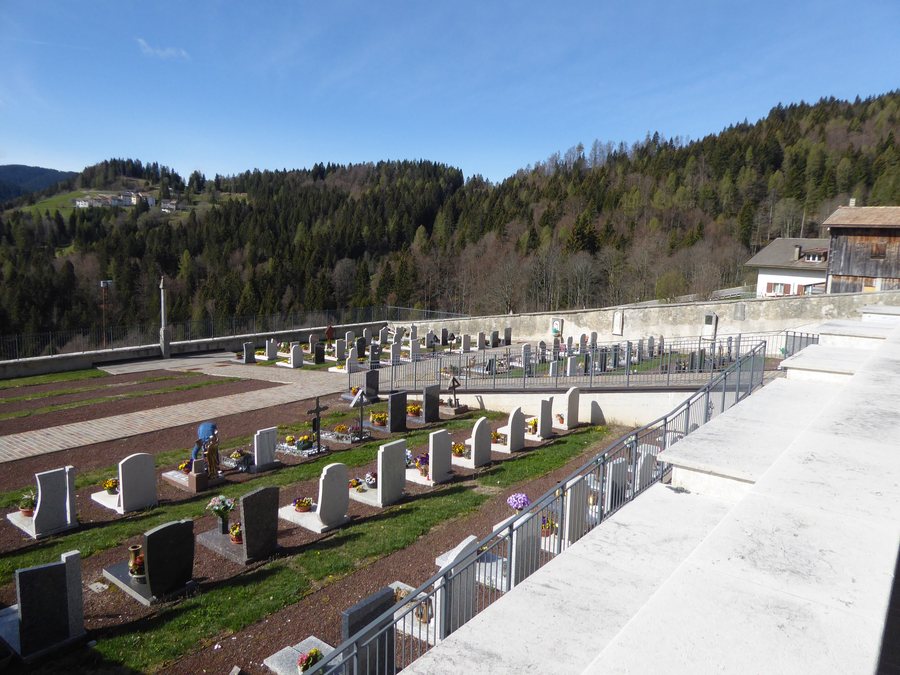
Mountain landscape around San Sebastiano
The peaks Seconda Cima and Mandrett are part of the immediate surroundings of San Sebastiano. Monte Spizo and Dosso del Sommo are also located in the surrounding area and are likewise classified as peaks. The different geographical references remain clear: Seconda Cima and Mandrett are in the immediate vicinity, while Monte Spizo and Dosso del Sommo are in the area around San Sebastiano.
Short trail with a spring and treasure hunt
From the centre of San Sebastiano, the Sentiero del Mulpoch leads to an old spring. The trail is approximately 2 km long, flat and easily accessible. This makes it suitable as a manageable hike to include in exploring the village, without a long distance or a major difference in elevation being the focus.
The Sentiero del Mulpoch includes a permanent treasure hunt with ten stations. The stations are directly connected to this trail and add a playful element to its route. In this way, the Sentiero del Mulpoch combines a spring outside the centre with a task that unfolds along the route.
Hike along the Sentiero dell'Acqua
Another hike from San Sebastiano follows the Sentiero dell'Acqua to Carbonare. From there, it returns to San Sebastiano via Morganti. The entire hike is listed as taking approximately three hours and covering 250 metres of elevation gain.
Church, village fountain and local history
An earlier church building in San Sebastiano has been documented since 1576. The parish church of San Sebastiano was rebuilt in 1904. There is also an old village fountain in the centre of the village. These three specific landmarks connect the present-day village with different stages of its architectural and everyday history.
The origins of San Sebastiano are associated with the first phases of Cimbrian presence on the Alpe. For centuries, local shepherds drove their flocks of sheep to the landscapes around Verona and Mantua for the winter. Both references broaden the perspective beyond individual buildings to include the history passed down through the generations and the former use of the landscape.
Fortresses, castle and museum in the surrounding area
Several destinations with a historical or cultural character are located in the area around San Sebastiano: Forte Cherle is a fortress, Castel Beseno is a castle, Forte Dosso delle Somme is a fortress and the Museo Diocesano Tridentino is a museum. In addition to trails and peaks, you will therefore find destinations suited to exploring regional history, buildings and museum exhibits. When choosing a hotel in San Sebastiano, these different themes can determine the focus of your individual travel plans.
More places for planning your trip: Faedo, Pieve Tesino, Sarche, Passo Del Tonale, Sfruz, Romeno, Norge and Folgaria.
For the higher-level travel overview: Trentino.

