
Fornacette: Cycle Paths, Water Engineering and Local History
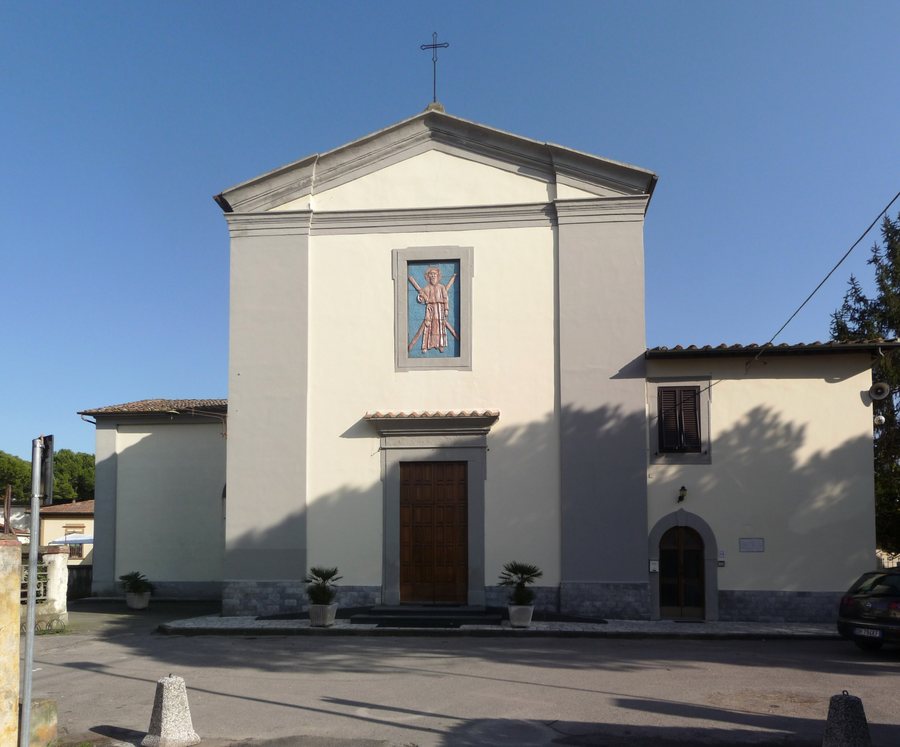 File:Chiesa di Sant'Andrea, Fornacette, Calcinaia.jpg
Photo: Lucarelli via Wikimedia Commons, CC BY-SA 3.0
File:Chiesa di Sant'Andrea, Fornacette, Calcinaia.jpg
Photo: Lucarelli via Wikimedia Commons, CC BY-SA 3.0
Fornacette between Cycle Paths and Local History
Fornacette combines tangible traces of local history with themes that can be readily connected on an individual trip to Italy. The Museo della Bicicletta Manolo Baggiani, or MU.BI for short, is located at Via Amendola 7. MUBI is a multifunctional centre that emerged from collaboration between the Municipality of Calcinaia and Giochi in Circolo.
Cycle and Walking Paths in the Built-Up Area
For getting around locally, the paths along Via Tosco-romagnola and the Canale Imperiale are described particularly specifically. In Fornacette, an existing, unmarked cycle and walking path runs along Via Tosco-romagnola. Within the built-up area, existing cycle and walking paths also run along both banks of the Canale Imperiale. If you are assessing Fornacette for opportunities to make short journeys on foot or by bicycle, these two local features differ in that one is located along a road and the other along a canal.
Water Engineering and Early History
The Trabocco mediceo di Fornacette was built in 1568 under Cosimo I, Grand Duke of Tuscany. As early as 1564, Cosimo I de’ Medici ordered the construction of the Arnaccio overflow canal in the Fornacette area. Both dates point to the role played by water engineering and the history of Medici rule in the surviving local references, without allowing any conclusion to be drawn about a present-day function or accessibility.
The place name may also point further back: Fornacette may derive from Fornacelle, meaning “small kilns”. Brickmaking began in Fornacette between the 10th and 12th centuries.
Church, Piazza and Cultural Events
The more recent local history includes the new parish complex in Fornacette, dedicated to Regina della Pace. The church was consecrated on 2 March 2002 by H.E. Monsignor Plotti. The traditional Concertone della Liberazione also takes place in Piazza della Resistenza, with I Patagarri as the headline act.
In the wider municipal area of Calcinaia, the Regata Storica sull'Arno takes place in May. It is a re-enactment of the former activities of the Navicellai. In addition, Parco dei Pini, near S. Quasimodo secondary school at Via Amendola 34 in Fornacette, was the third stop on an event dedicated to biodiversity. For your trip planning, this allows historical, cultural and nature-related themes to be considered separately without conflating their respective local or event-related references.
Choose Accommodation Based on Your Interests
If you are looking for a hotel or other accommodation in Fornacette, you can first determine which local features are important for your trip. The MU.BI at Via Amendola 7, the cycle and walking paths along Via Tosco-romagnola and the Canale Imperiale, and the historical landmarks connected with the Trabocco mediceo and Arnaccio provide different points of reference. Piazza della Resistenza, Regina della Pace and Parco dei Pini are also specific local features that can help you assess Fornacette more closely as a place to stay.
For the wider travel overview: Calcinaia.
Check prices, availability and amenities for your travel dates directly on Booking.com.
View Accommodation and OffersAdvertisement · Affiliate link to Booking.com
