
Bagno Vignoni: Thermal Waters, Mills and Culture
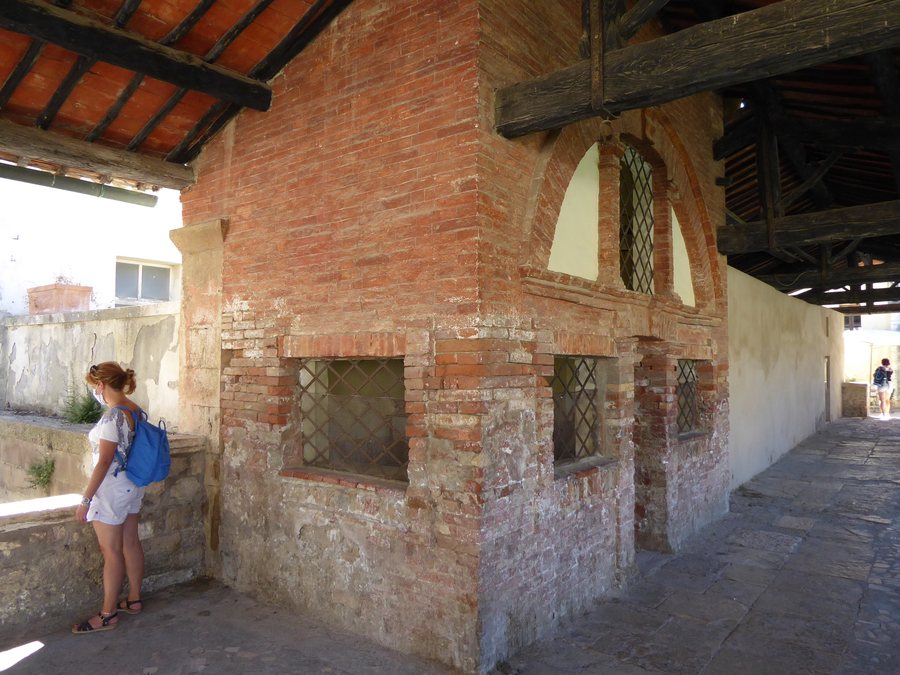
Bagno Vignoni between thermal waters and milling history
Bagno Vignoni combines thermal waters, milling history and sacred art. If you are looking for a place where the landscape and culture can be explored through specific sites, start at the pool of Bagno Vignoni: it is 49 metres long and 29 metres wide. The Parco dei Mulini in Bagno Vignoni developed into an important milling centre because the thermal spring supplied abundant and continuous water and the Via Francigena passed close to the town.
The pool, fountain and the Orcia River
The pool of Bagno Vignoni has a thermal-water fountain that once bubbled at a temperature of 52 degrees. The watercourse is also important for understanding this water-based destination: the water emerging from the piazza of Bagno Vignoni is channelled while still lukewarm through a small ditch out of the town and onwards to the Orcia River. The Orcia flows through the valley below. The historical use of the thermal water extends beyond the history of the mills.
In the past, the thermal water of Bagno Vignoni was used both for personal hygiene and to treat numerous illnesses. One cultural event focuses attention on the pool: the Feast of Saint John is celebrated every year on 24 June with a procession around the pool and the blessing of the fields. If you plan your trip around regional traditions and places shaped by sacred culture, this occasion forms part of Bagno Vignoni’s distinctive annual cycle.
A walking trail with views over the landscape
The Sentiero dei Mulini is a panoramic walking trail with views of the Rocca di Castiglione d’Orcia. This gives Bagno Vignoni’s milling history a scenic dimension in addition to its historical significance. The trail may be particularly interesting if, during your stay, you would like to include not only the pool and the piazza but also views of a castle complex in the surrounding area.
Church and art in Bagno Vignoni
The Chiesa di San Giovanni Battista adds a clear cultural and historical dimension to the thermal-water and milling themes. Its façade is simple, and the interior has a single nave. The church also contains an 18th-century painting from the Sienese school. It depicts Saint Catherine of Siena in Bagno Vignoni. If you enjoy exploring Italian local history through architecture and individual works of art, you will find both the restrained spatial character of the church and a motif specifically connected to Bagno Vignoni here.
Historic sites and mountains in the surrounding area
Several destinations with different characteristics are located around Bagno Vignoni: La Scala is a historic site, the Fortezza di Montalcino is a fortress, the Palazzo Piccolomini is a palace and the Museo della Tortura di Montepulciano is a museum. The wider regional area around Bagno Vignoni also contains several mountains: Monte Cucco, Monte Nebbiali, Monte Amiata and Monte Calcinaio. Distinguishing between historic sites, fortresses, palaces, museums and mountains helps you organise excursions according to your interests without grouping the different places under a single category.
The wellness theme also includes the outdoor thermal pools at Hotel La Posta. They are available both to hotel guests and to external visitors. For your planning, this documents an offering that caters to two visitor groups and adds a specific on-site option to Bagno Vignoni’s thermal character.
For the general travel overview: San Quirico D'Orcia.
Check prices, availability and amenities for your travel dates directly on Booking.com.
View accommodation and offersAdvertisement · Affiliate link to Booking.com
