
Castelluccio: Castle, History and Landscape
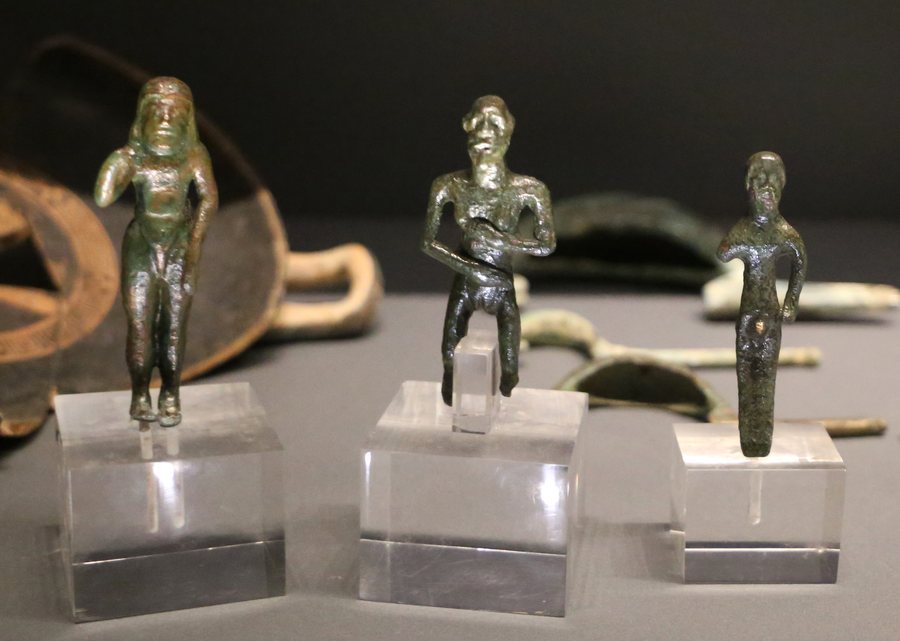 File:Bronzetti votivi da castelluccio di pienza, 650-100 ac ca. 01.jpg
Photo: Sailko via Wikimedia Commons, CC BY 3.0
File:Bronzetti votivi da castelluccio di pienza, 650-100 ac ca. 01.jpg
Photo: Sailko via Wikimedia Commons, CC BY 3.0
Castelluccio is a medieval castle and part of the La Foce estate. The village lies on the road connecting the Val di Chiana with the Val d’Orcia. The castle is situated on a hill between the Miglia and Astrone streams, which flow into the Orcia. For an individual journey through this landscape, the connection between the two valleys remains the specific geographical reference; the hill between the Miglia and Astrone describes the castle’s location in greater detail. For Castelluccio, travel planning therefore distinguishes between the Val di Chiana–Val d’Orcia road and the castle hill between the Miglia and Astrone.
Historical Routes and Religious Connections
Castelluccio is considered an old stopping point on the Via Francigena. The stopping point on this historic route connects Castelluccio with the history of religious travel. At the beginning of the 15th century, San Bernardino da Siena preached in Castelluccio. Castelluccio di Pienza is also one of the venues for the Incontri in Terra di Siena festival. The historic route, the sermon and the festival represent different chronological and cultural connections within the history of the village.
Castle Complex, Grancia and Defensive Remains
Part of Castelluccio was converted into a fortified grancia in 1390. A grancia was a fortified agricultural estate that served agricultural management and, at the same time, control of the area. This function remained in place until 1787. The term grancia thus refers to the connection between a fortified estate, agriculture and territorial control. The castle complex features two round corner towers and remains of the old defensive walls. For those interested in culture, the grancia, the two round corner towers and the remains of the old defensive walls serve as specific historical points of reference at the castle complex.
Church and Archaeological Traces
The Church of Santi Bernardino e Andrea Apostolo was built within the castle of Castelluccio in 1783. The church is therefore located within the same castle complex as the defensive remains and the former grancia. More systematic excavations, carried out on the initiative of Leone Mieli, led to the discovery of several graves in Castelluccio. The excavations initiated by Leone Mieli complement the religious building with archaeological traces.
Cultural Destinations in the Surrounding Area
The area around Castelluccio includes several destinations with different focal points. The Museo della Tortura di Montepulciano is a museum in the vicinity of Castelluccio. The Parco Archeologico Naturalistico Di Belvedere is an ancient site in the same area. La Scala is a historic site in the vicinity of Castelluccio. Palazzo Piccolomini is a palace in the vicinity of Castelluccio. For those interested in culture, the surrounding area therefore offers not only the castle but also a museum, an ancient site, a historic site and a palace.
Landscape and Geographical Connections
The landscape also offers clearly distinguishable points of reference. The Grotte paleolitiche di Belverde is a cave in the vicinity of Castelluccio. Monte Cetona, Monte Calcinaio and Monte Nebbiali are classified there as mountains. The cave and the three mountains are located in the vicinity of Castelluccio, while the castle stands on the hill between the Miglia and Astrone. For geographical planning, this distinction between the castle hill and the surrounding landscape destinations is useful. The mountains and the cave extend the geographical reference beyond the castle complex.
Check prices, availability and amenities for your travel dates directly on Booking.com.
View Accommodation and OffersAdvertisement · Affiliate link to Booking.comTo the higher-level travel overview: Pienza.
More Travel Destinations
More places under the same destination:

